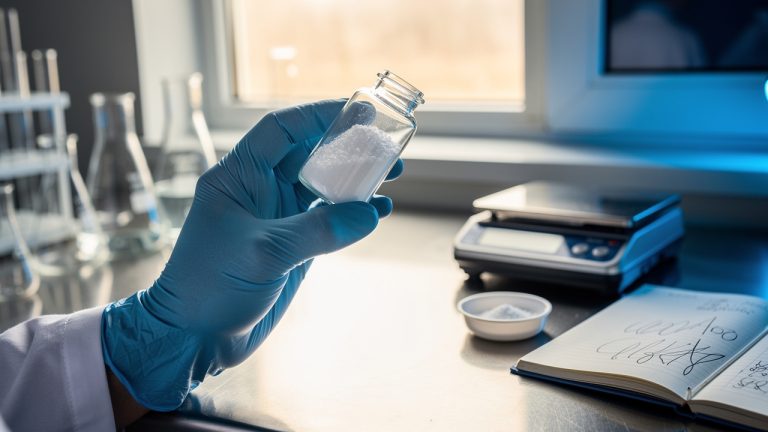

Glutathione is widely sold as capsules, effervescent tablets and drinks, and also offered as IV drips in clinics. Searches for glutathione side effects peaked in Malaysia in late 2025. So what do studies actually report? This guide covers the possible side effects of oral, topical and IV glutathione, the long-term effects we know about, and what manufacturers should check. Like any supplement, glutathione may not suit everyone, so it helps to weigh the safety and efficacy of glutathione together.
Is glutathione safe? The short answer
Oral glutathione is generally well tolerated in the trials published so far. Placebo-controlled skin trials ran for up to 12 weeks, and trials on blood levels ran for up to 6 months. Long-term safety has not been established. [2] IV glutathione is different: a 2025 systematic review concluded it is contraindicated because of a lack of efficacy and its side effects. [1]
What glutathione is, and the role of glutathione in the body
Glutathione is an antioxidant produced naturally by the body from three amino acids: glutamic acid, cysteine and glycine. The reduced form of glutathione (GSH) neutralises free radicals and helps the liver clear toxins. Because the body already makes it, glutathione supplements add to an existing supply rather than introduce a foreign substance. That does not make every dose or route safe, as the IV evidence shows.
Reported side effects of oral glutathione supplementation
- In a 4-week trial in 60 medical students taking 500 mg a day, both glutathione and placebo were very well tolerated. The authors noted that long-term safety has not been established. [2]
- In a 12-week trial in healthy women, 250 mg a day of reduced or oxidised glutathione caused no serious side effects. Blood samples were taken for safety monitoring. [3]
- A 2019 systematic review of glutathione and skin conditions reported some adverse events, but none were serious. [4]
- In a 12-week trial in 124 Asian women, a daily combination of 500 mg L-cystine and 250 mg L-glutathione was described as safe. The authors worked for the ingredient’s producer. [5]
Common side effects: what the studies list
The trial abstracts we reviewed do not name specific common or potential side effects. They report that oral glutathione was well tolerated, with no serious side effects. Product sites sometimes list bloating or cramps, but we could not find these in the controlled trials we reviewed. If you experience side effects from any supplement, stop and speak to a doctor.
What happens when you start taking glutathione?
Glutathione levels in the body rise gradually. In a 6-month trial, oral glutathione raised blood levels after 1 month, and the rise grew with time and dose. Levels returned to baseline a month after people stopped. [6] Skin changes in trials were measured after 4 to 12 weeks. [2][3]
What happens if you take glutathione every day?
All the trials above used glutathione daily. People took it for 4 weeks to 6 months without serious side effects being reported. [2][3] The effects studied, on blood levels and skin, faded after stopping. So the question for long-term daily use is safety beyond 6 months, which has not been studied.
Is glutathione safe for your liver?
Glutathione has been given by injection for chronic liver disease. [8] In an open-label pilot study, 29 people with non-alcoholic fatty liver disease took 300 mg a day by mouth for 4 months. Their ALT, a marker of liver function, fell. [8] The study had no placebo group, so whether glutathione could help liver function needs larger trials. We found no reports of liver harm from oral glutathione in the trials we reviewed.
Is glutathione safe for long-term use?
The longest trial we found ran for 6 months, at up to 1,000 mg a day. [6] That trial focused on glutathione levels rather than safety outcomes. We found no trials lasting several years. A finished product therefore needs its own safety assessment, and labels should give a clear daily dose.
For S-acetyl glutathione, a newer form, the European Food Safety Authority set a safe intake of 300 mg a day for adults in 2026. It excluded pregnant and breastfeeding women and children under 10. [7]
Side effects of glutathione injections and IV drips
IV glutathione is offered for skin lightening in some clinics. The 2025 review found only one placebo-controlled study of IV glutathione, and the difference from placebo was not significant. It concluded that IV glutathione is contraindicated because of a lack of efficacy and its side effects. [1] An injection is a medical procedure, not a supplement application, and the risk of side effects is not comparable with oral use.
Safety of glutathione for skin lightening
Glutathione is often used for skin whitening, so the safety of that use matters. For glutathione as a skin-lightening agent, the 2025 review compared the routes. Topical glutathione had minimal adverse effects, and oral glutathione had more substantial effects across the body. Neither effect was sustained after stopping. [1] In creams and lotions, glutathione is used at low concentrations, such as 0.5% to 2%. Read more in glutathione for skin.
Who should take care
- Pregnant and breastfeeding women. There are few data. EFSA excluded these groups from its safe intake for S-acetyl glutathione. [7]
- Children. Most trials enrolled adults only.
- People on medication or with a medical condition. They should ask their doctor first, as for any supplement.
What to avoid when taking glutathione
From the evidence above, the main things to avoid are IV use without medical supervision and glutathione products with unclear doses. For manufacturers, quality matters too. Reduced glutathione slowly oxidises in air, moisture and heat. Oxidising ingredients and some metal ions can degrade it in a blend.
Quality is part of safety
Ask your supplier for a lot-specific certificate of analysis showing:
- GSH assay by HPLC, and the oxidised glutathione (GSSG) content;
- heavy metals: lead, arsenic, cadmium and mercury;
- microbiology: total plate count, yeast and mould, E. coli and Salmonella;
- production route, Halal certificate and retest date.
Our glutathione supplier page lists the full checklist. For the benefits side of the evidence, see glutathione benefits.
What the research says
- A 2025 systematic review concluded that IV glutathione is contraindicated because of a lack of efficacy and side effects. It described topical glutathione as having minimal adverse effects. [1]
- In a 4-week double-blind trial in 60 adults, oral glutathione at 500 mg a day was very well tolerated. The authors noted long-term safety is not established. [2]
- In a 12-week double-blind trial, 250 mg a day of reduced or oxidised glutathione caused no serious adverse effects. [3]
- EFSA concluded in 2026 that S-acetyl glutathione is safe at 300 mg a day for adults, excluding pregnant and breastfeeding women. [7]
- In an open-label pilot study without a placebo group, 300 mg a day by mouth for 4 months lowered ALT in 29 people with non-alcoholic fatty liver disease. [8]
These summaries describe published research on the ingredient. They are not claims for any finished product; claims on finished products must meet the rules of the market where they are sold.
References
- Sarkar R, et al. Glutathione as a skin-lightening agent and in melasma: a systematic review. Int J Dermatol. 2025;64(6):992-1004. doi:10.1111/ijd.17535
- Arjinpathana N, Asawanonda P. Glutathione as an oral whitening agent: a randomized, double-blind, placebo-controlled study. J Dermatolog Treat. 2012;23(2):97-102. doi:10.3109/09546631003801619
- Weschawalit S, et al. Glutathione and its antiaging and antimelanogenic effects. Clin Cosmet Investig Dermatol. 2017;10:147-153. doi:10.2147/CCID.S128339
- Dilokthornsakul W, et al. The clinical effect of glutathione on skin color and other related skin conditions: a systematic review. J Cosmet Dermatol. 2019;18(3):728-737. doi:10.1111/jocd.12910
- Duperray J, et al. The effects of the oral supplementation of L-cystine associated with reduced L-glutathione-GSH on human skin pigmentation: a randomized, double-blinded, benchmark- and placebo-controlled clinical trial. J Cosmet Dermatol. 2022;21(2):802-813. doi:10.1111/jocd.14137
- Richie JP, et al. Randomized controlled trial of oral glutathione supplementation on body stores of glutathione. Eur J Nutr. 2015;54(2):251-263. doi:10.1007/s00394-014-0706-z
- EFSA Panel on Nutrition, Novel Foods and Food Allergens (NDA), et al. Safety of S-acetyl glutathione as a novel food pursuant to Regulation (EU) 2015/2283. EFSA J. 2026;24(9):e10258. doi:10.2903/j.efsa.2026.10258
- Honda Y, et al. Efficacy of glutathione for the treatment of nonalcoholic fatty liver disease: an open-label, single-arm, multicenter, pilot study. BMC Gastroenterol. 2017;17(1):96. doi:10.1186/s12876-017-0652-3
Need documentation for a glutathione product?
FC Materials supplies L-glutathione reduced with a lot-specific COA and Halal certificate. Tell us your format and volume, and our team will send the specification and pricing.