
Few fiber ingredients have the clinical track record of psyllium husk – it’s one of the small number of fibers with an FDA-recognized heart-health claim, and its ability to form a gel in water makes it uniquely versatile across supplements, functional foods, and even gluten-free baking.
What Is Psyllium Husk Powder?
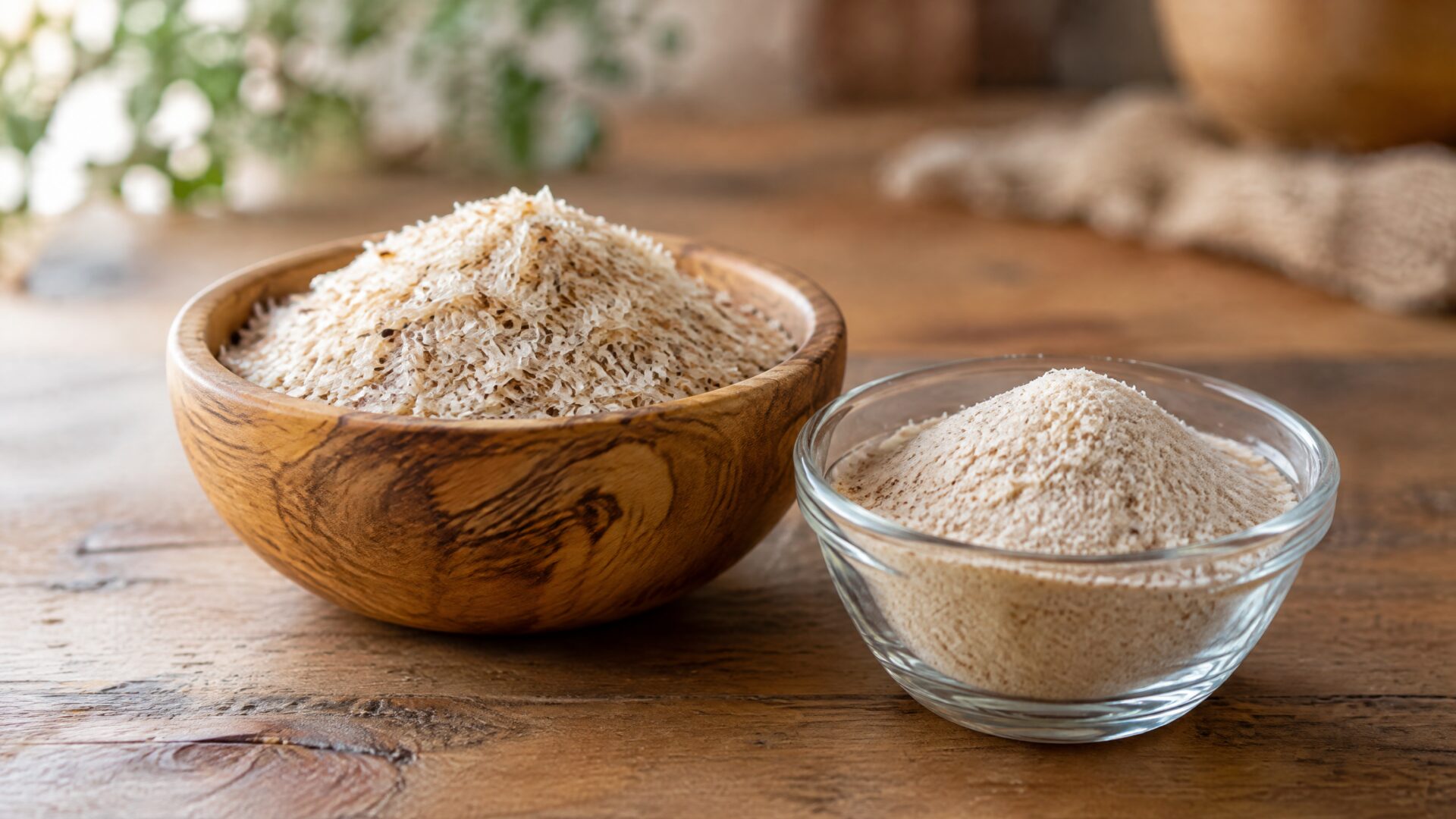
Psyllium husk comes from the seeds of the Plantago ovata plant, primarily grown in India. The husk – the outer coating of the seed – is ground into a powder that is exceptionally rich in soluble fiber. When mixed with water, psyllium forms a thick gel, a property that underlies both its digestive benefits and its use as a functional/technical ingredient in food formulation. It’s supplied as a fine or coarse powder, with purity typically measured by husk content versus seed/chaff impurities.
Key Benefits
Digestive Regularity
Psyllium husk’s best-known and most-studied benefit is supporting regularity. Its gel-forming soluble fiber adds bulk to stool and eases both constipation and, at appropriate doses, mild diarrhea – making it one of the most versatile digestive-health fibers available.
Cardiovascular and Cholesterol Support
Psyllium is one of the few fibers with a recognized health claim for supporting healthy cholesterol levels, as its soluble fiber binds bile acids and can help lower LDL cholesterol – a key differentiator from most other fiber ingredients.
Blood Sugar Management
By slowing digestion and the absorption of sugars, psyllium husk can help moderate post-meal blood sugar spikes, making it a common addition to metabolic-health and diabetic-friendly formulations.
Satiety and Weight Management
Psyllium’s gel-forming action increases feelings of fullness, which is why it appears in weight-management products aimed at reducing overall calorie intake.
Common Forms Used in Formulation
- Psyllium husk powder (fine) – used in capsules, drink mixes, and baking as a binder and fiber source.
- Psyllium husk (coarse/whole husk) – used in traditional fiber supplement formats.
- Psyllium husk granules – for functional food applications requiring a specific texture.
Sourcing and Quality Considerations for Manufacturers
Purity is the defining quality metric – higher-purity husk (with minimal seed and chaff content) swells more consistently and delivers more reliable gel-forming performance, so buyers should request a certificate of analysis specifying husk purity percentage. Swelling/viscosity testing is a useful functional quality check beyond basic composition. Confirm moisture content (affects shelf life and swelling consistency), particle size (fine vs coarse changes application), and pesticide residue and heavy metal testing, since psyllium is an agricultural crop. Origin (India is the dominant global source) and non-GMO documentation round out standard due diligence.
Safety and Side Effects
Psyllium husk is safe and well-established for regular dietary use. It must always be taken with adequate water, since insufficient fluid intake can cause the fiber to swell in the throat or digestive tract and create a choking or blockage risk. Introducing it gradually helps minimize bloating or gas as the body adjusts. Individuals with swallowing difficulties, bowel obstruction, or certain digestive conditions should consult a healthcare provider before use.
Frequently Asked Questions
What is psyllium husk powder used for?
Psyllium husk powder is used mainly as a soluble fiber supplement for digestive regularity, cholesterol support, blood sugar management, and satiety/weight management.
Why does psyllium husk need to be taken with water?
Psyllium forms a gel on contact with water. Without enough fluid, it can swell in the throat or digestive tract and pose a choking or blockage risk, so adequate water intake is essential.
What is the difference between fine and coarse psyllium husk?
Fine psyllium husk powder is used in capsules, drink mixes, and baking; coarse or whole husk is used in traditional fiber supplement formats. The choice depends on the intended application and desired texture.
Does psyllium husk really lower cholesterol?
Yes – psyllium is one of the few fibers with a recognized health claim for cholesterol support, as its soluble fiber binds bile acids and can help reduce LDL cholesterol.
Sourcing psyllium husk powder for your formulation?
FC Materials supplies high-purity psyllium husk powder in fine and coarse grades for supplement and functional food manufacturers. Tell us your product needs and our team will respond with specs, pricing, and MOQ.