
Long before “superfood” became a marketing buzzword, acai berry had already built a reputation as one of the most antioxidant-dense fruits on the planet. Harvested from acai palm trees native to the Amazon rainforest, the small, dark purple berry is now a staple ingredient in smoothie bowls, juices, and antioxidant-focused supplements worldwide. For formulators, acai’s appeal lies in its exceptionally high anthocyanin content, the same class of pigment compounds responsible for its deep purple color and much of its antioxidant activity.
What Is Acai Berry?
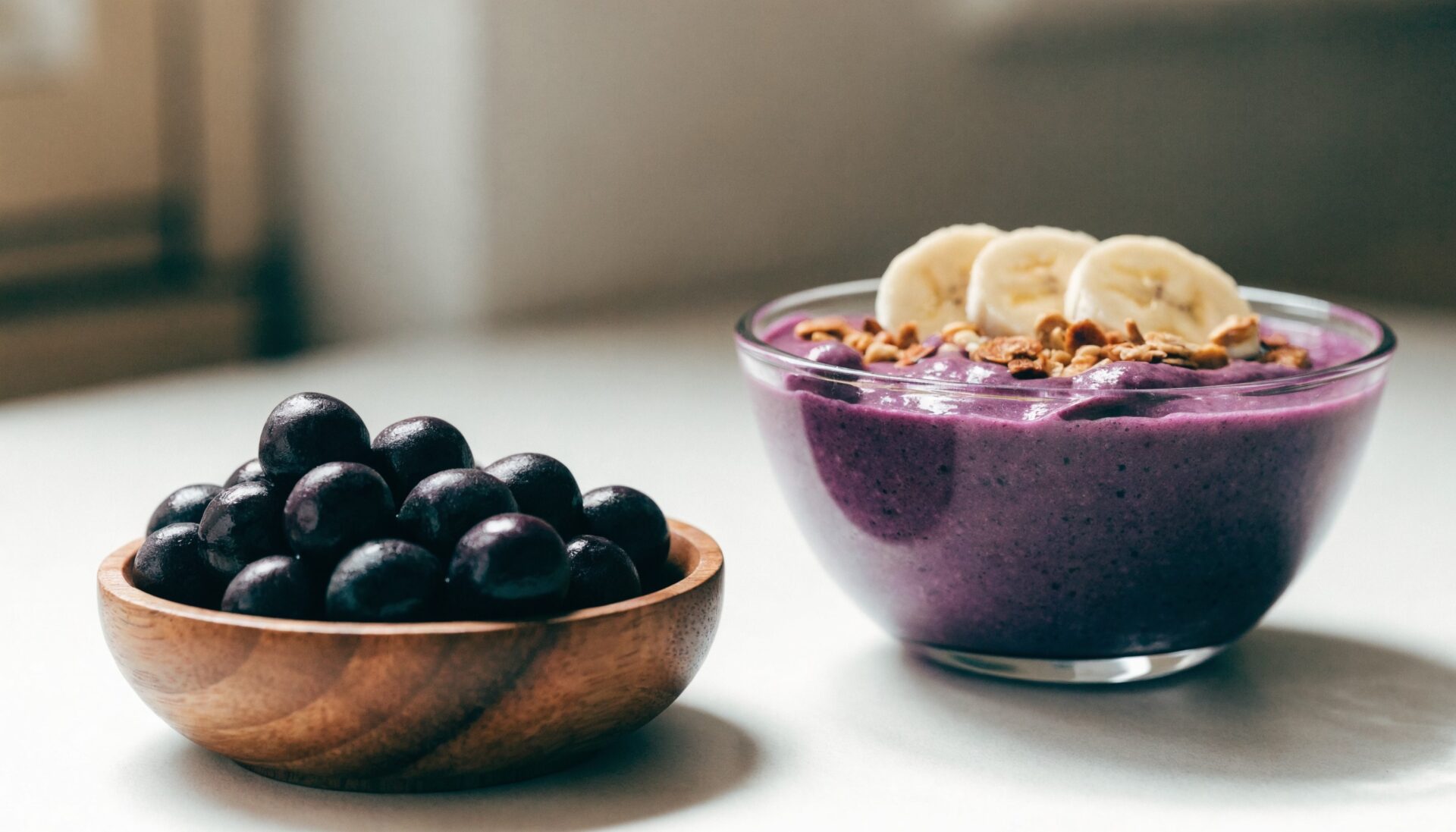
Acai (Euterpe oleracea) grows in clusters high on acai palm trees throughout the Amazon basin, primarily in Brazil. Because the fresh berry spoils quickly after harvest, it’s almost always processed close to the source into pulp, juice, freeze-dried powder, or standardized extract before being shipped internationally. Freeze-dried acai powder and extract are the most practical forms for supplement and food manufacturing, preserving the fruit’s antioxidant profile without the cold-chain logistics fresh acai requires.
Key Health Benefits of Acai Berry
Antioxidant and Anti-Aging Support
Acai’s anthocyanin and polyphenol content gives it one of the higher ORAC (oxygen radical absorbance capacity) scores among commercially available fruits, which is why it’s frequently positioned in antioxidant and beauty-from-within formulations aimed at supporting skin against oxidative and environmental stress.
Heart Health
The fruit’s polyphenol and healthy fat content, largely monounsaturated fats similar to those found in olive oil, has been studied for its potential role in supporting healthy cholesterol levels and cardiovascular function.
Skin Health
Acai’s antioxidant compounds are commonly cited in skincare and beauty-supplement formulations for their potential to help counter the visible effects of oxidative stress on the skin, complementing collagen- and antioxidant-focused product lines.
Energy and Recovery
Acai is a source of both healthy fats and fiber, and is frequently included in energy- and recovery-positioned blends aimed at active consumers, often alongside other Amazonian or superfruit ingredients.
Acai Berry Benefits for Women
Much of the consumer search interest around acai centers on women’s health and beauty applications. Its antioxidant profile is a natural fit for skin-health and anti-aging formulations, and it is frequently paired with collagen, vitamin C, or other beauty-from-within ingredients in finished products.
Common Forms Used in Formulation
- Freeze-dried acai powder, the most common format for capsules, smoothie mixes, and food applications, retaining much of the fresh fruit’s nutrient profile.
- Acai extract, a more concentrated format used where a standardized antioxidant potency claim is needed.
- Acai juice concentrate, used in beverages and liquid supplement formats.
Safety and Side Effects
Acai berry is well tolerated by most people, with no widely reported serious side effects at typical supplemental doses. A standard serving of unsweetened frozen acai pulp provides roughly 3 grams of dietary fiber, which supports satiety and gut regularity, though very high intakes can occasionally cause mild digestive discomfort. Individuals managing chronic kidney disease or on dialysis are generally able to include acai as part of their diet, though as with any potassium-containing fruit, portion tracking may be relevant depending on individual dietary restrictions. Because of its concentrated antioxidant content, people undergoing chemotherapy should check with their oncology team before adding concentrated acai supplements to their routine, since antioxidant interactions with certain cancer treatments are an area of active caution. Acai is not a common allergen, though as with any new ingredient, patch testing or a low starting dose is a reasonable precaution in finished products aimed at sensitive populations.
Sourcing and Quality Considerations for Manufacturers
Because fresh acai degrades quickly, sourcing quality hinges on how soon after harvest the fruit is processed and how it’s dried. Freeze-drying preserves anthocyanin content better than heat-based drying, and manufacturers formulating antioxidant-forward products typically request anthocyanin content, freeze-dried vs. spray-dried processing method, and Brazilian origin documentation as standard due-diligence.
Frequently Asked Questions
Is acai berry powder as effective as fresh acai?
Freeze-dried acai powder is specifically designed to preserve the fruit’s antioxidant compounds during processing, making it a practical and effective format for supplement and food manufacturing where fresh acai isn’t logistically feasible.
What is acai berry best combined with in formulations?
Acai is frequently paired with other antioxidant-rich superfruits, such as goji berry, cranberry, or acerola, as well as with collagen and vitamin C in beauty-from-within products.
Does acai berry support weight management?
Acai is often marketed alongside weight-management claims due to its fiber content and inclusion in meal-replacement smoothie formats, though its role is generally as a supporting ingredient within a broader formulation rather than a standalone solution.
Sourcing acai berry extract for your formulation?
FC Materials supplies acai berry extract and other antioxidant-rich botanical ingredients to supplement, nutraceutical, and food manufacturers. Tell us your product needs and our team will respond with specs, pricing, and MOQ.
Is acai berry good for kidneys?
Acai is generally considered acceptable for people with chronic kidney disease, including those on dialysis, though anyone managing kidney disease should track potassium intake as part of an overall renal diet plan rather than relying on any single food in isolation.