
Trending Ingredient
Ashwagandha Extract Supplier in Malaysia — Standardised Withanolides
FC Materials Sdn Bhd is a Malaysia-based supplier of standardised Ashwagandha Extract (10:1) — one of the fastest-growing adaptogen ingredients globally — for stress-relief, sleep-support and sports-nutrition manufacturers across Malaysia and Southeast Asia.
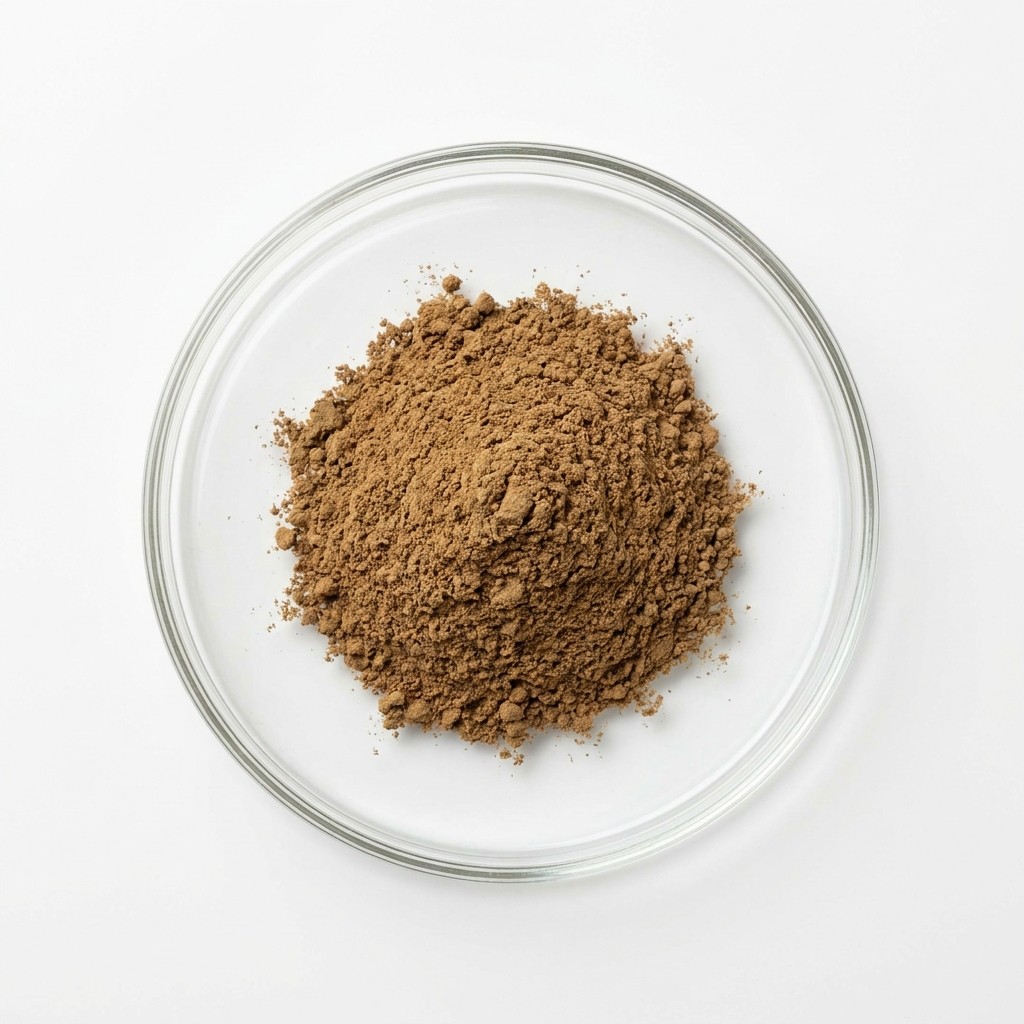
At a Glance
Ashwagandha Extract — At a Glance
Understanding the Ingredient
What Is Ashwagandha Extract?
Ashwagandha (Withania somnifera) is a small shrub native to India, the Middle East and parts of Africa, used in Ayurvedic medicine for over 3,000 years. It’s classified as an adaptogen — a botanical that helps the body resist and adapt to physical and mental stress. The medicinally active part is primarily the root, which contains a group of compounds called withanolides responsible for most of its studied effects. As an ingredient it’s supplied as root powder or, more commonly for supplements, as a standardised extract — FC Materials supplies a 10:1 concentrated grade.
Market Signal
A Fast-Rising Category in Malaysia
Ashwagandha search interest in Malaysia has climbed sharply over the past year, tracking its status as one of the fastest-growing botanical supplement ingredients worldwide — driven by demand for natural stress, sleep and cortisol support. FC Materials stocks standardised Ashwagandha Extract so manufacturers can move quickly on formulation without waiting on a new supplier relationship.
Applications
Where Ashwagandha Extract Is Used
Available Forms
Forms We Supply
Formulation Guidance
Sourcing & Quality Considerations
Standardisation is everything with ashwagandha — two products can both say “ashwagandha extract” while differing enormously in active withanolide content, so buyers should specify and verify the withanolide percentage on the Certificate of Analysis rather than ordering generic extract. Confirm whether the extract is root-only (traditional and preferred) or includes leaves, since some markets and buyers require root-only material. Because it’s cultivated in regions where soil quality varies, heavy metal testing is essential, and organic or clinically-studied branded grades command a premium for the documentation needed for structure/function claims.
Safety
Safety & Usage Guidance
In clinical trials, side effects were mostly mild, and long-term safety is not established. Rare cases of liver injury have been reported, usually after weeks of use; most people recovered after stopping, but outcomes were severe in people with existing liver disease. It is not recommended during pregnancy, and people with liver or thyroid conditions, autoimmune disorders, or those on sedatives or thyroid medication should consult a healthcare provider before use. See ashwagandha side effects for the evidence.
Evidence
Benefits of Ashwagandha: What the Research Says
Ashwagandha is a herb used mainly as a dietary supplement, usually as an ashwagandha root extract. Below is what meta-analyses of randomised trials show on its benefits and adverse effects. Read the full ashwagandha benefits guide and the ashwagandha side effects guide.
- Stress and anxiety: a 2022 meta-analysis of 12 trials (1,002 adults) found that ashwagandha may reduce stress and anxiety scores compared with placebo, with the stress benefit at a dose of 300–600 mg a day. Certainty of evidence was rated low. [1]
- Cortisol: a 2025 meta-analysis (488 participants) found cortisol fell by about 1.16 µg/dL, but perceived stress did not change significantly. [2]
- Sleep quality: a 2021 meta-analysis of 5 trials (400 adults) found a small improvement in sleep overall, larger in insomnia, at ≥600 mg a day and over ≥8 weeks. [3]
- Testosterone levels and thyroid: a 2026 meta-analysis of 23 trials found testosterone rose in men (about 57 ng/dL) but not in women, and the thyroid hormone T4 rose slightly. [4]
- Adverse effects and the liver: side effects in trials were mostly mild, but a 2026 scoping review of 25 patients found rare, usually cholestatic liver injury after weeks of use; most recovered, but outcomes were severe in people with cirrhosis. [5]
These summaries describe published research on the ingredient. They are not claims for any finished product; claims on finished products must meet the rules of the market where they are sold.
What to ask for on the certificate of analysis
- Species (Withania somnifera), plant part (root, leaf or both) and extraction solvent
- Withanolide content with the test method (HPLC, or gravimetric/UV)
- Identity test (HPTLC fingerprint or microscopy)
- Heavy metals (lead, arsenic, cadmium, mercury), pesticide residues and residual solvents
- Microbiology: total plate count, yeast and mould, E. coli, Salmonella
- Batch number, manufacture and retest dates
References
- Akhgarjand C, et al. Does Ashwagandha supplementation have a beneficial effect on the management of anxiety and stress? A systematic review and meta-analysis of randomized controlled trials. Phytother Res. 2022;36(11):4115-4124. doi:10.1002/ptr.7598
- Albalawi AA, et al. Dual impact of Ashwagandha: significant cortisol reduction but no effects on perceived stress – a systematic review and meta-analysis. Nutr Health. 2025;31(4):1395-1408. doi:10.1177/02601060251363647
- Cheah KL, et al. Effect of Ashwagandha (Withania somnifera) extract on sleep: a systematic review and meta-analysis. PLoS One. 2021;16(9):e0257843. doi:10.1371/journal.pone.0257843
- Fornalik M, et al. Hormonal modulation with Withania somnifera: systematic review and meta-analysis of randomized-controlled trials. Planta Med. 2026;92(8):790-805. doi:10.1055/a-2802-8363
- McIntyre D, et al. Ashwagandha (Withania somnifera)-associated liver injury: a scoping review of clinical characteristics and safety considerations. Cureus. 2026;18(5):e109764. doi:10.7759/cureus.109764
Why FC Materials
Sourcing Ashwagandha Extract from a Malaysian Supplier
FC Materials Sdn Bhd supplies standardised Ashwagandha Extract (10:1) directly to supplement manufacturers across Malaysia and Southeast Asia — Halal-certified, with a concentrated withanolide-rich profile for stress-relief, sleep-support, sports-nutrition and cognitive-health formulations.
Documentation
Product Information & Specification
FAQ
Frequently Asked Questions
What is ashwagandha used for?
Ashwagandha is used mainly for stress and cortisol reduction, sleep support, energy and physical performance, and cognitive/mood support — as an adaptogen that helps the body cope with stress.
What are withanolides and why do they matter?
Withanolides are the active compounds in ashwagandha responsible for most of its effects. The withanolide percentage in an extract determines its potency, which is why standardisation is critical when sourcing.
Is root extract better than whole-plant ashwagandha?
Root extract is the traditional and generally preferred form, and some markets require root-only material. Our 10:1 extract is root only and standardised to 2.5% withanolides by HPLC — message our team for the current COA.
Who should avoid ashwagandha?
It should be avoided during pregnancy and by people with liver disease. People with thyroid or autoimmune conditions, or those on sedatives or thyroid medication, should consult a healthcare provider first. More on safety.
Is ashwagandha extract Halal certified?
Yes — it is Halal-certified and food-grade quality.
Do you supply in bulk or wholesale quantities?
Yes, we supply in bulk for manufacturing-scale formulation. Message our team with your required volume for pricing and lead time.
Sourcing Ashwagandha Extract for Your Formulation?
Tell our team your required volume and specification — we’ll respond with pricing, MOQ, and the latest Certificate of Analysis. See the standardised ashwagandha extract spec on the product page.