
Bloating after meals, sluggish digestion, discomfort after dairy or a heavy dinner — these are the everyday frustrations that have made digestive enzymes one of the fastest-growing categories in gut-health supplements.
What Are Digestive Enzymes?
Digestive enzymes are proteins that break down the food you eat into absorbable nutrients. Your body naturally produces them in the mouth, stomach, pancreas, and small intestine, but production can decline with age, certain digestive conditions, or after specific surgeries, which is why supplemental enzyme blends have become popular for supporting digestion of carbohydrates, proteins, and fats.
The Main Types of Digestive Enzymes
- Amylase — breaks down carbohydrates and starches into simple sugars
- Protease (also called pepsin) — breaks down proteins into amino acids
- Lipase — breaks down fats into fatty acids and glycerol
- Lactase — breaks down lactose, the sugar in dairy, and is the specific enzyme lacking in lactose intolerance
- Cellulase — breaks down plant fiber, which the human body cannot otherwise digest on its own
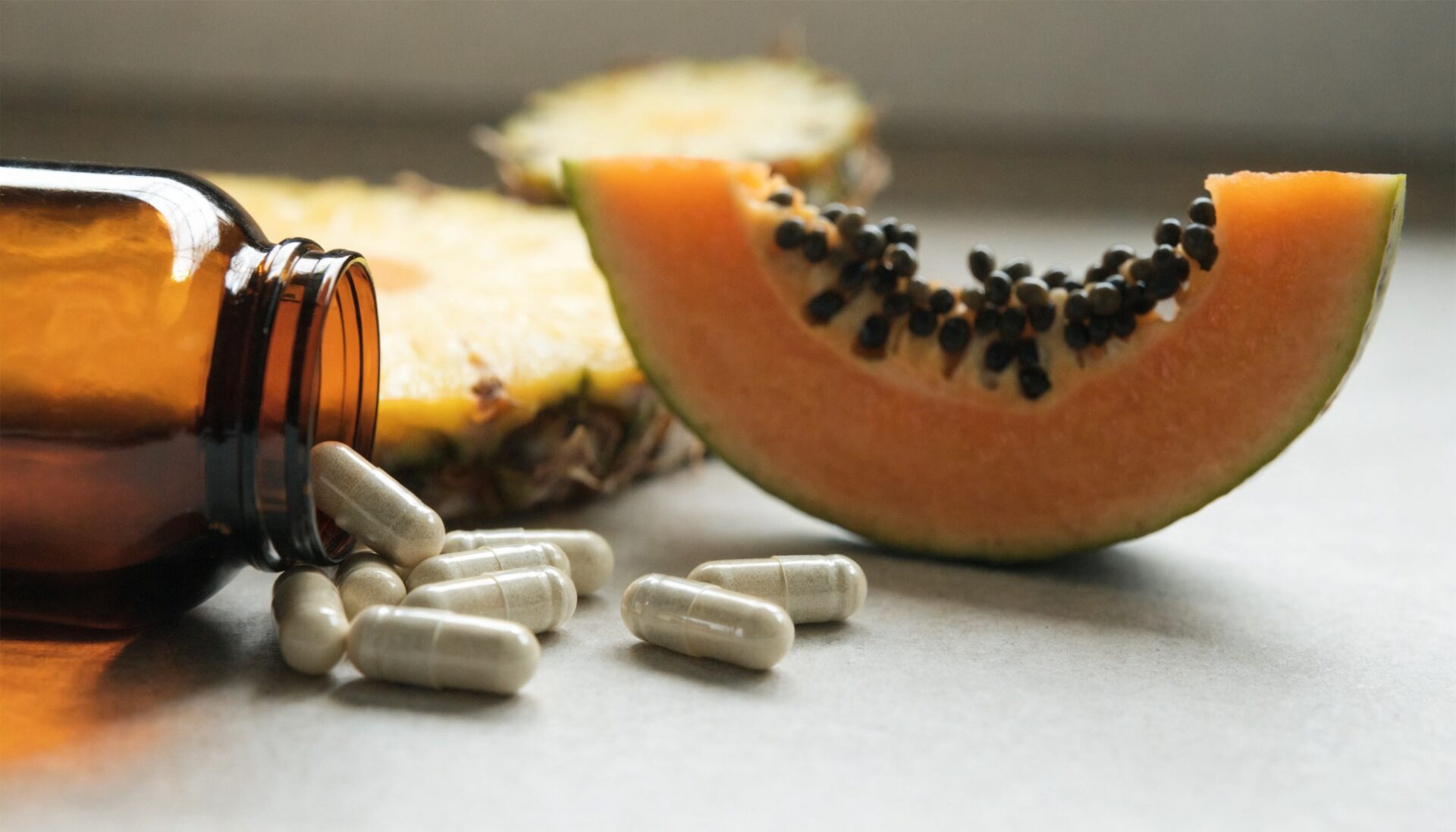
- Bromelain and papain — plant-derived proteases from pineapple and papaya, often added to broaden protein-digesting capacity
- Pancreatin — a combination enzyme blend (amylase, protease, and lipase together) derived from pancreatic tissue, most often animal-sourced
Key Health Benefits
Improved Nutrient Absorption
By more completely breaking down food, digestive enzymes support the body’s ability to absorb the nutrients within it.
Reduced Bloating and Gas
Enzyme blends targeting carbohydrate and fiber digestion are commonly used to ease bloating and gas after heavy or high-fiber meals.
Support for Lactose Intolerance
Supplemental lactase allows many people with lactose intolerance to consume dairy with fewer digestive symptoms.
Support Following Pancreatic Insufficiency
Prescription-strength pancreatic enzyme replacement therapy is used clinically for people whose pancreas doesn’t produce sufficient enzymes on its own, distinct from over-the-counter digestive enzyme supplements.
How and When to Take Digestive Enzymes
Digestive enzyme supplements are generally most effective when taken with the very first bite of a meal, so the enzymes are present as food enters the digestive tract rather than after digestion has already begun.
Common Forms Used in Formulation
- Multi-enzyme capsule and tablet blends combining amylase, protease, and lipase
- Single-enzyme formats, such as standalone lactase for dairy sensitivity
- Plant-based (fungal or fruit-derived) enzyme blends for vegan-formulated supplements
- Animal-derived pancreatin blends, often used in higher-potency formulations
Sourcing and Quality Considerations for Manufacturers
Buyers should request a certificate of analysis specifying enzyme activity units (such as DU, FCC lipase units, or HUT for protease) rather than relying on milligram weight alone, since enzyme potency is measured in activity, not mass. Confirm whether the enzyme blend is plant/fungal-derived or animal-derived, as this affects both vegan-labeling eligibility and stability across different pH environments in the finished product.
Safety and Side Effects
Digestive enzymes are generally well tolerated. Mild digestive upset can occur when starting supplementation. Enzyme supplements are not a substitute for prescription pancreatic enzyme replacement therapy in people with diagnosed pancreatic insufficiency, and individuals with conditions such as SIBO (small intestinal bacterial overgrowth) or active pancreatitis should consult a healthcare provider before use, since enzyme needs and tolerances vary by condition.
Frequently Asked Questions
Do digestive enzyme pills actually work?
For many people, especially those with mild digestive discomfort or specific intolerances like lactose sensitivity, enzyme supplements can meaningfully ease bloating and gas by supporting the breakdown of food that the body has difficulty processing on its own.
Are digestive enzymes okay for SIBO?
Some people with SIBO find enzyme supplements helpful for symptom management, but because SIBO involves bacterial overgrowth rather than an enzyme deficiency, it should be evaluated and managed under a healthcare provider’s guidance.
Can taking digestive enzymes help the pancreas?
Over-the-counter digestive enzymes can ease digestive symptoms, but they are not a treatment for pancreatic insufficiency; that condition requires prescription-strength pancreatic enzyme replacement therapy under medical supervision.
Should I take digestive enzymes with GLP-1 medications?
Some people using GLP-1 medications, which slow digestion, report that digestive enzymes help ease associated bloating or fullness, but this combination should be discussed with a healthcare provider given the specific way GLP-1 drugs affect gut motility.
Sourcing digestive enzymes for your formulation?
FC Materials supplies plant-based and animal-derived digestive enzyme blends for supplement manufacturing. Tell us your product needs and our team will respond with specs, pricing, and MOQ.