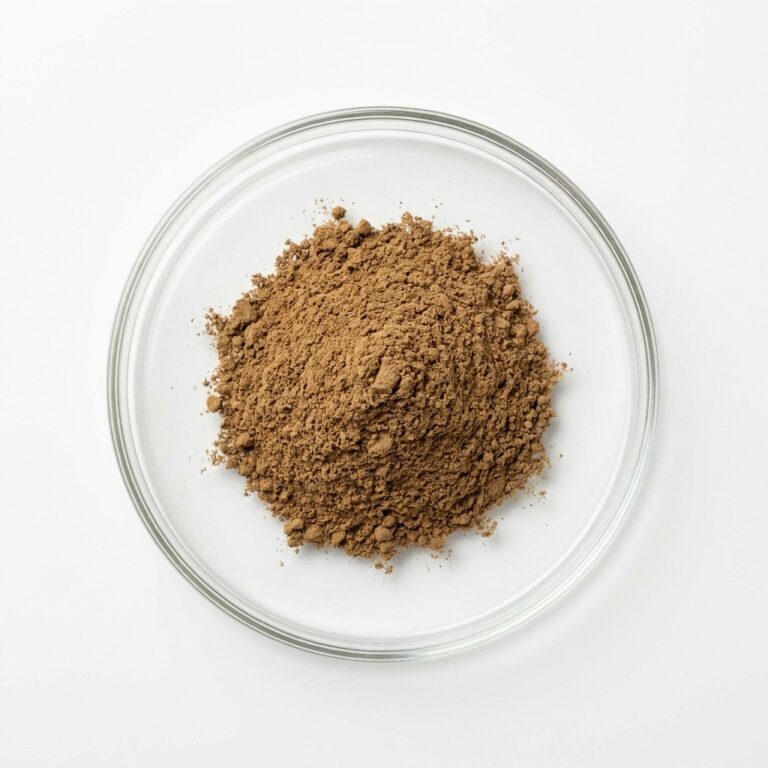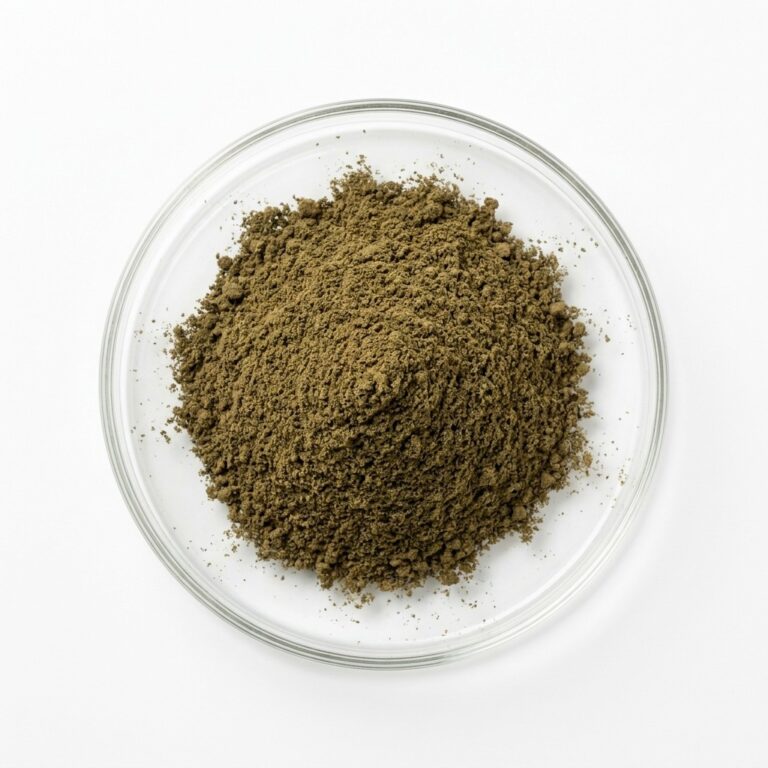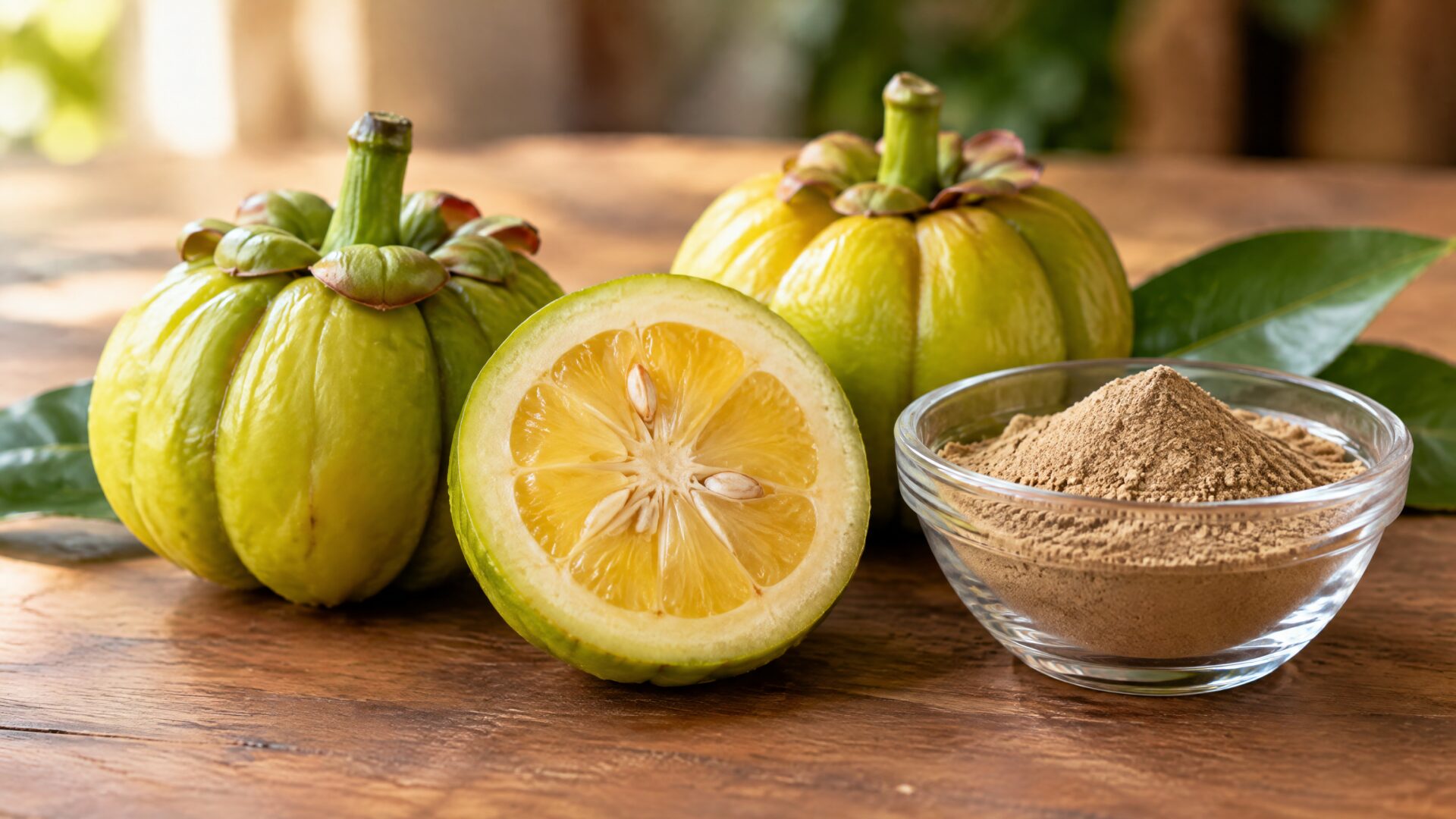

Garcinia cambogia is one of the best-known weight-management ingredients in the world. Its fruit rind is rich in hydroxycitric acid (HCA), the compound behind most of the marketing. This guide sets out what the human trials found, which is mixed. It also covers the liver-safety reports and what to check on a certificate of analysis.
What Is Garcinia Cambogia?
Garcinia cambogia, also called Malabar tamarind, is a small, pumpkin-shaped fruit from South and Southeast Asia. Its accepted botanical name is Garcinia gummi-gutta; Garcinia cambogia is a widely used synonym. The dried rind is extracted and standardised to a stated HCA content.
It is not the same plant as Malaysia’s asam gelugur, which is Garcinia atroviridis [7]. The two belong to the same genus and are both sour fruits, but research on one cannot be applied to the other.
How HCA Is Supposed to Work
HCA blocks an enzyme called ATP-citrate lyase. This enzyme helps the body turn excess carbohydrate into fat, so blocking it was expected to reduce fat build-up [3]. The theory is plausible, but it does not guarantee weight loss in people. That is what the trials below tested.
What the Research Says
The human evidence is mixed. Pooled trials show a small effect at best, and some well-designed trials found none.
- A small pooled effect. A 2020 meta-analysis of 8 randomised controlled trials (530 participants) found garcinia lowered body weight by 1.34 kg compared with placebo. BMI fell by 0.99, body fat by 0.42 percentage points and waist size by 4.16 cm [1].
- No meaningful effect in a wider review. A 2020 review of 54 placebo-controlled trials of herbal weight-loss products counted 2.5 kg or more as clinically significant. It found no effect for garcinia and concluded there was not enough evidence to recommend any of the herbs reviewed [2].
- A negative landmark trial. In a 12-week double-blind trial, 135 overweight adults took 1,500 mg of HCA a day or placebo, with a low-energy diet. Weight loss was 3.2 kg with HCA and 4.1 kg with placebo, a difference that was not significant [3].
- Blood sugar and liver enzymes. A 2025 meta-analysis of 9 publications (444 participants) found no significant effect on fasting blood sugar, insulin, ALT or AST. In subgroups, insulin rose in women, and insulin and blood sugar rose in people with a BMI of 30 or more [4].
These summaries describe published research on the ingredient. They are not claims for any finished product; claims on finished products must meet the rules of the market where they are sold.
Put simply, the best case is a difference of just over 1 kg. That is below the 2.5 kg one review set for clinical significance [1][2]. Most trials in that review lasted 12 weeks or less, so long-term effects are unknown [2]. Garcinia should not be presented as a stand-alone answer to weight loss.
Liver Safety: The Issue Buyers Must Know
Short trials have not shown changes in liver enzymes [4]. Case reports and registry data tell a more serious story, and brands should take them seriously.
- US registry data. The US Drug-Induced Liver Injury Network reviewed 1,418 patients enrolled from 2004 to 2018. It identified 22 high-confidence cases caused by garcinia: 5 with garcinia alone, 16 with garcinia plus green tea and 1 with ashwagandha [5].
- Severity. Injury appeared 13 to 223 days after starting, with a median of 51 days. Of these patients, 91% were hospitalised, one needed a liver transplant and one died [5].
- A possible genetic link. The HLA-B*35:01 gene variant was found in 55% of the garcinia cases, against 19% of patients injured by other supplements. The authors suggest an immune-mediated mechanism [5].
- Italian cases. An Italian case series described four women who developed acute liver failure while taking garcinia extract for weight loss [6].
These cases can be severe. Brands should carry out their own safety review, keep doses within published trial ranges, and think carefully before combining garcinia with green tea extract. Labels should advise people with liver conditions, or who take medicines, to speak to a healthcare professional first. The registry cases presented with jaundice [5], so labels can also advise users to stop and seek care if it appears.
HCA Content, Salts and Lactone
HCA percentage is the key specification, but the number alone can mislead. Free HCA is unstable and readily closes into HCA lactone, a different compound. Commercial extracts are therefore usually sold as calcium, potassium or mixed calcium-potassium salts.
Calcium salts dissolve poorly, while potassium salts dissolve well but absorb moisture. A “60% HCA” claim should say whether it means free HCA, HCA in the salt, or HCA including lactone. HPLC can report HCA and lactone separately. FC Materials supplies a garcinia cambogia extract standardised to 60% HCA by HPLC.
What to Check Before You Buy
- Identity. Species, plant part (fruit rind) and extraction solvent.
- HCA by HPLC. Stating free acid, salt basis and lactone separately.
- Salt form. Calcium, potassium or both, with mineral content.
- Loss on drying. Important for potassium salts, which take up moisture.
- Contaminants. Heavy metals, pesticide residues and residual solvents.
- Microbiology. Total plate count, yeast and mould, E. coli and Salmonella.
- Documents. Halal certificate, batch number, manufacture and retest dates.
- Claims and registration. Check which weight-management claims your market allows. For products sold in Malaysia, our FC | Comply team can advise on the NPRA documents you need.
Other ingredients often used in the weight-management category include glucomannan, chitosan and white kidney bean extract. Each has its own evidence base, which should be checked separately.
Frequently Asked Questions
Does garcinia cambogia help you lose weight?
The evidence is mixed. One meta-analysis found about 1.3 kg more weight loss than placebo [1]. Another review and a 12-week trial found no meaningful effect [2][3].
Is garcinia cambogia the same as asam gelugur?
No. Asam gelugur is Garcinia atroviridis, a related Malaysian fruit [7]. Garcinia cambogia is Garcinia gummi-gutta. The research on garcinia cambogia does not apply to asam gelugur.
Is garcinia cambogia safe for the liver?
Short trials found no change in liver enzymes [4]. However, serious liver injury has been reported, including a transplant and a death in US registry data [5][6]. People with liver conditions should speak to a doctor before using it.
What is hydroxycitric acid (HCA)?
HCA is the main acid in garcinia rind. It inhibits ATP-citrate lyase, an enzyme involved in making fat from carbohydrate [3]. Extracts are standardised by their HCA content.
What garcinia grade does FC Materials supply?
Our Garcinia Cambogia Extract is standardised to 60% HCA by HPLC and is Halal-certified. Ask us for the specification and certificate of analysis, including the salt form.
References
- Golzarand M, Omidian M, Toolabi K. Effect of Garcinia cambogia supplement on obesity indices: a systematic review and dose-response meta-analysis. Complement Ther Med. 2020;52:102451. doi:10.1016/j.ctim.2020.102451
- Maunder A, Bessell E, Lauche R, et al. Effectiveness of herbal medicines for weight loss: a systematic review and meta-analysis of randomized controlled trials. Diabetes Obes Metab. 2020;22(6):891-903. doi:10.1111/dom.13973
- Heymsfield SB, Allison DB, Vasselli JR, et al. Garcinia cambogia (hydroxycitric acid) as a potential antiobesity agent: a randomized controlled trial. JAMA. 1998;280(18):1596-600. doi:10.1001/jama.280.18.1596
- Tavakoli S, Amini MR, Rabiee R, et al. The effects of Garcinia cambogia on glycaemic control and liver enzymes in adults: a systematic review and meta-analysis of randomised controlled trials. J Nutr Sci. 2025;14:e8. doi:10.1017/jns.2024.91
- Vuppalanchi R, Bonkovsky HL, Ahmad J, et al. Garcinia cambogia, either alone or in combination with green tea, causes moderate to severe liver injury. Clin Gastroenterol Hepatol. 2022;20(6):e1416-25. doi:10.1016/j.cgh.2021.08.015
- Crescioli G, Lombardi N, Bettiol A, et al. Acute liver injury following Garcinia cambogia weight-loss supplementation: case series and literature review. Intern Emerg Med. 2018;13(6):857-72. doi:10.1007/s11739-018-1880-4
- Nursakinah I, Zulkhairi HA, Norhafizah M, et al. Nutritional content and in vitro antioxidant potential of Garcinia atroviridis (Asam gelugor) leaves and fruits. Malays J Nutr. 2012;18(3):363-71. PubMed 24568077
Source it from FC Materials: Garcinia cambogia extract (60% HCA, HPLC) – specification, COA and Halal documents on request.
Sourcing garcinia cambogia extract for your formulation?
FC Materials supplies garcinia cambogia extract standardised to 60% HCA (HPLC) to supplement manufacturers. Tell us your product needs and our team will respond with specs, pricing and MOQ.