
Pomegranate has carried a reputation as a symbol of health and fertility across cultures for thousands of years, and modern research on its polyphenol content has kept that reputation firmly intact. With “pomegranate benefits” drawing over 40,000 monthly searches and its juice form drawing over 90,000, pomegranate remains one of the most consistently popular fruit ingredients in both the food and supplement categories.
What Is Pomegranate?
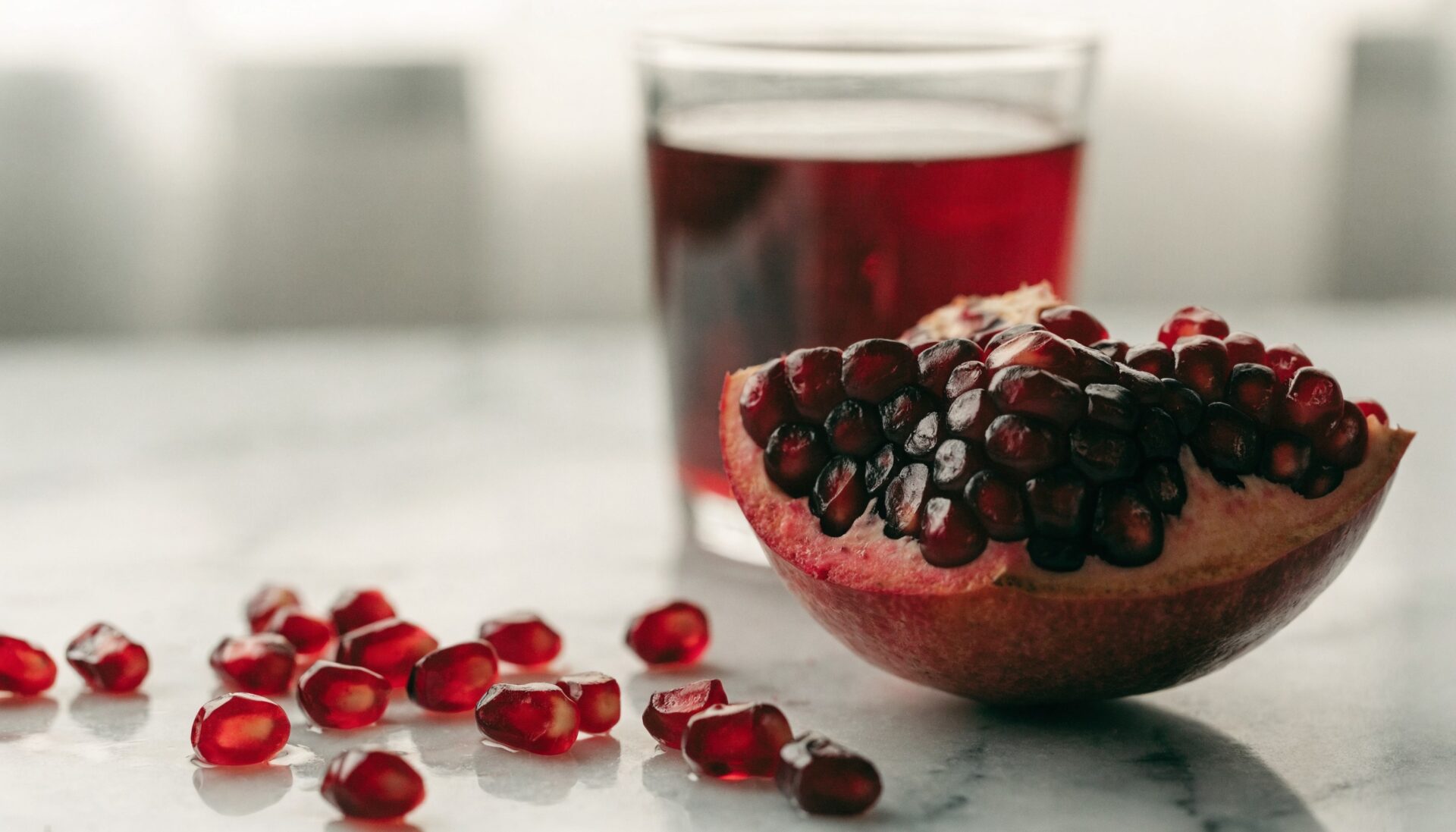
Pomegranate (Punica granatum) is a fruit-bearing shrub native to the region spanning Iran to northern India, now cultivated widely across the Mediterranean, Middle East, and parts of the Americas. The fruit’s edible arils, the juicy, seed-containing sacs inside its tough outer skin, are the source of pomegranate juice, and are also processed into extract and powder for supplement and food applications where the fresh fruit isn’t practical to use directly.
Key Health Benefits of Pomegranate
Antioxidant Support
Pomegranate is exceptionally rich in punicalagins and other polyphenols, compounds studied for their antioxidant capacity, which is often cited as higher than that of green tea or red wine on a per-serving basis, a comparison frequently used in pomegranate’s marketing positioning.
Heart Health
Pomegranate’s polyphenol content has been studied for a potential role in supporting healthy blood pressure and cholesterol levels, making it a common ingredient in heart-health-positioned juice and supplement products. Gut bacteria also convert pomegranate’s ellagitannins into urolithin A, a postbiotic compound studied separately for its role in supporting cellular energy and muscle function — part of why pomegranate and urolithin A formulations are often discussed together in the healthy-aging category.
Skin Health
Pomegranate benefits for skin are a fast-growing search category, driven by both ingestible antioxidant claims and a wave of interest in pomegranate extract as a topical skincare ingredient for brightening and antioxidant protection.
Women’s Health
Pomegranate benefits for female health is one of the largest specific search segments for this ingredient, spanning iron content, general wellness, and traditional associations with fertility and hormonal balance.
Pomegranate Benefits During Pregnancy
Pomegranate benefits during pregnancy is a notably large and fast-growing search segment, reflecting consumer interest in the fruit’s iron and antioxidant content during a nutritionally demanding life stage. As with any ingredient marketed toward pregnancy, product content in this category should stick to well-supported, cautious claims and standard healthcare-provider guidance rather than specific outcome promises.
Common Forms Used in Formulation
- Juice concentrate, the most familiar consumer format, used in beverages and liquid supplements.
- Whole fruit or peel extract, standardized for punicalagin or ellagic acid content, the preferred format for supplement capsules and tablets making a specific antioxidant claim.
- Freeze-dried powder, used in food applications, smoothie mixes, and capsule fills where a full-spectrum ingredient is preferred over an isolated extract.
Sourcing and Quality Considerations for Manufacturers
Pomegranate extract quality is largely defined by punicalagin and ellagic acid content, along with whether the extract is derived from the fruit’s juice, arils, or peel (peel extract, though less familiar to consumers, is often higher in punicalagins). Manufacturers should request standardization percentage, extraction source (juice vs. peel), and country-of-origin documentation, since growing region and processing method both meaningfully affect potency.
Safety and Side Effects
Pomegranate is well tolerated by most people, with no widely reported serious side effects at typical dietary or supplemental doses. Individuals with kidney disease should discuss pomegranate consumption with their care team given its potassium content. Pomegranate juice can interact with certain medications, including some blood pressure and cholesterol medications, in a manner similar to grapefruit juice, so products intended for at-risk populations should carry a standard consult-your-doctor note.
Frequently Asked Questions
Is pomegranate juice as beneficial as pomegranate extract?
Both retain key polyphenol compounds, though extract formats (particularly from the peel) are typically more concentrated for punicalagin content, making them better suited to products making a specific, measurable antioxidant claim.
What is the best time to consume pomegranate?
This is one of the most searched questions about pomegranate, though there’s no strong evidence that timing meaningfully changes its health effects; it’s more a matter of consumer habit and product positioning (e.g., a morning juice vs. an evening supplement).
Can pomegranate help with iron levels?
Pomegranate contains a modest amount of iron and is often discussed alongside iron-related health content, though it’s better positioned as a supporting antioxidant ingredient than a primary iron source in formulation.
Sourcing pomegranate extract for your formulation?
FC Materials supplies pomegranate extract and other antioxidant-rich botanical ingredients to supplement, nutraceutical, and food manufacturers. Tell us your product needs and our team will respond with specs, pricing, and MOQ.
Is it better to eat pomegranate seeds or drink the juice?
Whole arils (seeds) retain the fruit’s fiber content, while juice concentrates the sugars without the fiber; for a formulation making a fiber or whole-fruit claim, arils or whole-fruit powder are the more accurate choice.