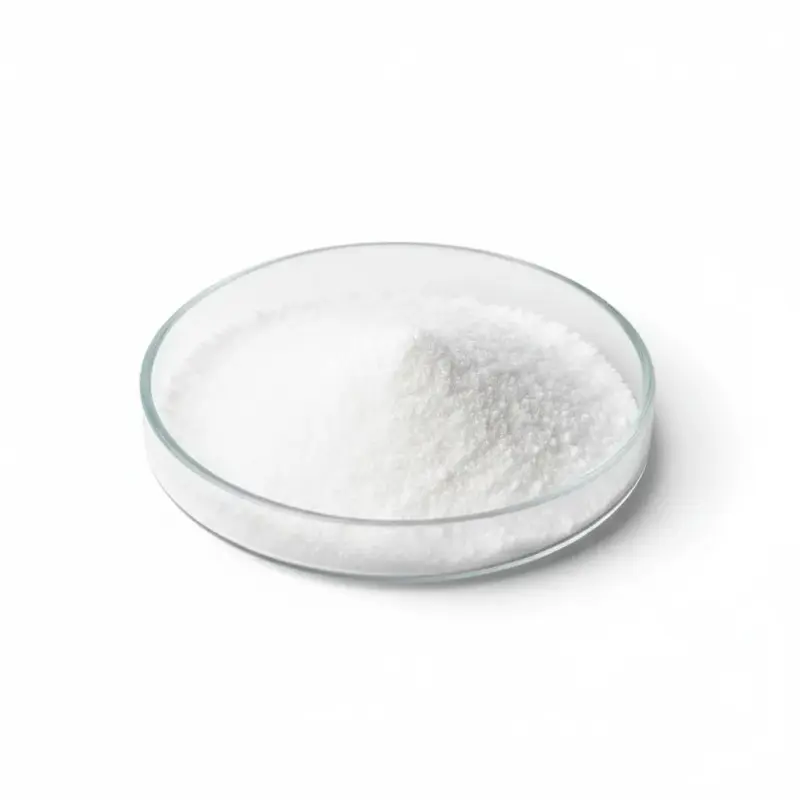
Menthol Crystal is a high-purity natural cooling active derived from peppermint or other mint oils through fractional distillation and crystallisation, with a chromatographic purity of more than 98%. This Halal-certified ingredient consists of white, prismatic crystals of l-menthol — the primary active compound responsible for the characteristic cooling sensation of mint — which activates TRPM8 cold receptors in the skin to produce an intense cooling effect without any actual temperature change. It is one of the most widely used actives in oral care, topical analgesics, cooling personal care, and food flavouring globally.
Applications:
- Oral Care (toothpastes, mouthwashes, breath fresheners — defining cooling mint active)
- Topical Pain Relief (cooling muscle balms, analgesic patches, pain relief formulations)
- Personal Care (cooling deodorants, after-sun, refreshing body care, cooling face masks)
- Food & Beverage Flavouring (mint-flavoured confectionery, chewing gum, beverages)
Key Features & Benefits:
- Chromatographic purity >98% – high purity natural l-menthol crystals
- Halal-certified – natural mint-derived cooling active
- Intense cooling sensation via TRPM8 receptor activation
- The defining cooling active in oral care, pain relief, and refreshing personal care
- Versatile across oral care, topical, food, and personal care applications
Natural and synthetic menthol
Natural menthol is crystallised mainly from cornmint oil (Mentha arvensis); synthetic l-menthol is the same molecule made by chemical routes. What decides the cooling effect is the isomer. Only l-menthol gives the strong, clean cooling sensation; racemic dl-menthol, which is also sold simply as “menthol”, is noticeably weaker and harsher. The product name will not tell you which one is in the drum — the specific optical rotation on the certificate will.
Formulation notes
Menthol melts at around 42 °C and slowly sublimes at room temperature, so it is lost from open vessels and from heated phases. Dissolve it in the oil, alcohol or flavour phase, add it late in the process, and keep containers closed. Cooling intensity rises with concentration, but so do irritation and a burning sensation, and oral care, balms and cooling body care sit at very different use levels. Use levels in topical pain-relief products are regulated differently from market to market, so confirm the limit for yours. Menthol is often combined with other cooling agents to extend the effect without raising the menthol dose.
Halal certification
This ingredient is listed as “Menthol Crystal” on FC Materials’ Halal certificate (Sijil Pengesahan Halal, MS 1500:2019), issued through the Penang Islamic Religious Council (MAINPP) and the Department of Islamic Development Malaysia (JAKIM). Reference JAKIM.700-2/3/1 105-07/2022, valid until 15 October 2028. Ask us for a copy.
What the research says
- A 2026 meta-analysis of 16 studies (191 participants) found topical menthol gave a small improvement in exercise performance (g = 0.27). [1]
- Menthol made people feel cooler and lowered perceived exertion, but core body temperature did not change. Benefits in heat of 30 °C or more were smaller and not significant. [1]
- A 2024 meta-analysis of 10 studies found that menthol mouth rinsing did not significantly improve exercise capacity or performance. [2]
- A 2020 meta-analysis of randomised trials found cooler thermal sensation with menthol, with no difference in sweating, deep body temperature or heart rate. [3]
- A 2026 network meta-analysis cautions that menthol may mask the feeling of heat without reducing heat strain. These studies concern exercise, not oral care or pain relief. [4]
These summaries describe published research on the ingredient. They are not claims for any finished product; claims on finished products must meet the rules of the market where they are sold.
References
- Wang Y, et al. Acute topical menthol application and exercise performance: a systematic review and meta-analysis of perceptual and physiological responses. J Therm Biol. 2026;140:104529. doi:10.1016/j.jtherbio.2026.104529
- Gavel EH, et al. How cool is that? The effects of menthol mouth rinsing on exercise capacity and performance: a systematic review and meta-analysis. Sports Med Open. 2024;10(1):18. doi:10.1186/s40798-024-00679-8
- Keringer P, et al. Menthol can be safely applied to improve thermal perception during physical exercise: a meta-analysis of randomized controlled trials. Sci Rep. 2020;10(1):13636. doi:10.1038/s41598-020-70499-9
- Zhu Y, et al. Effects of different menthol administration routes on endurance performance and physiological responses in the heat: a network meta-analysis. Front Nutr. 2026;13:1833420. doi:10.3389/fnut.2026.1833420
What to ask for on the certificate of analysis
- Assay by GC, reported as l-menthol.
- Specific optical rotation — the check that confirms l-menthol rather than racemic dl-menthol.
- Melting range and appearance (colourless crystals, no yellowing).
- Non-volatile residue and heavy metals.
- An origin statement if you plan to market the product as natural.
Related ingredients
For the mint oil itself and for warming actives often paired with menthol in balms, see Peppermint Oil, Methyl Salicylate and Wintergreen Oil.