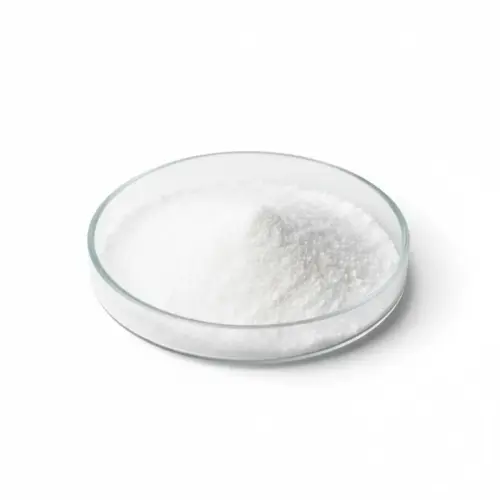
Trilion B (Disodium EDTA / Ethylenediaminetetraacetic Acid Disodium Salt) is a chelating agent with a pH value of 10.5–12.5 in 1% water solution, Halal-certified. One of the most widely used chelating agents in personal care, pharmaceutical, and industrial applications, Trilion B/Disodium EDTA functions by binding and sequestering calcium and magnesium metal ions (found in hard water and raw materials) that would otherwise interfere with formulation stability, preservation efficacy, and product performance. By chelating these metal ions, EDTA enhances the effectiveness of preservatives, improves formulation clarity, prevents rancidity, and stabilises colour and fragrance in personal care products.
Applications:
- Personal Care (chelating agent and preservative booster in shampoos, lotions, creams)
- Oral Care (chelating agent in toothpastes for tartar control and formulation stability)
- Pharmaceutical (stabiliser and chelating agent in topical and oral liquid formulations)
- Industrial Cleaning (scale and metal deposit prevention in industrial cleaning formulations)
Key Features & Benefits:
- pH 10.5–12.5 (1% in water) – highly alkaline chelating agent
- Halal-certified – suitable for Halal-compliant personal care formulations
- Powerful chelation of calcium and magnesium ions
- Enhances preservative efficacy and formulation stability
- Prevents rancidity and stabilises colour and fragrance in personal care products
Disodium or tetrasodium EDTA
EDTA is sold mainly as disodium EDTA and tetrasodium EDTA, and they behave differently. Disodium EDTA gives a mildly acidic solution, while tetrasodium EDTA is strongly alkaline. Both bind calcium, magnesium, iron and copper ions, but the pH difference changes how they fit your formula and how much pH adjustment you need. Confirm the identity and the pH of a 1% solution on the certificate before use.
What it does in a formula
By binding metal ions from hard water and raw materials, EDTA helps preservatives such as DMDM Hydantoin work, improves foam and clarity in SLES systems, and slows the colour and odour changes that metals catalyse. It is typically used at low levels; check the limits for your product category.
Alternatives
EDTA biodegrades poorly, and some brands avoid it for that reason. Biodegradable chelating agents such as GLDA or sodium phytate are used in “greener” formulas, although they may need higher use levels.
What to ask for on the certificate of analysis
- Identity: disodium or tetrasodium EDTA (and hydrate)
- Assay (%) by titration and pH of a 1% solution
- Nitrilotriacetic acid (NTA), iron and heavy metals
- Batch number, manufacture and retest dates; safety data sheet (SDS)