
Rosemary has flavored Mediterranean cooking for millennia, but its more interesting modern role happens behind the scenes: rosemary extract is one of the food industry’s most widely used natural preservatives, a job that has little to do with its familiar herbal aroma.
What Is Rosemary Extract?
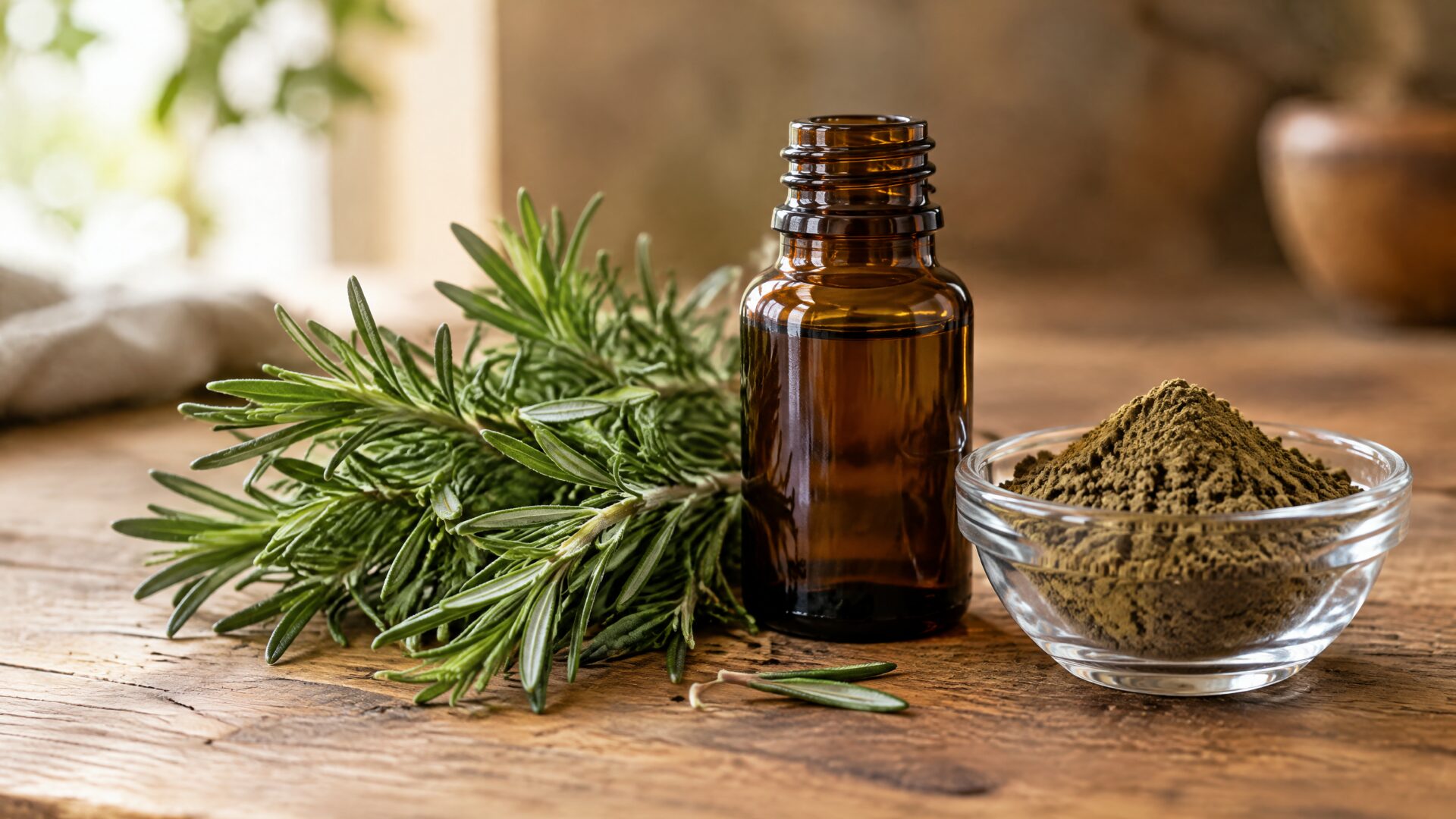
Rosemary extract is derived from the leaves of Rosmarinus officinalis and is rich in carnosic acid and carnosol, potent antioxidant compounds responsible for both its studied health properties and its practical use as a natural preservative. Food-grade rosemary extract is typically deodorized and standardized for carnosic acid content, distinguishing it from the culinary herb or essential oil, which retain rosemary’s characteristic aroma.
Rosemary Extract as a Natural Preservative
In food manufacturing, rosemary extract’s antioxidant compounds slow oxidative rancidity in fats and oils, extending shelf life and preserving flavor in products like packaged meats, snack foods, and cooking oils. It’s one of the most common natural alternatives to synthetic antioxidants like BHA and BHT, appealing to manufacturers pursuing clean-label positioning while still needing reliable oxidative stability.
Key Health Benefits
Antioxidant Support
Rosemary extract’s carnosic acid and carnosol content gives it strong antioxidant activity, helping combat oxidative stress both in food matrices and, when consumed, potentially within the body.
Cognitive and Mood Support
Rosemary has a traditional association with mental clarity and memory, and modern research has explored its antioxidant compounds’ potential role in supporting cognitive function, an area of ongoing scientific interest.
Digestive Comfort
Rosemary extract’s antioxidant and mild anti-inflammatory properties are traditionally associated with digestive comfort, though this application is less rigorously studied than its preservative use.
Hair and Scalp Support
Rosemary oil and extract have become popular in hair care formulations, with growing consumer interest in rosemary’s potential to support scalp circulation and hair health, an area with emerging but still limited clinical research.
Common Forms Used in Formulation
- Deodorized rosemary extract, standardized for carnosic acid content, used as a natural preservative in food and cosmetic applications
- Rosemary essential oil, retaining the herb’s aromatic profile, used in aromatherapy and personal care
- Rosemary powder or dried leaf, used for culinary and traditional supplement applications
Sourcing and Quality Considerations for Manufacturers
Buyers should request a certificate of analysis confirming carnosic acid and carnosol content, the key markers of antioxidant potency for preservative applications, along with confirmation of whether the extract is deodorized (important for food applications where rosemary’s flavor and aroma are undesired). Manufacturers should also verify solvent extraction method and residual solvent testing, since this affects both regulatory compliance and clean-label positioning.
Safety and Side Effects
Rosemary extract is well tolerated at typical food-preservative and supplemental doses. In supplement form, high doses have occasionally been associated with digestive upset, and rosemary extract may have mild blood-thinning properties, so individuals on anticoagulant medication should consult a healthcare provider before taking concentrated supplemental doses. Topical rosemary oil should be diluted before skin or scalp application to avoid irritation.
Frequently Asked Questions
How does rosemary extract work as a preservative?
Its concentrated carnosic acid and carnosol content acts as an antioxidant, slowing the oxidative rancidity process that causes fats and oils to spoil, extending shelf life without synthetic preservatives.
Is rosemary extract better than synthetic antioxidants like BHA and BHT?
Rosemary extract offers comparable oxidative stability for many applications while supporting clean-label and natural-ingredient positioning, though the right choice depends on the specific product’s stability requirements and target market.
Can rosemary extract help with hair growth?
Rosemary oil and extract have growing popularity in hair care for potentially supporting scalp circulation, though the clinical evidence base is still developing compared to its well-established preservative use.
Is rosemary extract safe for daily use?
At typical culinary and formulation-level doses, yes; those on blood-thinning medication should consult a healthcare provider before taking concentrated supplemental doses due to rosemary’s mild blood-thinning properties.
Sourcing rosemary extract for your formulation?
FC Materials supplies standardized rosemary extract for food preservation, supplement, and personal care manufacturing. Tell us your product needs and our team will respond with specs, pricing, and MOQ.