
Alpha arbutin has become the go-to brightening active for formulators who want visible results on dark spots without the safety baggage of hydroquinone. It’s one of the most in-demand ingredients in modern skincare, and understanding how it works – and how to source it well – matters for anyone building a serum or cream around it.
What Is Alpha Arbutin?
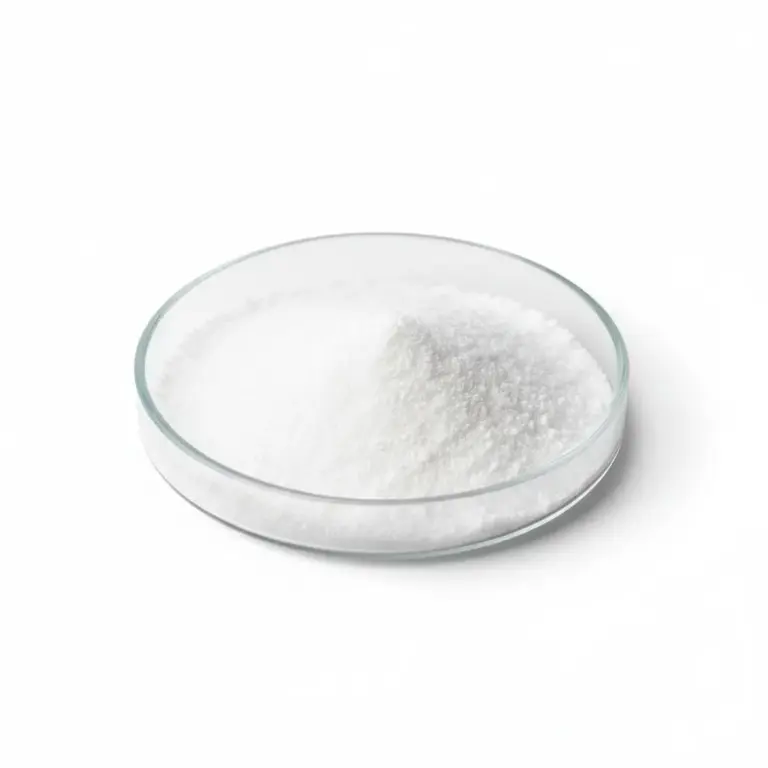
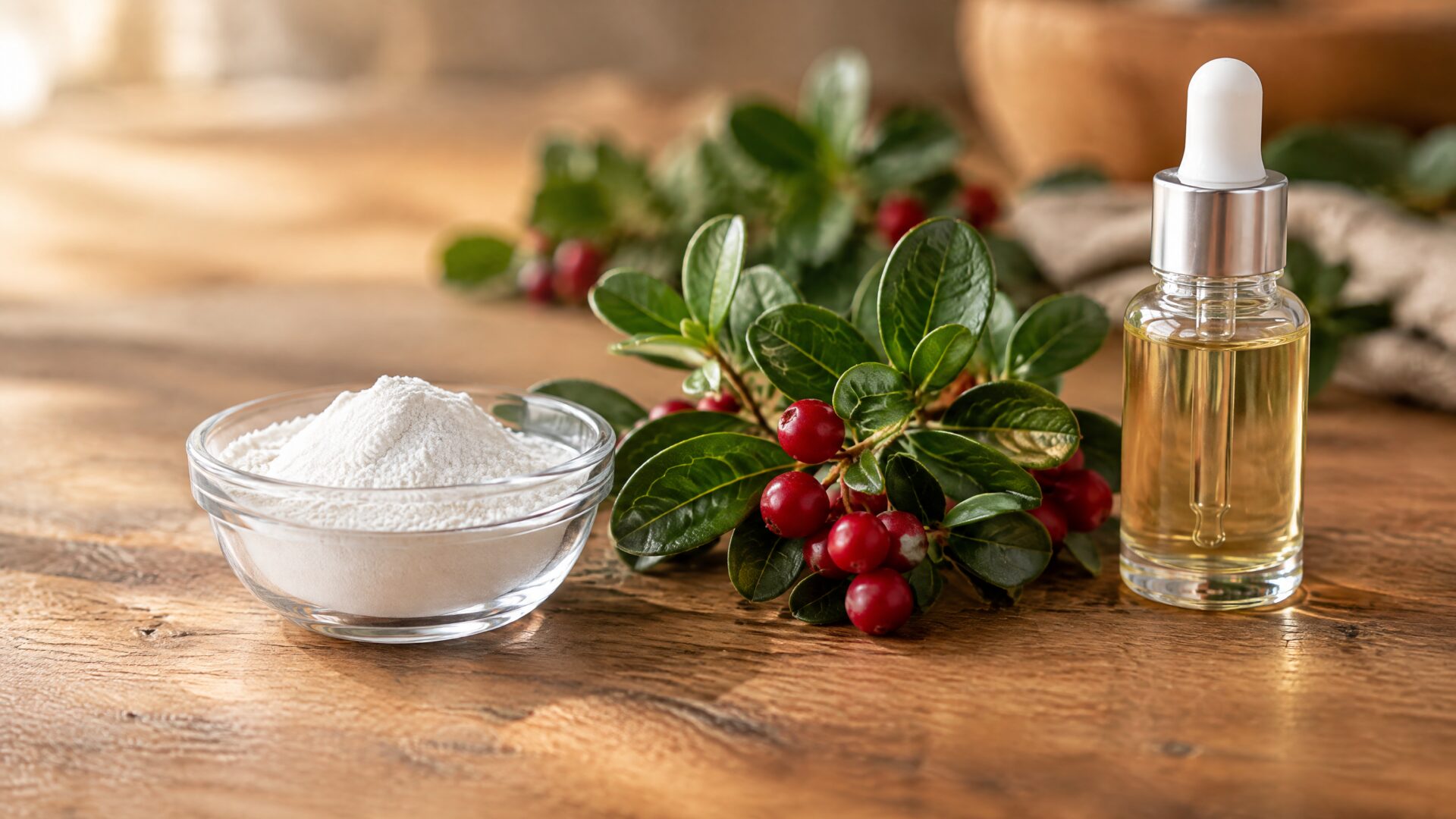
Alpha arbutin is a naturally-derived skin-brightening compound, a glycosylated form of hydroquinone originally found in the bearberry plant but now produced through biofermentation for purity and consistency. It works as a gentler, more stable alternative to hydroquinone, delivering pigmentation-fading benefits without the same irritation risk. In finished products it’s supplied as a fine white, water-soluble powder that formulators dissolve into serums, essences, and creams.
Key Benefits
Fades Dark Spots and Hyperpigmentation
Alpha arbutin works by inhibiting tyrosinase, the enzyme responsible for melanin production. By slowing melanin synthesis, it fades existing dark spots and helps prevent new ones from forming – its primary and best-documented benefit.
Evens Skin Tone and Brightens
Beyond targeting individual spots, regular use helps even out overall skin tone and reduce dullness, delivering the “glow” that brightening products promise.
Gentle and Broadly Compatible
Compared with harsher lightening agents like hydroquinone and kojic acid, alpha arbutin is notably gentle and well-tolerated across skin types, including sensitive skin – a major reason for its popularity in modern clean-beauty formulations.
Stable and Formulator-Friendly
Alpha arbutin is more stable than its beta counterpart and pairs well with other actives such as niacinamide and vitamin C derivatives, giving formulators flexibility to build multi-active brightening systems.
Common Forms Used in Formulation
- Alpha arbutin powder (cosmetic grade) – the standard water-soluble active for serums, essences, and creams, typically used at 1–2%.
- Pre-dissolved concentrates – used by manufacturers who prefer a liquid active to simplify batching.
Sourcing and Quality Considerations for Manufacturers
Purity is the critical variable: alpha arbutin should be sourced at high assay (typically ≥99%) and buyers should confirm it’s the alpha (not beta) isomer, since alpha arbutin is more stable and more effective. Because it can hydrolyze into hydroquinone under heat or low pH, a certificate of analysis should confirm free hydroquinone content is within regulatory limits – an essential compliance check given tightening global regulation of skin-lightening ingredients. Verify biofermentation source, heavy metal testing, and appropriate storage/handling guidance to protect stability in the finished product.
Safety and Side Effects
Alpha arbutin is considered safe and well-tolerated for topical use across skin types. Some users may experience mild irritation or redness, particularly at higher concentrations, so patch testing is advisable. As with all brightening actives, daily broad-spectrum sunscreen is essential during use, since treated skin and fading pigment are more vulnerable to UV.
Frequently Asked Questions
What does alpha arbutin do for skin?
Alpha arbutin fades dark spots and hyperpigmentation, evens skin tone, and brightens the complexion by slowing melanin production.
Is alpha arbutin better than hydroquinone?
Alpha arbutin is a gentler, more stable alternative to hydroquinone that delivers brightening benefits with a lower risk of irritation, making it preferred for over-the-counter and sensitive-skin formulations.
Can alpha arbutin be used with niacinamide or vitamin C?
Yes. Alpha arbutin pairs well with niacinamide and vitamin C derivatives, and combining complementary brightening actives is a common formulation strategy.
What percentage of alpha arbutin is effective?
Alpha arbutin is typically used at 1–2% in cosmetic formulations, which balances efficacy with skin tolerance.
Sourcing alpha arbutin for your formulation?
FC Materials supplies high-purity (≥99%) biofermentation alpha arbutin for cosmetic and skincare manufacturers. Tell us your product needs and our team will respond with specs, pricing, and MOQ.