
Tiger milk mushroom has been called Malaysia’s lost national treasure – a rainforest fungus that indigenous Orang Asli communities have relied on for generations, and one that Malaysian researchers have spent the last two decades turning into one of the country’s most successful homegrown nutraceutical exports. With searches for tiger milk mushroom rising sharply and Malaysian supplement brands leading the category worldwide, it’s worth understanding exactly what this ingredient is, what the science actually shows, and how it’s sourced responsibly at commercial scale.
What Is Tiger Milk Mushroom?
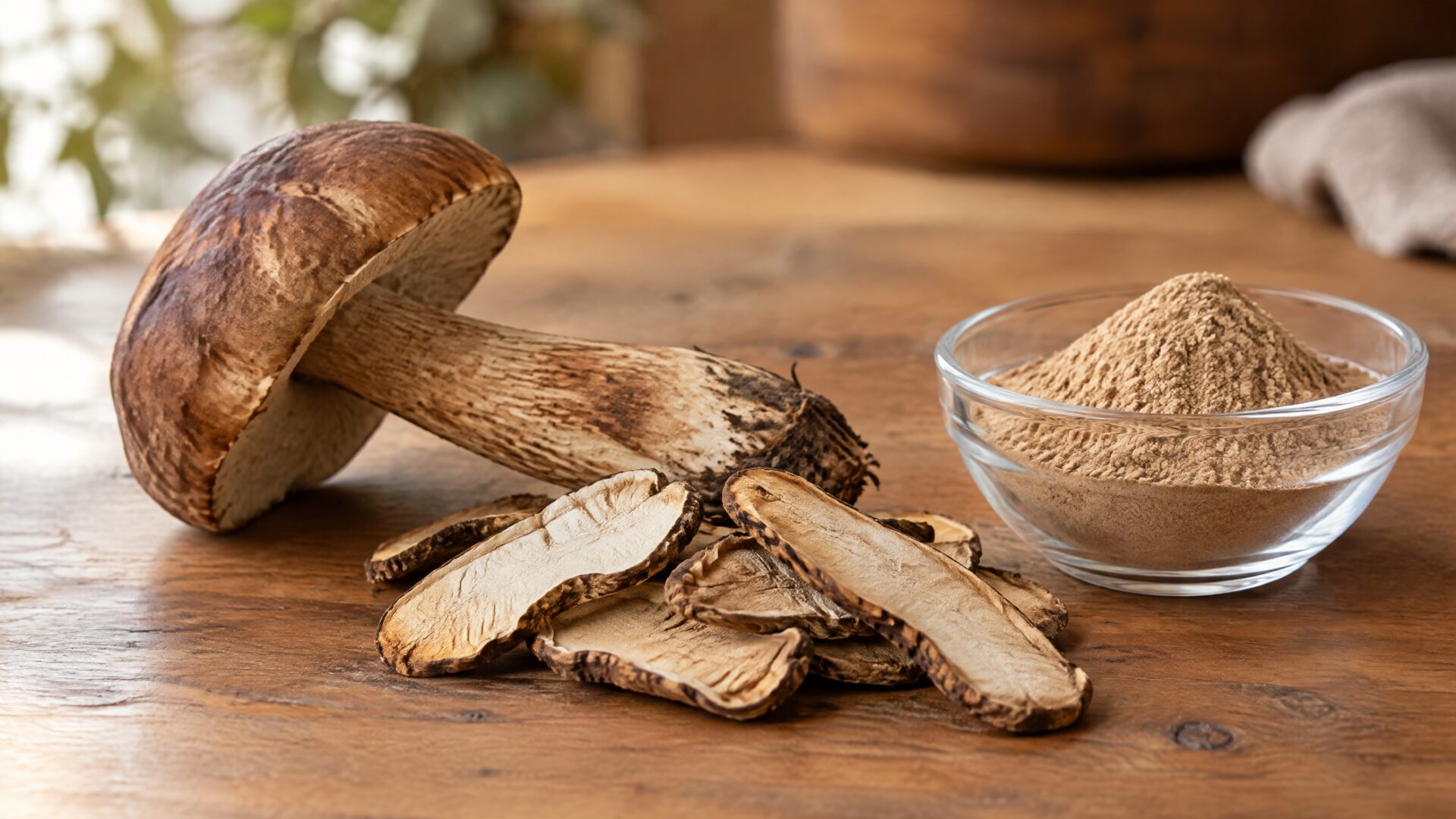
Tiger milk mushroom (Lignosus rhinocerotis) is a rare fungus native to the tropical rainforests of Malaysia, Indonesia, Thailand, southern China, and the Philippines. Unlike most culinary mushrooms, the part used is not the cap or stem but the sclerotium – a dense, tuber-like underground structure the fungus develops to store nutrients and survive dry seasons. It can take years for a wild sclerotium to reach a usable size, which is part of why the ingredient has historically been scarce and highly prized.
The name comes from Malaysian folklore: legend holds that the mushroom sprouts where a tigress’s milk falls to the forest floor as she nurses her cubs. Orang Asli and other native communities have used the sclerotium for centuries as a general tonic, most famously for cough and asthma, [5][6] and it has long been sold in traditional medicine halls across Malaysia and Singapore under names like “fungus of the tiger” (cendawan susu harimau) or simply “tiger’s milk.”
Why Tiger Milk Mushroom Is a Big Deal in Malaysia
Malaysia has positioned tiger milk mushroom as a flagship national bioresource. The cultivated sclerotium known as TM02® is produced by the Malaysian company LiGNO Biotech using its proprietary solid-state fermentation technology, which allows the sclerotium to be grown at scale instead of being harvested from the wild. [5] This turned a scarce, slow-growing rainforest fungus into a scalable commercial ingredient, and Malaysian-formulated tiger milk mushroom products – from lozenges to capsules to ready-to-drink tonics – are sold across Southeast Asia and beyond.
Key Benefits
Respiratory Health
Tiger milk mushroom’s best-documented traditional use is respiratory support. A 2021 open-label study of 50 volunteers reported fewer respiratory symptoms, better lung function and changes in immune and antioxidant markers after three months, but it had no placebo group. A 2026 placebo-controlled trial in allergic rhinitis also reported fewer nasal symptoms. Both studies were small; see What the research says below.
Immune Support
The sclerotium is rich in polysaccharides and beta-glucans – compound classes widely studied across the mushroom category for their ability to modulate immune response. This is a key reason tiger milk mushroom has traditionally been used as a general wellness tonic rather than a single-symptom remedy, and why it’s increasingly formulated alongside other immune-supportive botanicals.
Anti-Inflammatory & Antioxidant Activity
Laboratory studies on Lignosus rhinocerotis extracts have documented measurable anti-inflammatory and antioxidant effects. Early-stage research has also explored anticancer potential, though this remains an active area of ongoing scientific investigation rather than an established clinical outcome.
Traditional Digestive and General Tonic Use
Beyond respiratory support, traditional practitioners have used tiger milk mushroom sclerotium as a general tonic for fatigue, wound healing, and digestive complaints – uses that predate modern clinical research but continue to shape how the ingredient is formulated and marketed today, particularly in Malaysia and Singapore.
What the Research Says
- A 2021 open-label study gave 50 volunteers 300 mg of tiger milk mushroom twice a day for three months. Respiratory symptoms and lung function improved, and some immune and antioxidant blood markers changed. There was no placebo group, so the study cannot show that the mushroom caused these changes; one author is from a private company’s research and development department. [1]
- A 2026 randomised, placebo-controlled trial of the cultivated strain TM02® in 108 people with allergic rhinitis found lower nasal symptom scores and better rhinitis control after 30 days. Only 56 participants were included in the main analysis, and the blood immune markers measured did not change significantly. Side effects did not differ from placebo. [2]
- A 2025 randomised, placebo-controlled trial in 52 people who had finished surgery and chemotherapy for localised breast cancer found TM02® (1,040 mg a day for 6 months) well tolerated, with only a trend towards better physical functioning and less fatigue compared with placebo. [3]
- A 2026 systematic review on asthma found that most evidence comes from animal and laboratory studies, with a single small human study, and called for larger, high-quality trials. [4]
These summaries describe published research on the ingredient. They are not claims for any finished product; claims on finished products must meet the rules of the market where they are sold.
References
- Tan ESS, Leo TK, Tan CK. Effect of tiger milk mushroom (Lignosus rhinocerus) supplementation on respiratory health, immunity and antioxidant status: an open-label prospective study. Sci Rep. 2021;11(1):11781. doi:10.1038/s41598-021-91256-6
- Tan HD, et al. Clinical efficacy of TM02® in allergic rhinitis: significant symptom alleviation associated with IL-5 downregulation and reduced allergic inflammation. Curr Issues Mol Biol. 2026;48(9):898. doi:10.3390/cimb48090898
- Eng JY, et al. Efficacy and safety of Lignosus rhinocerus (Cooke) Ryvarden TM02® supplementation for immune-challenged patients with localised breast cancer in remission: a randomised controlled trial. BMC Complement Med Ther. 2025;25(1):194. doi:10.1186/s12906-025-04919-6
- Paneerselvam GS, et al. Effectiveness of tiger milk mushroom (Lignosus rhinocerus) on asthma: a systematic review. BMC Pulm Med. 2026;26(1). doi:10.1186/s12890-026-04190-6
- Kong BH, et al. Longitudinal assessment of the tiger milk medicinal mushroom, Lignosus rhinocerus (Agaricomycetes), sclerotium cultivar: uniformity of bioactive components. Int J Med Mushrooms. 2021;23(10):61-68. doi:10.1615/IntJMedMushrooms.2021040120
- Nallathamby N, et al. A status review of the bioactive activities of tiger milk mushroom Lignosus rhinocerotis (Cooke) Ryvarden. Front Pharmacol. 2018;8:998. doi:10.3389/fphar.2017.00998
Wild Harvest vs. Cultivated Sclerotium
This distinction matters more for tiger milk mushroom than for almost any other botanical ingredient. Wild sclerotium is slow-growing, difficult to locate, and has been over-harvested in parts of its native range, raising real conservation concerns. Most reputable supply today comes instead from sclerotia cultivated under controlled conditions using cultivars such as TM02®. A University of Malaya study of 11 TM02® batches produced over 9 years found stable protein, polysaccharide and glycoprotein content, comparable to wild sclerotium. [5] For manufacturers, cultivated sclerotium can offer more consistent composition from batch to batch, a traceable supply chain and fewer conservation concerns than wild-harvested material. Ask for batch data rather than assuming it.
Common Forms Used in Formulation
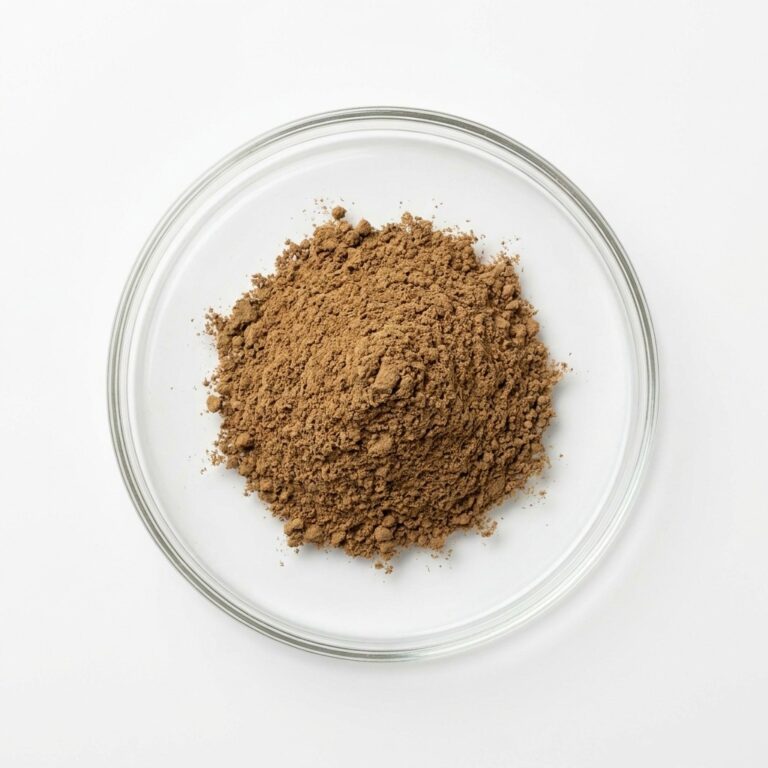
- Tiger milk mushroom powder – ground sclerotium used in capsules, sachets, and functional beverage mixes.
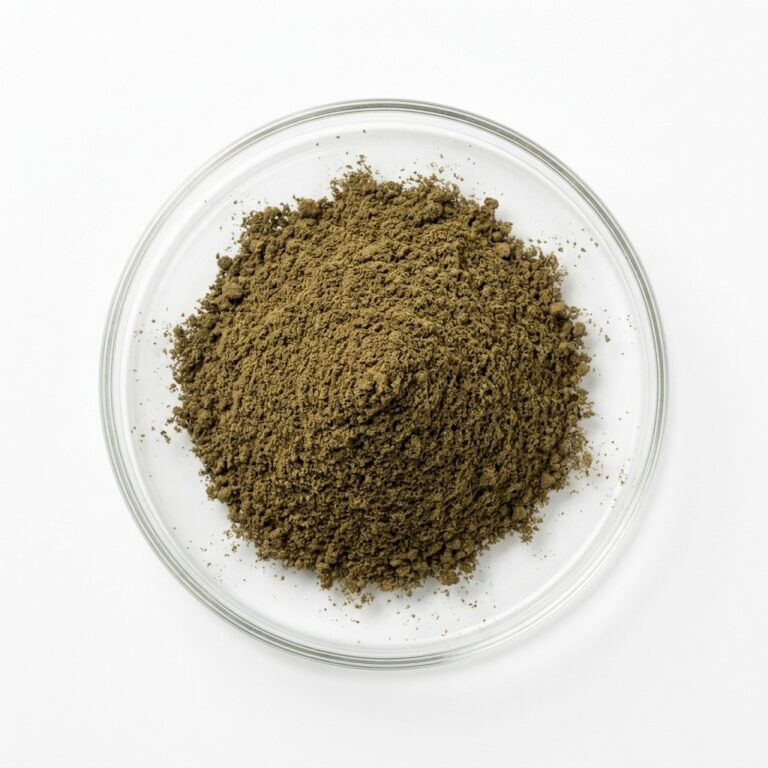
- Standardized extract – concentrated for polysaccharide/beta-glucan content, used in supplement and nutraceutical formulations.
- Lozenges and throat formulations – a popular Malaysian retail format leveraging the ingredient’s respiratory reputation.
- Whole sclerotium slices – used in traditional decoctions and tonics, still common in TCM halls.
Sourcing and Quality Considerations for Manufacturers
Buyers should confirm whether the sclerotium is cultivated or wild-harvested, since this affects sustainability, price stability, and supply consistency, and should request a certificate of analysis verifying the polysaccharide and beta-glucan content of the specific strain used – potency varies meaningfully between cultivation methods and strains. Because tiger milk mushroom is subject to increasing regulatory attention in some markets due to wild-harvest conservation concerns, documentation of cultivation source, strain, and country of origin is increasingly a baseline requirement for export-ready formulations rather than a nice-to-have. Heavy metal and microbiological testing should also be standard, as with any botanical grown in tropical soil conditions.
Safety and Side Effects
In the small human trials so far, lasting up to six months, side effects were no more common with tiger milk mushroom than with placebo. Long-term safety data are limited. As with any mushroom-derived ingredient, people with known fungal or mushroom allergies should take care, and anyone on medication for chronic respiratory or immune conditions should consult a healthcare provider before use, given the ingredient’s immune-modulating activity.
Frequently Asked Questions
What is tiger milk mushroom good for?
It is traditionally used for cough, congestion and general wellbeing. A small number of human studies, mostly on respiratory and allergy symptoms, have reported benefits, but larger trials are still needed.
Does tiger milk mushroom really work?
The evidence is early. An open-label study and a placebo-controlled trial in allergic rhinitis reported fewer symptoms, but both were small, and a 2026 systematic review on asthma found the evidence still largely preclinical. Results from one branded, cultivated strain (TM02) may not apply to every tiger milk product.
Is tiger milk mushroom good for the lungs and cough?
Respiratory support is its main traditional use, and small human studies on respiratory and nasal allergy symptoms are encouraging. They are not yet proof: larger, placebo-controlled trials are needed.
Why is tiger milk mushroom associated with Malaysia specifically?
Tiger milk mushroom grows wild in Malaysian rainforests and has deep roots in Orang Asli traditional medicine. The Malaysian company LiGNO Biotech developed solid-state cultivation of the sclerotium, sold as TM02®, turning a scarce wild fungus into a scalable ingredient.
What is the difference between wild and cultivated tiger milk mushroom?
Wild sclerotium is harvested from the rainforest and is limited in supply due to slow growth and conservation concerns; cultivated sclerotium is grown under controlled conditions using selected strains, offering a more consistent, sustainable, and traceable supply for commercial formulation.
Are there side effects of tiger milk mushroom?
Tiger milk mushroom is generally well-tolerated, though those with mushroom allergies or existing immune/respiratory conditions on medication should consult a healthcare provider before use.
Sourcing tiger milk mushroom for your formulation?
FC Materials supplies cultivated tiger milk mushroom (Lignosus rhinocerotis) sclerotium powder and extract for supplement and functional beverage manufacturers. Tell us your product needs and our team will respond with specs, pricing, and MOQ.