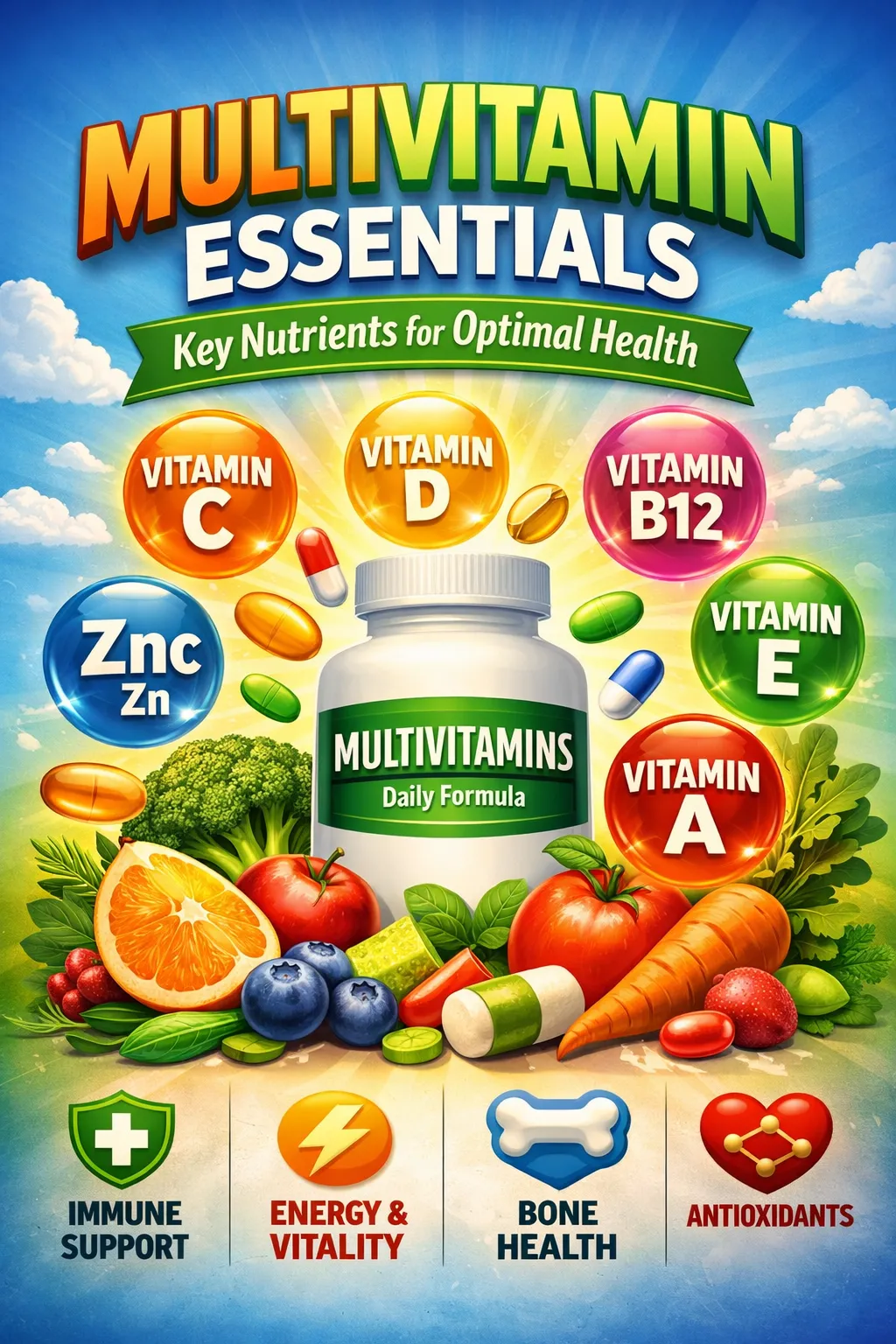

Multivitamin Essentials Key Nutrients for Optimal Health
A single multivitamin tablet looks simple on the surface, yet behind it sit careful science, regulatory work, and ingredient choices that shape real health outcomes. For manufacturers and brand owners, a multivitamin is not just another product; it is often the flagship in a range of daily nutritional supplements. When a formula delivers the right balance of key nutrients for health, it can become a long-term anchor for an entire brand.
Modern eating habits, long working hours, and heavy use of processed foods often mean diets fall short of essential vitamins and minerals. A well-designed multivitamin steps in as nutritional insurance, supporting energy, immunity, and long-term vitality where food alone may not be enough. For consumers, this feels like a simple one-a-day habit. For formulators, every milligram and ingredient choice carries weight.
“Let food be thy medicine and medicine be thy food.” — Hippocrates
Food should always come first, yet real-life eating patterns rarely match ideal guidelines. That gap is where high quality vitamins in multivitamin products make a difference.
This guide walks through the foundations of an effective multivitamin, from essential vitamins and minerals to delivery formats, bioavailability, and Malaysian regulatory requirements. Whether the next step is a new men’s product, a premium prenatal line with methylfolate, or a gummy concept for online retail, the sections ahead provide practical direction. Along the way, you will also see how FC Materials Sdn Bhd supports manufacturers with vitamins, functional ingredients, and end-to-end technical and regulatory support in Malaysia and across Southeast Asia.
Key Takeaways
Before diving into technical details, it helps to see the big picture of what this guide covers and why it matters for product development and brand growth.
Multivitamin products exist to bridge real nutritional gaps caused by modern diets, food processing, and busy routines. When formulated well, they support energy, immunity, and long-term health in a single daily vitamin tablet or gummy.
High-performance multivitamins depend on thoughtful ingredient choice, from bioavailable vitamin forms to precise mineral salts and functional compounds. Every demographic group, from women and men to pregnant individuals and active adults, benefits from slightly different balances and strengths.
For the Malaysian market, NPRA product registration, Halal certification, and KKLIU advertising approval are essential steps, not optional extras. FC Materials Sdn Bhd supports manufacturers through ingredient sourcing, FC | Lab formulation services, and regulatory guidance, so brands can move from concept to compliant product with greater confidence.
What Is a Multivitamin and Why Does It Matter?
A multivitamin is a dietary supplement that combines a wide range of essential vitamins and minerals in one convenient form, usually a tablet, capsule, gummy, or powder. The aim is simple yet powerful: to support the body’s daily physiological functions by topping up nutrients that may be missing from regular meals. Instead of relying on several separate products, consumers reach for one multivitamin to cover most bases.
Modern food systems and lifestyles often reduce the nutritional density of diets. Long storage times, processing, and cooking can lower the levels of water-soluble nutrients such as Vitamin C and many B vitamins. At the same time, busy schedules push people towards convenience foods that may supply calories but fewer essential vitamins and minerals. In this context, a multivitamin acts as a steady background supply of key micronutrients, helping to maintain best-possible intake rather than scraping by at minimum levels.
The idea of optimum daily intake sits at the heart of effective multivitamin benefits. The goal is not just to prevent classic deficiency states, but to support:
Immune function
Energy metabolism
Cognitive performance
Cellular repair and protection
This is why comprehensive formulas focus on a full profile of essential vitamins and minerals, often with extra strength for nutrients such as Vitamin D, B-complex vitamins, and Zinc.
From a business viewpoint, the multivitamin category is one of the most searched and purchased areas in health supplements, both in-store and when people search phrases such as “vitamins shop near me” or “buy vitamins online”. Consumers understand the concept and expect to see a multivitamin in any serious supplement range. For manufacturers, that means strong pressure to design products that stand out through clear benefit claims, clean-label positioning, and formats that match how people prefer to take their daily vitamins. Getting this foundation right can support many other products across a brand portfolio.
Essential Vitamins in Multivitamin Formulations and Their Functions

Vitamins are the biological spark plugs in a multivitamin. They help enzymes work, support cell repair, and keep organs functioning smoothly. For formulators, the task is not only to decide which vitamins to include, but also which chemical forms to use and at what dose. These choices affect shelf stability, absorption in the gut, and how well the multivitamin supports real-world health needs.
Another key point is synergy. A multivitamin should work as a team, not a loose list of single ingredients:
Vitamin C supports iron absorption.
B vitamins work together in energy production.
Fat-soluble vitamins share pathways linked to cell membranes and hormone activity.
When building a profile of essential vitamins and minerals, it makes sense to think in terms of clusters and interactions rather than isolated nutrients.
In this section, we look at three core vitamin groups: fat-soluble Vitamins A, D, and E; the full Vitamin B complex; and Vitamin C as a stand-out water-soluble nutrient. These are at the centre of high quality vitamins aimed at immune support, energy, and long-term wellness.
Fat-Soluble Vitamins A D and E
Fat-soluble vitamins sit inside cell membranes and fatty tissues, so they stay in the body longer than water-soluble vitamins. This makes both dose and form important in any multivitamin designed for daily use across many months or years.
Vitamin A in the form of Retinyl palmitate supports vision, immune defences, and normal growth of skin and mucous membranes. This ester form is widely used in multivitamin formulations because it is stable during storage and converts readily into active Vitamin A in the body. Including Vitamin A at sensible levels helps maintain barrier tissues that act as the body’s first line of defence.
Vitamin D, most often added as Cholecalciferol (Vitamin D3), helps with the absorption and use of calcium and phosphorus, which are vital for strong bones and teeth. D3 also has a strong link to immune balance. Even in sunny countries such as Malaysia, time spent indoors, clothing, and sun protection habits often limit natural Vitamin D production. This is why many modern multivitamin products include a meaningful dose of D3 as part of their core offering.
Vitamin E, used in multivitamins as natural d-alpha-tocopheryl acid succinate, is an antioxidant that protects cell membranes from oxidative damage. By helping to neutralise reactive oxygen species, it supports cardiovascular, skin, and immune health. The natural d-alpha form has better bioavailability than synthetic dl-alpha forms, which is an important detail when designing premium multivitamin benefits for health-conscious consumers.
The B-Vitamin Complex Energy Metabolism and Nervous System Support
The B-vitamin complex is central to most multivitamin formulas because it turns food into usable energy and supports brain and nerve function. Rather than working alone, these vitamins overlap constantly in metabolic cycles, so an effective multivitamin protects against gaps across the whole group.
Key B vitamins include:
Vitamin B1 (often used as Thiamine nitrate):
Supports carbohydrate metabolism and helps nerves and muscles work properly. Its stable nitrate form suits compressed daily vitamin tablets.Vitamin B2 (Riboflavin):
Supports cellular respiration and the breakdown of fats, and contributes to normal skin and vision. These first two B vitamins are among the first to slip when diets lack whole grains and unprocessed foods.Vitamin B3 (Nicotinamide):
A non-flushing form that feeds into NAD and NADP coenzymes involved in hundreds of reactions related to energy and tissue repair.Vitamin B5 (Calcium pantothenate):
Supports Coenzyme A production, which sits at the centre of fat and carbohydrate metabolism. These vitamins give multivitamins strong positioning for tired professionals and active adults.Vitamin B6 (Pyridoxine hydrochloride):
Helps with amino acid use, neurotransmitter formation, and homocysteine regulation, so it is important for mood, cognition, and cardiovascular health.Vitamin B12 (Cyanocobalamin):
Essential for red blood cell formation and nerve function. Since B12 is mainly found in animal foods, a multivitamin with B12 is particularly helpful for consumers following plant-focused or vegetarian eating patterns.Folic acid, the synthetic form of folate:
Supports DNA synthesis and cell division. It is especially important for women of childbearing age, which is why prenatal vitamins with methylfolate or a mix of folic acid and methylfolate are now common at the premium end of the market. Methylfolate (5-MTHF) is the active form favoured when brands want to highlight bioavailability and modern science.Biotin (Vitamin B7):
Supports fatty acid and glucose metabolism and is widely known for its link to healthy hair and nails. As a result, higher Biotin levels often appear in women’s multivitamins and hair vitamins for women that sit between inner health and beauty support.
Vitamin C The Immune Cornerstone
Vitamin C, usually provided as Ascorbic acid, is one of the star ingredients in any multivitamin. It is a water-soluble antioxidant that supports white blood cell activity, helps protect cells from oxidative stress, and assists in wound healing. These roles make it central to immune support messaging and practical daily health.
Beyond immunity, Vitamin C is key for collagen synthesis, the protein framework that supports skin, joints, blood vessels, and gums. In multivitamin benefits communication, this allows brands to connect immunity, skin health, and structural support in one nutrient story. Vitamin C also improves absorption of non-haem iron from plant foods, which is valuable in formulas aimed at women, older adults, and those who avoid red meat.
Many effective multivitamin products include Vitamin C at levels higher than the basic daily requirement to give a meaningful buffer for smokers, stressed individuals, and those with low fruit and vegetable intake. FC Materials Sdn Bhd supplies Ascorbic acid with standardised purity for multivitamin manufacturers, supporting both tablet and gummy formats with consistent quality and full documentation for NPRA submissions.
Essential Minerals in Multivitamin Formulations and Their Roles
Minerals are just as important as vitamins in a multivitamin product, even if they receive less attention on the front of the pack. They act as structural building blocks and enzyme cofactors, supporting bones, muscles, nerves, and hormonal systems. Because they are inorganic elements, form and dose have strong effects on absorption and digestibility.
When building a profile of essential vitamins and minerals, manufacturers need to choose mineral salts that balance:
Bioavailability
Stability
Taste profile
Tablet or gummy hardness
The wrong combination can lead to instability, discolouration, or unpleasant metallic flavours. This is where working with experienced suppliers such as FC Materials Sdn Bhd helps, as they provide proven raw materials and technical guidance on how each mineral behaves in different formats.
In most multivitamin products, minerals are grouped into macrominerals, required in larger amounts, and trace minerals, needed only in milligram or microgram quantities. Both groups must be handled with care, as too little fails to deliver benefits and too much may push intakes close to upper safe levels for daily nutritional supplements.
Macrominerals Calcium Magnesium Iron and Potassium
Calcium is the most abundant mineral in the body and sits at the centre of bone and tooth structure. In multivitamins, Calcium carbonate is a common choice as it provides a high amount of elemental Calcium per gram and supports cost-effective tablet sizes. Alongside Vitamin D, Calcium helps maintain normal bone mineral density, which is vital for women, older adults, and anyone at risk of low intake.
Magnesium takes part in more than 300 enzymatic reactions including energy production, muscle and nerve function, and maintenance of normal blood pressure. Magnesium oxide is widely used in multivitamin tablets due to its high elemental content and good stability. Although some other forms have slightly higher absorption, oxide remains a practical option when formulators need to include meaningful Magnesium levels without increasing tablet size too much.
Iron is another mineral of high interest, especially in daily vitamins for women who lose iron through monthly menstruation. In a multivitamin, Iron often appears as Ferrous sulfate, a well-studied form with good absorption when taken with Vitamin C. Iron supports haemoglobin production and oxygen transport, so suboptimal intake can show up as tiredness and shortness of breath. Strictly speaking, Iron is usually classified as a trace mineral, but its relatively higher requirement means it often appears alongside the macrominerals in multivitamin design. Brands need to strike a careful balance: helpful for many adults, but not always suitable for everyone, which is why some men’s and senior formulas reduce or exclude Iron.
Potassium, often supplied as Potassium sulfate in multivitamins, acts as a key electrolyte for nerve impulses, muscle contraction, and fluid balance. In food, it appears widely in fruits and vegetables, so supplement doses are usually modest. Including Potassium in a multivitamin helps support overall electrolyte balance, especially in consumers who use high-sodium processed foods and may not meet recommended intakes from fresh produce.
Trace Minerals Zinc Selenium Manganese and Iodine
Zinc is one of the best-known trace minerals in multivitamin products. Commonly added as Zinc oxide, it supports immune cell development and function, wound healing, and DNA synthesis. Zinc also plays a role in sense of taste and smell, skin health, and male reproductive health. Because of its link to testosterone and sperm quality, Zinc is especially important in the best multivitamin for men and in formulas marketed as the best male fertility supplements.
Selenium works as part of several antioxidant enzymes, including glutathione peroxidase, which help protect cells from oxidative stress. It also supports normal thyroid function, immunity, and reproductive health. Multivitamins can provide a steady, safe source of Selenium where soil or diets are low. Careful dosing is key, as both deficiency and excess intake cause problems over time.
Manganese, added as Manganese sulfate monohydrate, supports bone formation, amino acid metabolism, and antioxidant defence through manganese-dependent enzymes. It is required only in tiny amounts, so precise weighing and blending are important to avoid over-supply in daily vitamin tablets. Its role is often quiet but significant, contributing to the overall performance of the multivitamin formula.
Iodine is essential for the production of thyroid hormones T3 and T4, which regulate metabolic rate, growth, and brain development. Table salt iodisation programmes have helped, but gaps can still appear, especially in people who avoid processed foods or use speciality salts. Including Iodine in a multivitamin is a straightforward way to support thyroid health, especially for women of childbearing age and older adults, where mild deficiency may go unnoticed but still affect energy and weight control.
Key Health Benefits of Daily Multivitamin Supplementation
Consumers rarely read full ingredient lists, but they care deeply about what a multivitamin can do for their daily life. For manufacturers, it is important to connect the science of essential vitamins and minerals to simple, honest benefit stories that stand up under regulatory review. The main themes are higher energy, better immune support, protection for long-term health, and reliable coverage of dietary gaps.
A well-balanced multivitamin helps the body convert food into energy more efficiently, supports immune cells when they confront microbes, and provides a safety net where diets fall short. These effects may not feel dramatic overnight, yet over months and years they add up to better resilience and fewer periods of feeling run down.
“An ounce of prevention is worth a pound of cure.” — Benjamin Franklin
For long-term supplement users, this quote reflects the idea that consistent intake of optimal health supplements can support better health outcomes over time.
Increased Energy Levels and Combating Fatigue
One of the most common reasons people reach for a multivitamin is unexplained tiredness. Even when sleep is reasonable, low intake of key micronutrients can make it harder for cells to create and use energy. The B-vitamin complex plays a central role here by feeding into the pathways that turn carbohydrates, fats, and proteins into ATP, the body’s main energy currency.
Iron also links closely to energy levels. Low iron stores reduce the blood’s ability to carry oxygen, which leaves muscles and the brain under-supplied during daily tasks. Magnesium contributes by helping enzymes inside mitochondria function properly and by supporting normal muscle relaxation and contraction. When these nutrients are present at supportive levels in a multivitamin, many consumers notice steadier energy over the day.
For manufacturers, energy support is a strong yet honest claim platform when based on this nutrient profile. Daily vitamins for women can emphasise iron and B-vitamin content, while men’s and active adult multivitamins can highlight broader total vitamins coverage for energy metabolism based on B-complex, Magnesium, and other supportive nutrients.
Strengthened Immune Function
Immune health has become one of the strongest drivers of supplement purchases, and multivitamins are often the starting point for this interest. Several vitamins and minerals within a typical multivitamin act together to support both innate and adaptive immune responses:
Vitamin C supports production and protection of white blood cells and helps maintain healthy skin and mucosal barriers.
Vitamin D influences the activity of immune cells and the release of signalling molecules that guide the immune response.
Zinc is needed for the development and function of T-lymphocytes and natural killer cells, which hunt and neutralise invading microbes.
Selenium supports antioxidant defences in immune cells, helping them carry out their work without excessive self-damage from free radicals.
When these nutrients appear together in meaningful amounts within multivitamin benefits messaging, brands can credibly claim support for normal immune function. This kind of positioning matters both for physical retail and for online shoppers comparing optimal health supplements on e-commerce platforms.
Long-Term Health Protection and Healthy Ageing
Beyond day-to-day energy and immunity, many consumers use a multivitamin as part of a long-term plan to stay active and independent as they age. Consistent intake of key nutrients helps protect bones, the cardiovascular system, brain function, and skin over the years.
Vitamin D and Calcium help maintain bone strength and slow age-related bone loss.
Antioxidants such as Vitamins C and E help neutralise free radicals that can damage DNA, lipids, and proteins.
B vitamins such as B6, B12, and folate support homocysteine metabolism, which is linked to cardiovascular health.
For manufacturers, framing a multivitamin as part of a long-term healthy ageing plan, rather than a quick fix, encourages consistent daily use. Product copy can connect antioxidants, bone-support nutrients, and B vitamins to this theme of protection. This message aligns well with the idea of optimal health supplements that support quality of life well into older age.
Nutritional Gap Prevention and Dietary Insurance
Even consumers who try to eat well can find it hard to reach every recommended intake each day. Busy schedules, eating out, and food preferences often lead to repeated shortfalls in certain vitamins or minerals. Cooking methods such as boiling and frying can further reduce Vitamin C and some B vitamins.
A well-designed multivitamin acts as a daily insurance policy against these repeated gaps. By covering a broad range of essential vitamins and minerals at sensible doses, it supports health even when actual food intake is less than ideal. For manufacturers, describing a multivitamin as “nutritional back-up” or “daily support where diets fall short” connects directly with this reality. This is especially powerful when combined with clear data on the number of nutrients per serving and how they contribute to key nutrients for health.
“Supplements are meant to complement the diet, not replace it.” — Common guidance from nutrition professionals
This reminder can feature in both consumer education and professional-facing materials for multivitamin products.
Target Demographics and Specialised Formulation Needs

The days of one-size-fits-all multivitamins are fading as consumers look for products that match their life stage, sex, and health priorities. While a general adult multivitamin still has a strong place in the market, targeted formulas often carry higher value and better loyalty. For product developers, this means thinking carefully about who the product serves before finalising the formula.
Different groups have different needs:
Women in their reproductive years
Men focused on fitness, vitality, or fertility
Pregnant and breastfeeding women
Active adults and older adults
Matching the nutritional design with clear labelling and marketing claims helps a multivitamin stand out both on store shelves and when buyers search online for the best vitamins for overall health.
Daily Vitamins for Women Targeted Support
Women face changing nutritional demands across their lifespan, especially related to menstrual cycles, pregnancy, and menopause. A women’s multivitamin should reflect these realities with a smart balance of key nutrients.
Important focus areas include:
Iron as a central ingredient, as monthly blood loss can lower iron stores and lead to fatigue and reduced concentration.
Folic acid for women of childbearing age, since many pregnancies are unplanned and folate status in the early weeks affects neural tube development.
Calcium and Vitamin D at meaningful levels to support bone health both before and after menopause.
Biotin and other B vitamins, allowing women’s multivitamins to link into hair vitamins for women claims and connect inner nutrition to outer appearance.
A clear explanation of these nutrients on pack and in marketing helps consumers understand why daily vitamins for women differ from generic products.
Best Multivitamin for Men Formulation Priorities
Men often look for a multivitamin that supports energy, physical performance, and reproductive health. For this group, higher levels of B vitamins can help support energy metabolism in line with larger muscle mass and heavier physical loads. Vitamin D and Magnesium are also key for muscle function and recovery, as well as general vitality.
Zinc stands out as especially important in a men’s multivitamin. It supports testosterone metabolism, sperm quality, and prostate health, while also contributing to immune function and skin maintenance. Selenium adds further support for male reproductive health and antioxidant protection. Multivitamins that address these needs can credibly position themselves as the best multivitamin for men, and when combined with targeted levels of Zinc and Selenium, can feed into the category of the best male fertility supplements without relying on extreme or unrealistic claims.
Prenatal and Postnatal Nutritional Support
Pregnancy and breastfeeding place very high demands on a woman’s nutrient stores. For this reason, regular adult multivitamins are rarely enough, and specialised prenatal and postnatal products are preferred.
Key nutrients include:
Folate / Methylfolate:
One of the centrepieces of any prenatal product. Prenatal vitamins with methylfolate or combinations of folic acid and methylfolate help support neural tube development and reduce the risk of related birth defects.Iron:
Needs increase during pregnancy to support the growth of the placenta and the baby’s expanding blood volume, as well as the mother’s own increased red blood cell mass.Iodine:
Becomes more important as the developing baby relies on maternal thyroid hormones for brain and nervous system development.
Carefully balanced doses of these nutrients, supported by Vitamins D and B12, are essential in both prenatal formulas and the best postnatal vitamins.
Docosahexaenoic acid (DHA), an omega-3 fatty acid, plays a key role in foetal brain and eye development. FC Materials Sdn Bhd supplies Algae Oil DHA Powder, a plant-based form suitable for Halal-compliant and vegetarian-friendly prenatal multivitamin products. This allows brands to extend their support beyond standard essential vitamins and minerals to deeper cognitive and visual benefits for both mother and child.
Active Adults and General Adult Wellness
The largest single audience for multivitamins is still general adults who want to stay well, keep up energy, and avoid illness. Within this, active adults and busy professionals face higher stress and metabolic demands, while often having less time to plan balanced meals. A general adult multivitamin aimed at this group should highlight energy, immunity, and overall resilience.
Core nutrients for this segment include:
A complete B-vitamin complex for energy production and stress support
Vitamin C and Zinc for immune health
Vitamin D for bones, muscles, and mood
A simple one-a-day format works very well here, as these consumers often reject complicated regimens. By positioning products around “daily vitamin tablets for busy lives” and “total vitamins for everyday resilience”, brands can meet the needs of this broad yet demanding segment without making the formula unnecessarily complex.
Delivery Formats Tablets Gummies and Beyond

The way a multivitamin is delivered is more than a technical choice; it affects whether consumers take the product every day or leave it in the cupboard. Tablets, capsules, gummies, effervescents, and powders each offer different advantages and constraints for both R&D teams and marketing departments.
Tablets remain common for their efficiency, stability, and flexibility in dose, while gummies have grown quickly by offering a pleasant, snack-like experience that tackles pill fatigue. At the same time, formats such as effervescent tablets and powders give brands fresh ways to connect multivitamin benefits with daily routines such as hydration or smoothies.
Traditional Tablets Proven Efficacy and Formulation Stability
Traditional tablets are still the backbone of the multivitamin sector. They can carry high levels of vitamins and minerals in a compact space, have long shelf life, and are relatively straightforward to package, ship, and store. This makes them attractive for brands aiming to reach pharmacies, supermarkets, and export markets with consistent quality and manageable cost.
From a manufacturing viewpoint, tablets allow precise control over:
Dose accuracy
Content uniformity
Disintegration and dissolution times
This supports NPRA submissions and quality audits. Choosing stable forms such as Thiamine nitrate for Vitamin B1, Ferrous sulfate for Iron, and Calcium carbonate for Calcium helps maintain integrity during compression and storage. A simple “one tablet per day” instruction is also clear and reassuring for adult consumers.
However, some people dislike swallowing tablets, particularly if they are large or if they already take several medicines. This pill fatigue can reduce compliance, even when the multivitamin benefits are well understood. Formulators must also consider possible digestive discomfort in sensitive individuals, which may call for coating technologies or adjusted ingredient levels.
Gummy Supplements Consumer Appeal and Compliance
Gummy multivitamins have grown fast because they make supplementation feel more like a treat than a chore. Soft, chewable textures, pleasant fruit flavours, and no need for water all combine to make a daily multivitamin easier to remember and more enjoyable. This directly improves compliance, especially among adults who struggle with tablets or who want a more playful approach to daily health.
From a product design point of view, gummies give strong marketing angles:
Natural flavours such as strawberry or mixed berry
Natural colours from fruit concentrates or “super berries”
Easy portioning for adults and older children
Many people also report better digestive comfort with gummies compared to some tablets, as they begin to break down in the mouth and may feel gentler on the stomach.
The challenges are mainly technical. Vitamins and minerals must remain stable within a gel matrix that also includes sugars or sweeteners, gelling agents, and acid regulators. Heat, humidity, and packaging all affect texture and potency. FC Materials Sdn Bhd supports clients with ingredient choices and technical guidance that consider these hurdles, helping Malaysian brands build gummy multivitamin ranges that are both appealing and reliable.
Emerging Formats and Considerations
Beyond tablets and gummies, several other formats offer promising directions for multivitamin innovation:
Effervescent tablets that dissolve in water to create flavoured drinks combining hydration with micronutrient intake.
Chewable tablets that sit between traditional tablets and gummies, combining easier chewing with simpler formulation.
Powders and sachets that can be mixed into smoothies, yoghurt, or water, allowing flexible dosing and interesting flavour directions.
Whatever the choice, brands need to confirm that active ingredients remain stable and bioavailable in the final format, and that the format suits how their target audience prefers to take daily nutritional supplements.
Ingredient Quality Bioavailability and Clean-Label Considerations
Two multivitamin products can list very similar nutrients on their labels, yet perform quite differently inside the body. The difference often comes down to ingredient quality, bioavailability, and excipient choices. Consumers are becoming more aware of these factors, and regulators already look closely at them.
For manufacturers and brand owners, investing in high quality vitamins and minerals, with clear sourcing and documentation, supports better product performance and lower regulatory risk. At the same time, clean-label expectations are rising, with more people scanning for free-from claims and natural flavour and colour systems. FC Materials Sdn Bhd works at this intersection, supplying ingredients with strong technical support so that brands can meet both scientific and consumer expectations.
Bioavailability and Chemical Form Selection
Bioavailability refers to how much of a nutrient the body absorbs and then uses for its intended functions. Different chemical forms of the same vitamin or mineral can behave very differently once swallowed, which makes this choice a key design step in any serious multivitamin project.
Examples include:
Vitamin E supplied as natural d-alpha-tocopheryl acid succinate, which is better absorbed than synthetic dl-alpha forms and offers stronger antioxidant support per milligram.
Vitamin D3 (Cholecalciferol), which has a better record than Vitamin D2 in raising and maintaining blood Vitamin D levels, important for bone and immune support claims.
Methylfolate (5-MTHF) in the folate category, the active form that bypasses certain genetic variations that reduce conversion from folic acid, making it especially attractive for prenatal formulas.
Mineral forms also matter. Some, such as Ferrous sulfate for Iron and Zinc oxide for Zinc, provide good absorption at a sensible cost, while others trade higher absorption for higher price or lower elemental content. Dosage must then be set to deliver an optimum intake that supports health without approaching upper safe levels. Working with a supplier that provides detailed specifications and technical advice makes it easier to choose well across this complex set of options.
Clean-Label Formulation and Free-From Claims
Clean-label expectations influence supplement purchases almost as strongly as core health benefits. Many consumers now scan labels quickly for allergens, animal-derived ingredients, and artificial additives they prefer to avoid. For manufacturers, this means thinking beyond active ingredients and looking at the whole multivitamin composition.
Popular free-from claims include the absence of:
Added yeast
Gluten or wheat
Milk derivatives
Artificial preservatives, flavours, and sweeteners
Leaving out these elements reassures people with coeliac disease, gluten sensitivity, lactose intolerance, dairy allergies, or general ingredient concerns.
Positive choices also matter. Using natural flavours and colours from fruit, vegetable, or super berry concentrates shows that the product design respects both health and sensory appeal. To support these claims, manufacturers must control sourcing, production, and testing carefully. FC Materials Sdn Bhd helps by supplying ingredients with clear origin and Halal status, making it easier to design clean-label multivitamin products.
The Role of Functional Ingredients Beyond Standard Vitamins and Minerals
Modern multivitamins often move beyond a simple list of vitamins and minerals to include functional ingredients that target specific systems. This allows brands to step into more specialised positions without giving up the broad “one-a-day” appeal.
Examples include:
Choline, often supplied as Choline bitartrate, which supports the formation of acetylcholine, a neurotransmitter involved in memory and muscle control. It also helps with fat transport and liver health.
Inositol, which supports cell signalling and insulin sensitivity and is popular in formulas linked to mood, metabolic health, and hormonal balance.
Plant-based Algae Oil DHA Powder, providing omega-3 DHA that supports brain and eye function, especially valuable in prenatal, postnatal, or cognitive support products.
FC Materials Sdn Bhd offers these functional ingredients alongside core vitamins and minerals, helping brands to build total vitamins ranges that stand out in a crowded market.
Regulatory and Certification Requirements for Multivitamins in Malaysia
For any multivitamin aiming to reach Malaysian consumers, regulatory compliance and proper certification are just as important as ingredient choice. Retailers, healthcare professionals, and consumers all look for clear signs that a product has passed safety and quality checks. Good compliance work also lays the groundwork for regional expansion into neighbouring markets.
In Malaysia, three pillars matter most for multivitamin products:
Registration with the National Pharmaceutical Regulatory Agency (NPRA)
Halal certification
Advertising approval via a KKLIU number
Understanding and managing these areas well helps brands move confidently, whether their products sell in pharmacies, supermarkets, or online channels.
NPRA Product Registration MAL Number
NPRA registration is mandatory for all health supplements in Malaysia, including multivitamins. During this process, the agency reviews the product’s formulation, quality data, and safety profile, and may request further information or clarification. Once approved, the product receives a MAL number, which appears on the label and marks it as a registered supplement rather than an unapproved item.
The MAL number format includes a code that identifies the product category, which for health supplements usually includes an “N” within the string. This number allows regulators, healthcare professionals, and even consumers to check basic registration information. For manufacturers, accurate and complete documentation of each active ingredient and excipient is essential; any mismatch between label and submission can delay approval.
Working with ingredient suppliers who provide full technical dossiers, certificates of analysis, and stability data simplifies this process. FC Materials Sdn Bhd supports clients with documentation that feeds directly into NPRA applications, helping reduce back-and-forth queries and keeping projects on track.
Halal Certification A Commercial Imperative in Malaysia
Halal status is a major factor in the success of multivitamins in Malaysia. Certification from JAKIM or a recognised foreign body signals that the product’s ingredients, processing aids, manufacturing environment, and handling all comply with Islamic requirements. This covers not only obvious items such as gelatin and flavourings, but also more hidden elements such as coating agents, solvents, and certain excipients.
For supplement brands, Halal certification does more than open doors to Muslim consumers. Many non-Muslim consumers also read the Halal logo as a sign of careful control over ingredients and production hygiene. Halal products may access more retail channels, including specialist outlets, and can more easily cross borders into other Muslim-majority markets in Southeast Asia and beyond.
To gain and maintain certification, manufacturers must be able to show full ingredient traceability. This is where choosing Halal-compliant vitamins, minerals, and functional ingredients from the start is vital. FC Materials Sdn Bhd offers Halal-certified options across its portfolio and guides clients on how each ingredient fits within Halal standards, reducing the risk of reformulation later in the project.
Advertising Approval KKLIU Number
In Malaysia, health supplement advertising is regulated to protect consumers from misleading or exaggerated claims. Any advertisement for a multivitamin, whether on television, print, outdoor displays, or online media, must receive approval from the Medicine Advertisements Board. Approved materials receive a KKLIU number and a validity period, both of which should appear in the advertisement itself.
This process checks that health claims, testimonials, and images do not overstate the product’s abilities or suggest that it can diagnose, treat, or cure serious diseases. It also confirms that disclaimers such as “Always read the label and follow the directions for use” are present where appropriate. Brands must take care that promotions in pharmacies, “vitamins shop near me” outlets, and digital channels all remain consistent with the approved content.
By designing multivitamin benefits and taglines with these rules in mind from the start, manufacturers avoid costly rewrites and rejections. FC Materials Sdn Bhd supports clients by aligning technical ingredient information with claim wording that fits Malaysian regulatory standards, helping brands communicate confidently in both offline and online channels, including when consumers look to buy vitamins online.
How FC Materials Sdn Bhd Supports Multivitamin Manufacturers
Behind every successful multivitamin sits a network of ingredient suppliers, formulators, and regulatory specialists. FC Materials Sdn Bhd brings these roles together for manufacturers across Malaysia and Southeast Asia, acting as a technical partner rather than just a raw material trader. For food, nutraceutical, personal care, and pharmaceutical companies, this partnership shortens development time and supports more reliable product performance.
At the ingredient level, FC Materials offers a broad range of vitamins and minerals suitable for multivitamin products. This includes core items such as Ascorbic acid for Vitamin C, a range of B vitamins, and mineral salts like Calcium carbonate, Magnesium oxide, and Zinc oxide. All come with quality documentation and, where available, Halal certification to support NPRA registration and Halal approval processes. This gives R&D teams a solid toolbox for both standard and premium multivitamin lines.
Beyond single ingredients, FC Materials supplies functional nutrients such as Algae Oil DHA Powder, selected herbal extracts, and other nutraceutical raw materials that help brands build more targeted formulas. Through its FC | Lab services, the company assists with concept development, prototype formulation, and small-scale trials, helping clients find stable combinations that still meet marketing needs. This collaboration is especially valuable for modern delivery formats such as gummies, effervescents, and powders where texture, taste, and stability are tightly linked.
Regulatory and logistics support form the third pillar of FC Materials’ offer. The team helps clients prepare technical sections for NPRA submissions, interpret guidelines, and plan around common regulatory pitfalls in health supplement categories. With operations based in Penang and links across the region, FC Materials also supports efficient supply and stock planning, which is vital for brands that want to maintain steady availability across pharmacies, supermarkets, and online channels. Taken together, these services make FC Materials Sdn Bhd a reliable partner for any company aiming to build or expand a multivitamin range that meets both scientific and commercial expectations.
Conclusion
A well-designed multivitamin brings science, regulation, and consumer insight together in a single daily product. When vitamins, minerals, and functional ingredients sit in the right balance, they support energy, immunity, and long-term wellness in a way that fits real eating patterns and lifestyles. For manufacturers, this creates a strong platform for both brand trust and repeat purchase.
To reach that point, it is not enough to list many nutrients on a label. Thoughtful choices on bioavailable forms, clean-label excipients, and delivery format all feed into how well a multivitamin works and how consumers feel about taking it every day. In Malaysia, careful attention to NPRA registration, Halal certification, and KKLIU-approved messaging adds another layer of security and confidence.
FC Materials Sdn Bhd is well positioned to support this full process, from ingredient sourcing and FC | Lab formulation work to regulatory documentation and supply chain planning. With the right partners and a clear understanding of multivitamin essentials, manufacturers across Malaysia and Southeast Asia can bring to market products that genuinely support optimal health while standing out in a crowded category.
FAQs
What Is The Main Role Of A Multivitamin?
A multivitamin provides a wide range of essential vitamins and minerals in one convenient dose to support daily health. It helps fill nutritional gaps that appear when diets fall short due to busy schedules or limited food choices. It is not a replacement for balanced eating, but a steady back-up.
Who Should Consider Using A Multivitamin Product?
Most healthy adults who do not always meet recommended intakes from food can benefit from a well-formulated multivitamin. Specific groups such as women of childbearing age, older adults, strict vegetarians, and people with high stress levels may see particular value. However, anyone with medical conditions or on medication should speak to a healthcare professional before starting a new supplement.
How Can Manufacturers In Malaysia Start Developing A New Multivitamin?
The first step is to define the target consumer group and key benefits such as energy, immunity, or prenatal support. From there, R&D teams can work with partners like FC Materials Sdn Bhd to select suitable vitamins, minerals, and functional ingredients, design stable tablet or gummy formats, and prepare documentation for NPRA and Halal processes. This structured approach shortens development time and supports smoother market entry.