
Inulin is one of those ingredients that quietly does two jobs at once: it’s a clinically-backed prebiotic fiber that feeds gut bacteria, and a functional texturizer that lets manufacturers cut sugar and fat without wrecking mouthfeel. That dual role is why it appears in everything from probiotic drinks to protein bars to reduced-fat dairy.
What Is Inulin?
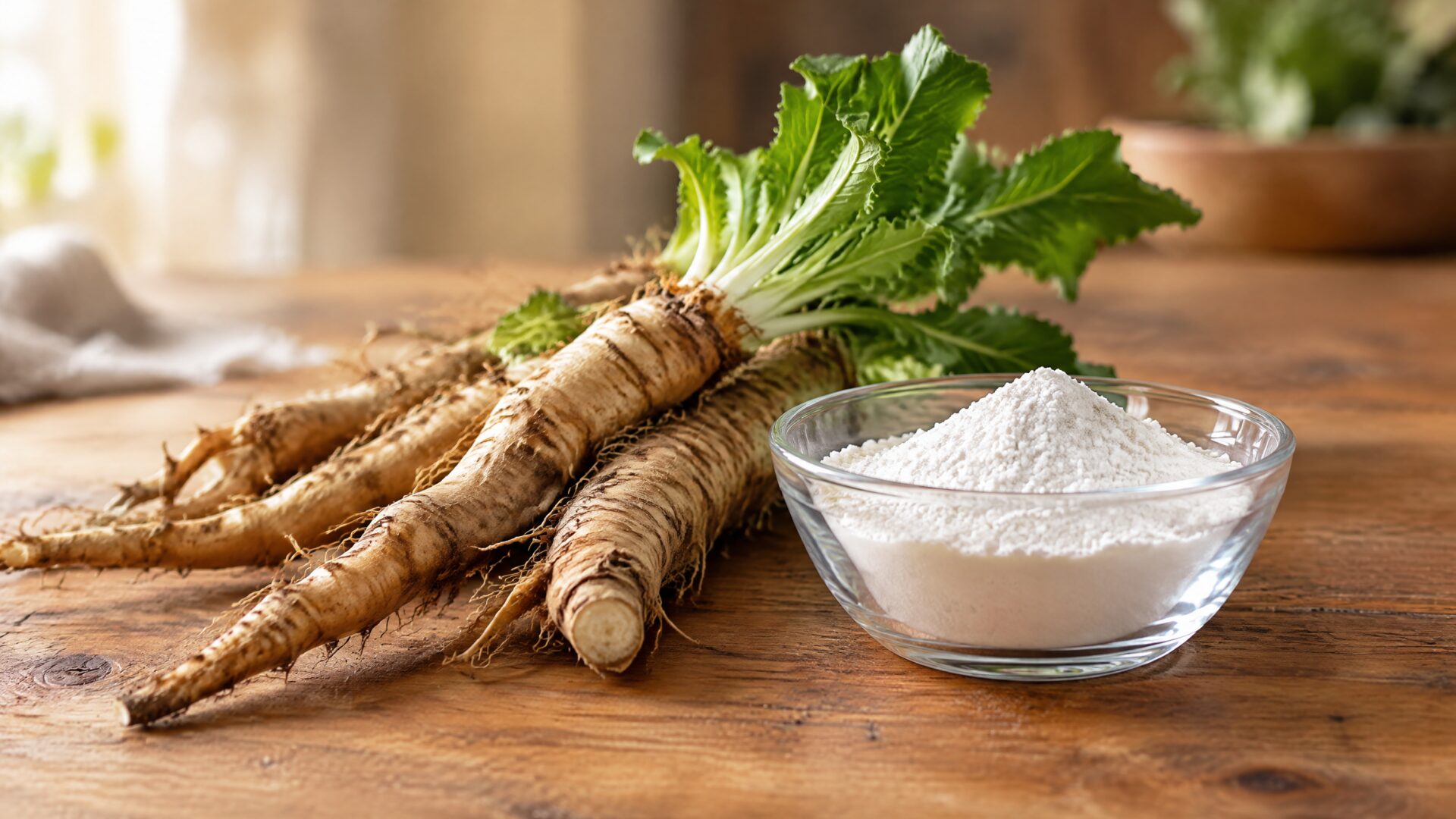
Inulin is a soluble dietary fiber belonging to a group of carbohydrates called fructans – chains of fructose molecules that the human small intestine cannot digest. Because it passes intact into the large intestine, it becomes food for beneficial gut bacteria rather than a source of absorbed calories. Commercially, most inulin is extracted from chicory root, though it also occurs naturally in Jerusalem artichokes, agave, asparagus, and garlic. As an ingredient it’s supplied as a fine, mildly sweet white powder that dissolves easily into both wet and dry formulations.
Key Benefits
Prebiotic Gut Support
Inulin’s headline benefit is its prebiotic action: it selectively feeds beneficial gut bacteria, especially Bifidobacteria, helping maintain a balanced microbiome. This is the most-researched and most-marketed property of the ingredient.
Digestive Regularity
As a soluble fiber, inulin adds bulk and supports regularity, making it a common addition to fiber-fortified foods and digestive-health supplements.
Sugar and Fat Reduction in Formulation
Beyond its health role, inulin is prized by food technologists as a functional ingredient: it mimics the mouthfeel of fat in low-fat dairy and provides bulk and mild sweetness that allows sugar reduction, all while adding fiber to the nutrition panel.
Blood Sugar and Satiety
Because it isn’t digested as sugar, inulin has a negligible impact on blood glucose, and its bulking effect can promote satiety – both reasons it features in weight-management and diabetic-friendly product formulations.
Common Forms Used in Formulation
- Standard chicory inulin powder – the general-purpose grade for fiber fortification and prebiotic supplements.
- Long-chain inulin (HP) – higher molecular weight, used specifically for fat replacement and creamy texture in dairy and spreads.
- Oligofructose / short-chain inulin – sweeter and more soluble, used where mild sweetness and easy dissolution matter.
Sourcing and Quality Considerations for Manufacturers
The most important sourcing variable is the degree of polymerization (chain length), since it determines whether an inulin performs as a fat-replacer (long-chain) or a soluble sweetener (short-chain) – buyers should specify the grade for their application rather than ordering generic “inulin.” A certificate of analysis should confirm inulin content/purity, sugar profile, moisture, and microbiological limits. For clean-label products, confirm the extraction is done with water rather than solvents, and verify non-GMO and origin documentation, as chicory-derived inulin is the standard for premium applications.
Safety and Side Effects
Inulin is well-established as safe and is widely used in food. Its main consideration is dose: because it ferments in the gut, introducing large amounts too quickly can cause bloating or gas in sensitive individuals, so gradual incorporation and appropriate dosing are recommended in high-fiber formulations. People with fructan intolerance or IBS may be more sensitive.
Frequently Asked Questions
What is inulin powder used for?
Inulin powder is used as a prebiotic fiber supplement, a fiber fortifier in food and beverages, and a functional ingredient for reducing sugar and fat while improving texture.
Is inulin the same as regular fiber?
Inulin is a specific type of soluble fiber (a fructan) that is also prebiotic, meaning it actively feeds beneficial gut bacteria – not all fibers have this prebiotic property.
What is the best source of inulin?
Chicory root is the most common commercial source of inulin and is generally considered the premium source for food and supplement applications.
Can inulin cause digestive discomfort?
In large or rapidly-introduced amounts, inulin can cause bloating or gas because it ferments in the gut. Gradual introduction and appropriate dosing minimize this.
Sourcing inulin for your formulation?
FC Materials supplies chicory-derived inulin in standard, long-chain, and short-chain grades for food, beverage, and supplement manufacturers. Tell us your product needs and our team will respond with specs, pricing, and MOQ.