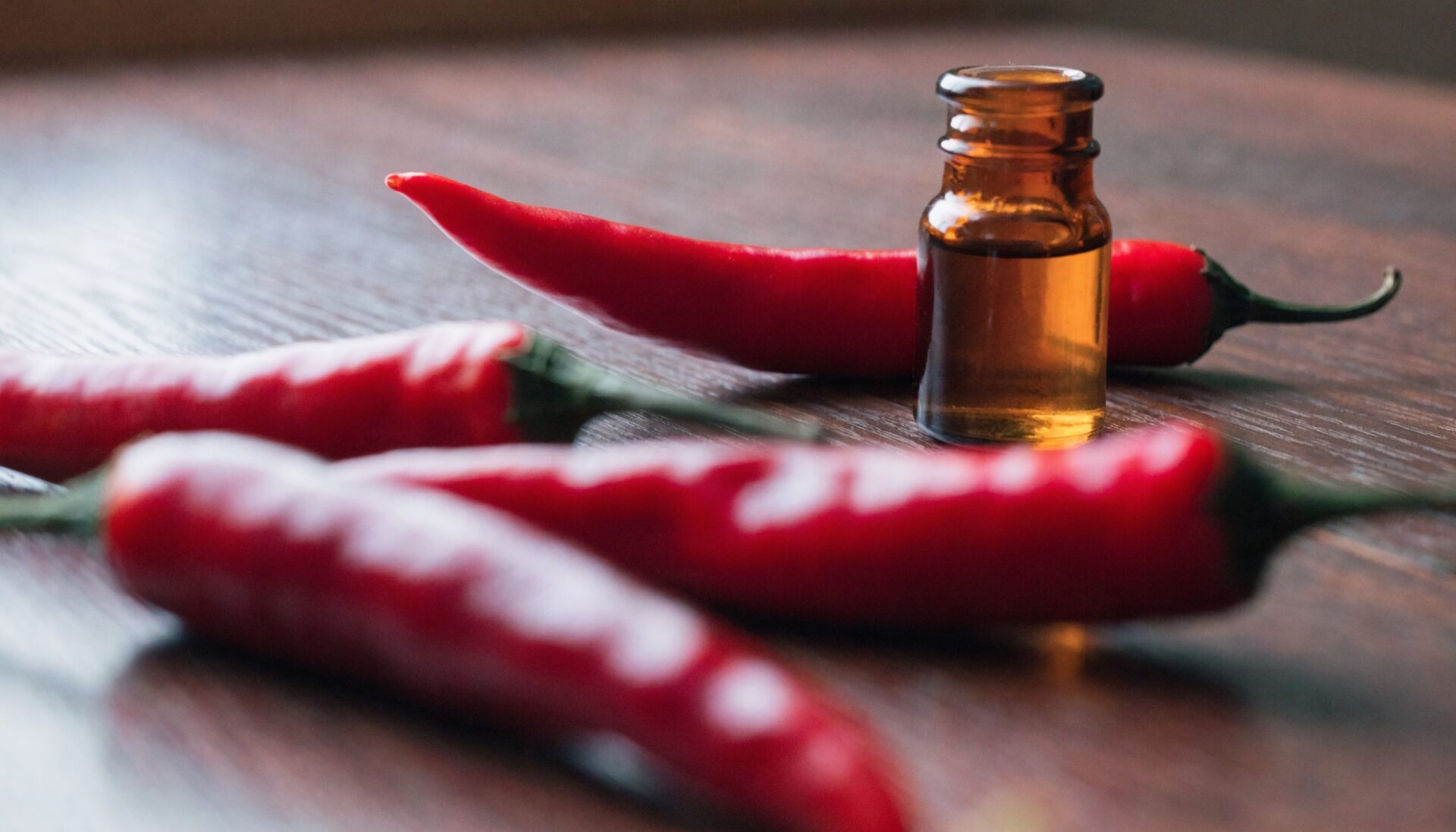

Capsicum oil, derived from chili peppers, owes its signature warming sensation to capsaicin, the compound responsible for a chili’s heat and one of the more commercially diverse ingredients covered in this series: “capsaicin cream” alone draws over 40,000 monthly searches, spanning topical pain relief, sports recovery, and dietary supplement applications.
What Is Capsicum Oil?
Capsicum oil is extracted from Capsicum annuum and related chili pepper species, concentrating capsaicinoids, the group of pungent compounds responsible for a pepper’s heat, measured on the Scoville scale. Depending on the intended application, capsicum can be supplied as an oil-based extract, an oleoresin, or a standardized capsaicin powder, each suited to different topical, food, or supplement formulation needs.
Key Applications of Capsicum Oil
Topical Pain Relief
Capsaicin’s best-established commercial application is topical pain relief, where it’s formulated into creams and patches for muscle, joint, and nerve pain, a category with substantial existing market size and consumer familiarity. Clinical evidence for topical capsaicin in pain relief is considerably stronger than for oral capsaicin supplements used for general pain.
Metabolic and Weight Management Support
Capsaicin has been studied for a potential thermogenic effect, a modest, temporary increase in calorie burning and core body temperature, which underlies its use in weight-management and metabolism-support supplement formulations, though the effect size in humans is generally modest.
Circulatory Support
Capsicum has a traditional and modern reputation for supporting healthy circulation and cholesterol regulation, a positioning reflected in both dietary supplement and topical product marketing.
Sports and Recovery Applications
Beyond general pain relief, capsaicin-based topical products are widely used in sports recovery contexts, often combined with other warming or cooling agents in muscle-relief formulations.
Oral Supplement Dosing
There are no official standardized dosing guidelines for oral capsaicin supplements, but published studies have used doses ranging from roughly 1.2 mg to 135 mg of capsaicin per day. A typical capsule made from dried cayenne pepper (around 500 mg) yields approximately 1.2 mg of actual capsaicin, since cayenne powder itself is a diluted source compared to purified capsaicinoid extracts.
Common Forms Used in Formulation
- Capsicum oleoresin, a concentrated extract used in topical creams, patches, and some supplement capsules
- Standardized capsaicin powder, used where a precise, measurable capsaicinoid content is required for a specific product claim
- Capsicum oil (diluted), used in lower-concentration topical and food applications where the full intensity of the oleoresin isn’t desired
- Dried cayenne pepper powder, a lower-potency, whole-food-style capsule filler
Sourcing and Quality Considerations for Manufacturers
Capsaicinoid content, typically measured in Scoville Heat Units or by percentage, is the key quality benchmark for capsicum extract, and it varies significantly by pepper variety and growing conditions. Manufacturers should request capsaicinoid standardization, extraction method, and, for topical products in particular, documentation supporting safe-use concentration levels, since capsaicin’s potency makes over-concentration a real formulation risk.
Safety and Side Effects
Capsicum oil and capsaicin are generally safe at appropriate concentrations for their intended use, but require careful formulation: topical products can cause skin irritation or a burning sensation if over-concentrated or used on broken skin, and oral supplements can cause abdominal pain, diarrhea, or irritation at high doses. High-dose, long-term oral use has also been associated with blood pressure changes, so products should be avoided by children, pregnant or breastfeeding individuals, and those with bleeding disorders, and used cautiously alongside blood pressure medication. Products should carry clear usage instructions and, for topical formats, a patch-test recommendation.
Frequently Asked Questions
Are capsaicin supplements good for you?
For most healthy adults, capsaicin supplements are considered safe when used at typical doses, with modest evidence supporting metabolic and circulatory benefits. Individuals with digestive sensitivities, bleeding disorders, or blood pressure concerns should approach oral capsaicin cautiously.
Who should not use capsaicin?
Children, pregnant or breastfeeding individuals, and people with bleeding disorders are generally advised to avoid capsaicin supplements, and anyone on blood pressure medication should consult a healthcare provider before use.
What is the best way to take capsaicin?
For pain relief, topical application (creams, gels, or patches) has stronger clinical support than oral supplements; for metabolic or circulatory support, oral capsules are more common, generally dosed well within the 1.2–135 mg per day range used in research.
What’s the difference between capsicum oil and capsaicin cream?
Capsicum oil or oleoresin is the raw extracted ingredient; capsaicin cream is a finished topical product formulated with a standardized, diluted capsaicin concentration suitable for direct skin application.
How is capsaicin’s potency measured?
Capsaicin potency is measured in Scoville Heat Units (SHU) for peppers and their extracts, or by direct capsaicinoid percentage for standardized ingredients used in supplement and topical formulation.
Sourcing capsicum oil or capsaicin extract for your formulation?
FC Materials supplies capsicum oil and standardized capsaicin extract to supplement and topical product manufacturers. Tell us your product needs and our team will respond with specs, pricing, and MOQ.