
Are you a fan of milk but worried about the fat content? Skim milk powder solves a problem the dairy industry has faced for decades: how to ship, store, and formulate with milk’s protein and calcium without the cost and spoilage risk of hauling water and fat around the world.
What Is Skim Milk Powder?
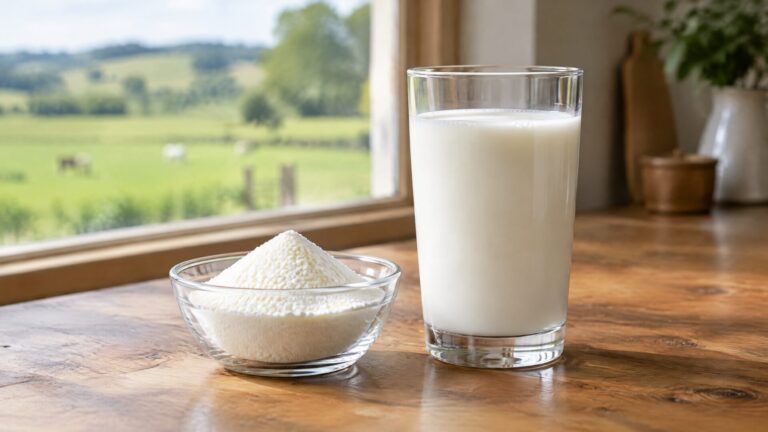
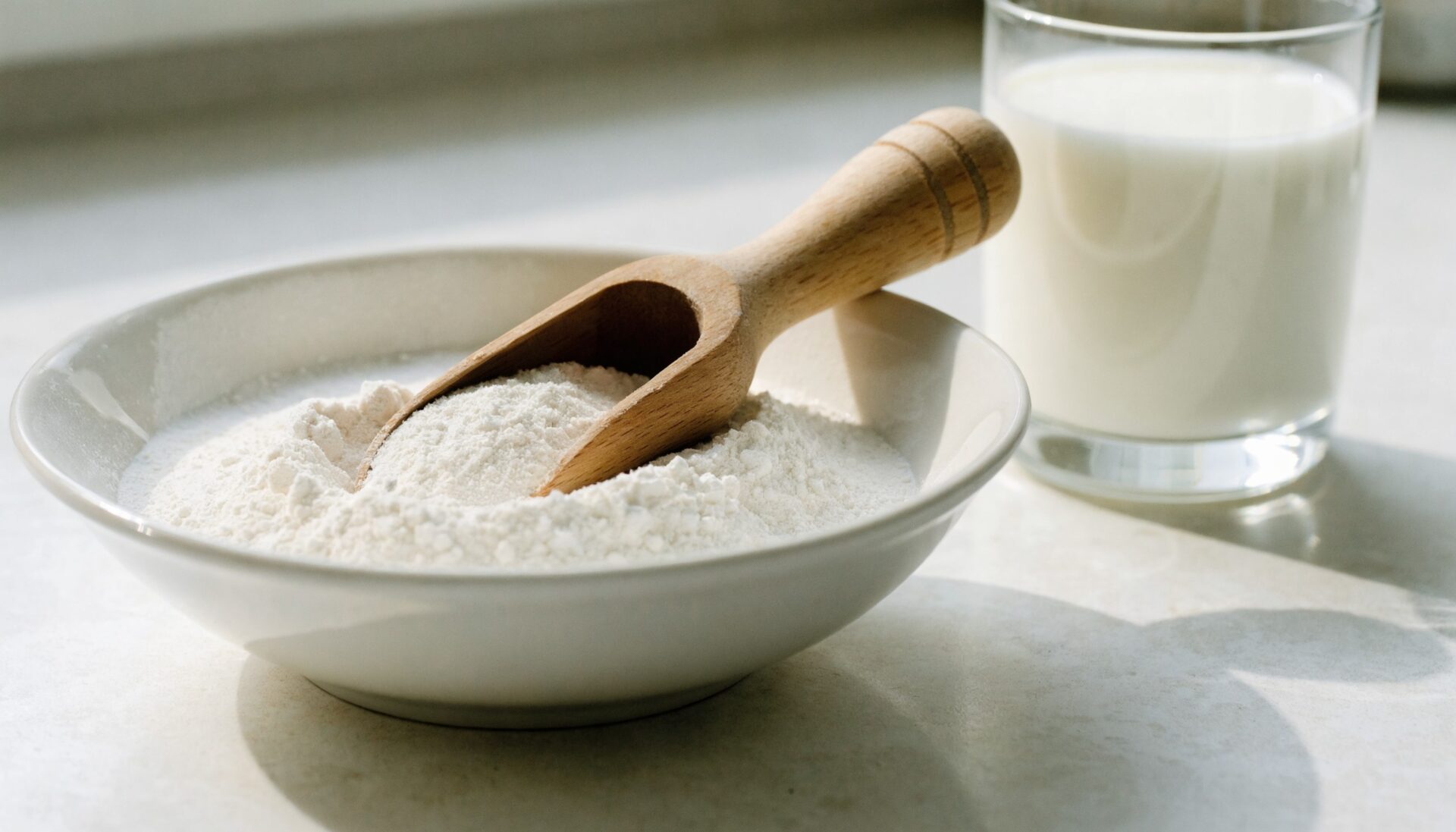
Skim milk powder is produced by removing the fat and nearly all the water from fresh milk, then spray-drying the remaining solids into a fine, shelf-stable powder. What’s left is a low-fat, high-protein dairy ingredient rich in calcium, vitamin D, and potassium, with a long shelf life and none of the refrigeration requirements of liquid milk. It’s sometimes called non-fat dry milk, and the two terms are used interchangeably in most markets, though the American Dairy Products Institute distinguishes them by slightly different moisture and solubility index specifications.
Key Benefits of Skim Milk Powder
High-Quality Protein
Skim milk powder typically contains around 34–36% protein, offering a complete amino acid profile useful in everything from bakery formulations to protein-fortified beverages.
Low in Fat, Calorie-Conscious
With roughly 0.1% fat content, it delivers milk’s nutritional profile without the calorie and fat load of whole milk, suiting reduced-fat product formulations.
Rich in Calcium and Essential Nutrients
Calcium supports bone health, while the powder also retains meaningful levels of vitamin D and potassium, both important for calcium absorption and normal muscle and heart function.
Long Shelf Life and Easy Storage
Removing water and fat significantly extends shelf life and reduces the risk of spoilage, making skim milk powder easier to transport and store at scale than liquid dairy.
Common Forms Used in Formulation
- Regular (non-instant) skim milk powder, favored in baking and processed food manufacturing
- Instant (agglomerated) skim milk powder, engineered to dissolve quickly in cold or warm liquids
- Low-heat, medium-heat, and high-heat classifications, each suited to different applications from recombined milk to baked goods
- An ingredient in infant formula, confectionery, processed meats, and beverage powders
Skim Milk Powder vs. Whole Milk Powder and Non-Fat Dry Milk
Whole milk powder retains the full fat content and a richer flavor, while skim milk powder has the fat removed before drying, giving a leaner, more neutral-tasting powder better suited to reduced-fat formulations. “Non-fat dry milk” is largely a synonym for skim milk powder in everyday use, though industry specifications (such as those published by the American Dairy Products Institute) define slightly different heat treatment and solubility index ranges between the two labels depending on the finished-product application.
Sourcing and Quality Considerations for Manufacturers
Buyers should confirm protein content specifications (typically 34% minimum), heat classification appropriate to their application, and microbiological testing results on every batch. Heat treatment matters in particular: low-heat powder is preferred for recombined milk and cheese-making, while high-heat powder is better suited to baked goods, where its functional properties improve dough strength and browning. Non-GMO and organic-certified skim milk powder options are increasingly requested by manufacturers targeting clean-label positioning.
Safety and Side Effects
Skim milk powder contains lactose and milk proteins, and products made with it must declare milk as an allergen. It is not suitable for individuals with lactose intolerance or milk protein allergies unless formulated with lactase enzyme treatment. Because it still contains natural milk sugars, individuals managing diabetes should account for its carbohydrate content within their overall meal planning, though its lower fat content makes it a common component of reduced-fat, protein-forward products.
Skim Milk Powder in Adult Nutrition
Powdered milk is often associated with infant and childhood nutrition, but skim milk powder is widely used in products formulated for adults. Because the fat is removed before drying, it delivers milk protein and calcium at a lower calorie load than whole milk powder – a useful profile for adult formulations where protein density matters more than fat content.
Common adult-focused applications include meal replacement and weight-management powders, high-protein beverages and shakes, senior and medical nutrition formulas where calcium and protein intake are a formulation priority, and everyday bakery and beverage products aimed at general adult consumers. Its long shelf life and stable handling also make it practical for markets where refrigerated fresh milk supply is inconsistent.
For manufacturers, the main formulation considerations are lactose content (relevant for lactose-intolerant consumer segments), protein standardisation batch to batch, and solubility in cold versus hot systems – all of which should be confirmed against a current certificate of analysis.
Frequently Asked Questions
What is skim milk powder?
Skim milk powder is a dairy ingredient made by removing the fat and water from fresh milk and spray-drying the remaining solids into a fine, shelf-stable powder, retaining most of the protein, calcium, and other nutrients.
Is skimmed milk powder healthy?
Yes, for most people. It provides high-quality protein, calcium, and other nutrients with minimal fat, though it should be considered alongside overall dietary needs, particularly for those managing lactose intolerance or diabetes.
What is the difference between milk powder and skimmed milk powder?
Whole milk powder retains the natural fat content of milk, while skimmed (skim) milk powder has the fat removed before drying, resulting in a leaner, lower-calorie product.
What is the difference between skim milk powder and whole milk powder in baking?
Skim milk powder is commonly reconstituted with water or added directly to dry ingredients in baking, providing the same protein and calcium contribution as fresh milk without adding extra fat.
Is dry milk good for adults?
Yes. Dry (powdered) milk provides broadly the same core nutrition as the fresh milk it was made from, including protein and calcium. Skim milk powder in particular suits adults who want that nutrition without the additional fat and calories of whole milk, which is why it appears in meal replacements, protein beverages, and senior nutrition products.
What does skim milk mean?
“Skim” refers to milk that has had the cream, and therefore most of the fat, removed. Skim milk powder is that same low-fat milk with the water also removed by spray-drying, leaving a shelf-stable powder that retains most of the original protein, calcium, and other non-fat nutrients.
Sourcing skim milk powder for your formulation?
FC Materials supplies quality-tested skim milk powder for bakery, beverage, and food manufacturing. Tell us your product needs and our team will respond with specs, pricing, and MOQ.