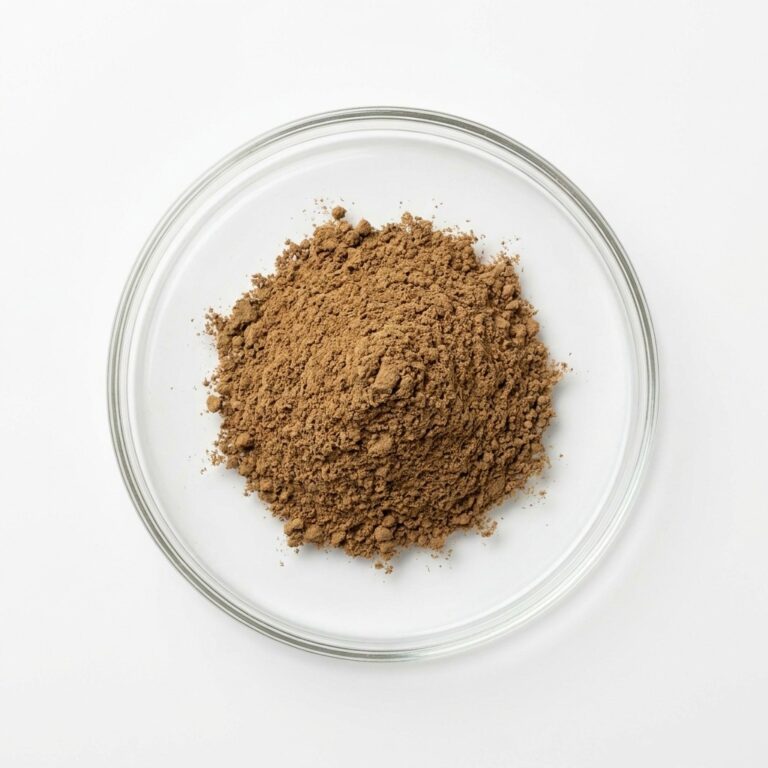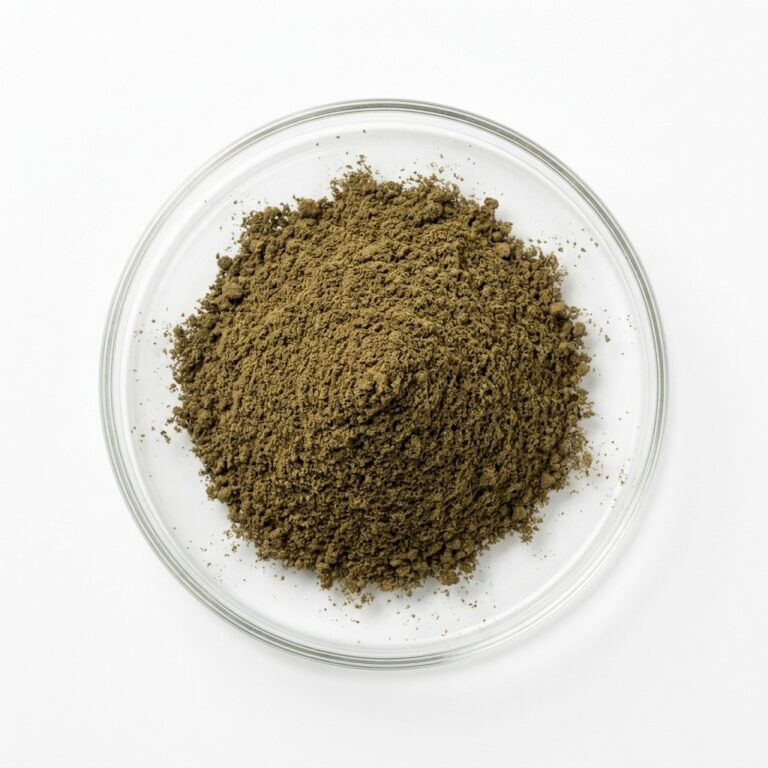

Senna is one of the few herbal laxatives with genuine pharmacological backing. Its active compounds, the sennosides, are used in over-the-counter laxatives as well as in herbal teas and traditional medicine. This guide covers what senna leaf is, how it works, what controlled studies show, how safe it is, and what manufacturers should check when sourcing senna leaves or senna extract.
What is senna leaf?
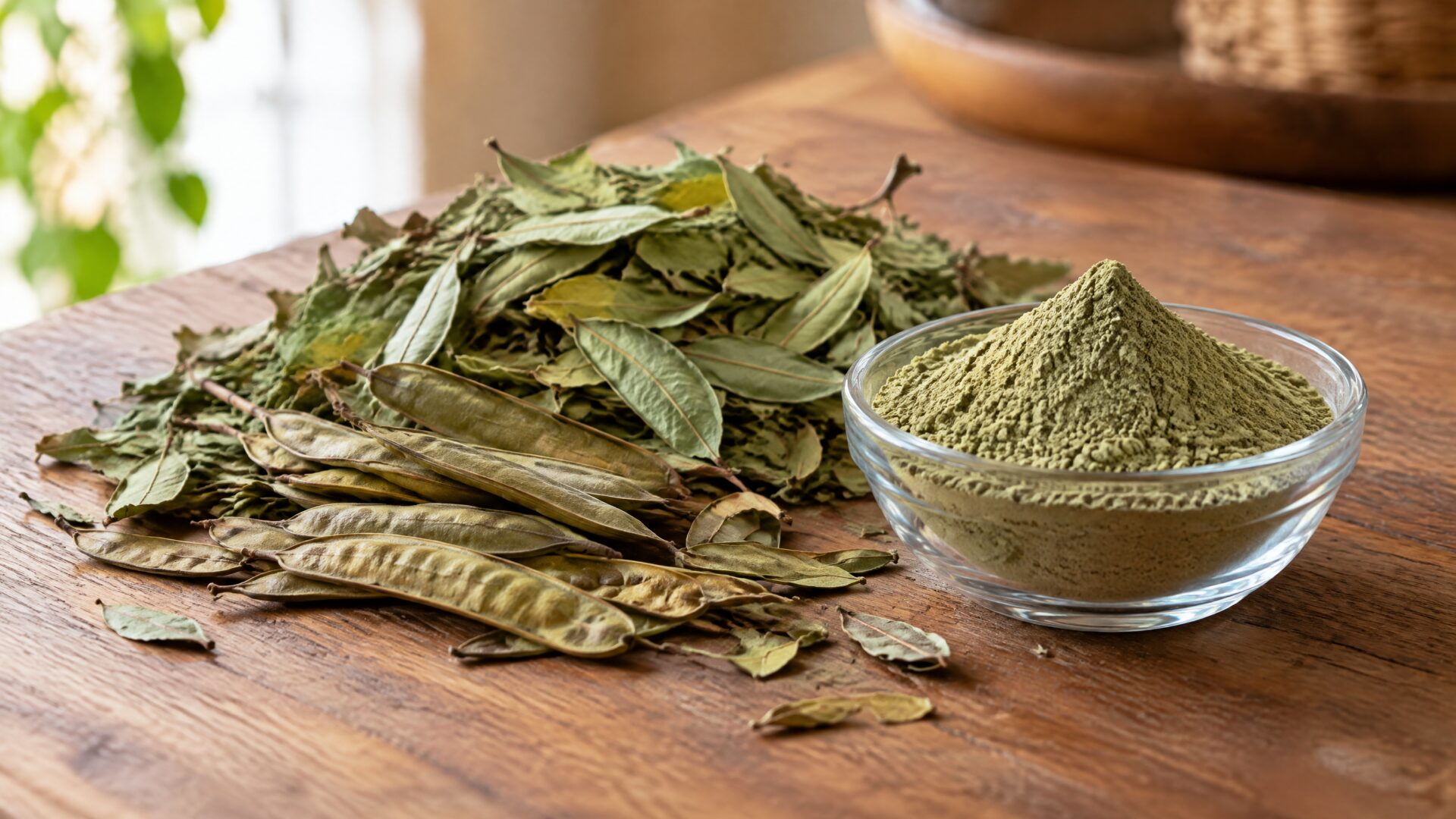
Senna leaf comes from Senna alexandrina, a shrub of the legume family (Fabaceae). Older names include Cassia senna, Cassia angustifolia and Cassia acutifolia. The senna plant grows in dry tropical regions of Africa, the Middle East and India. Indian senna, grown in Tamil Nadu, is often traded as Tinnevelly senna.
The medicinal plant has many local names. In Malaysia it is daun senna or daun jati cina. In Arabic and in Islamic traditional medicine it is sana makki. In Tamil it is nilavarai. Both the leaves and pods (fruits) are used. As an ingredient, senna is supplied as cut leaf, leaf powder or a standardised senna extract.
How senna works: sennosides and the laxative effect
The active compounds in senna are sennosides, mainly sennoside A and sennoside B. They are anthraquinone glycosides. Sennosides pass through the stomach and small intestine largely unchanged. In the colon, gut bacteria convert them into an active form. This stimulates the intestinal muscles to contract and reduces how much water the colon absorbs. The result is softer stools and a bowel movement, usually within 6 to 12 hours.
Because senna is a stimulant laxative, its laxative effect depends on the dose of sennosides. Senna may act more strongly in some people than others, which is why clear dose guidance matters when you use senna to relieve constipation. That is why manufacturers standardise senna extract to a defined sennoside content.
What does senna leaf do for the body?
- Relieves occasional constipation. Senna is a natural laxative, and this is the main use of senna with trial evidence.
- Bowel preparation. Sennosides are used to clear the bowel before colonoscopy.
- Traditional medicine. Senna has a long history in herbal medicine, including Islamic, Ayurvedic and traditional Chinese medicine, mainly as a purgative.
What the research shows for constipation
In a double-blind trial in 90 adults with chronic constipation, senna (1.0 g a day for 28 days) improved symptoms in 69.2% of patients, against 11.7% on placebo. Bowel movements and quality of life also improved, and there were no severe treatment-related adverse events. [1] Most patients were women, and the trial was run in Japan.
For bowel preparation, a randomised trial in 705 adults found that a sennoside A + B regimen cleaned the bowel adequately in 70.1% of patients, compared with 56.3% for a sodium picosulfate regimen. Intolerance was more common with the sennoside regimen: 7.0% versus 0.7%. [2]
After childbirth, a Cochrane review found low-certainty evidence that senna helped more women have a first bowel movement within 24 hours. It also increased abdominal cramps. The reviewers judged the evidence insufficient for firm conclusions. [3]
Senna leaf tea: how people take senna as tea
Senna tea is made by steeping cut senna leaves or pods in hot water. It tastes bitter, so tea blends often add peppermint, ginger or fruit. The sennoside content of leaf varies with origin, harvest and storage, so the strength of a cup is hard to predict. A tablet or capsule made from standardised extract gives a defined dose. For tea manufacturers, consistent leaf grade and testing matter more than for most herbal teas.
Does senna clean your stomach? Senna for detox and weight loss
Senna acts on the colon, not the stomach. It speeds up the passage of stool and water. In our review of the literature we found no controlled trials showing that senna reduces body fat. Any weight change after a laxative is mostly water and stool. Senna is often sold in “detox” and “slimming” teas, but we do not recommend positioning senna for weight loss.
Misuse carries real risks. One case report describes acute liver failure in a woman who drank a litre a day of tea made from 70 g of senna fruits for more than three years. [4] Severe liver injury is unusual, but it shows why products need clear dose and duration limits.
Is senna leaf safe to take daily? Side effects of senna
Senna is intended for occasional, short-term use. Prolonged daily use can lead to dependence and electrolyte imbalance, so products should carry clear dosing and duration guidance. Reported side effects include abdominal cramps [3] and intolerance of high bowel-preparation doses [2]. Loose stools and diarrhoea are the expected result of too high a dose.
Long-term use of anthraquinone laxatives can darken the lining of the colon, a condition called melanosis coli. In one hospital study, people with melanosis coli had more colorectal polyps. [5] A 2022 meta-analysis of observational studies found a trend towards a higher colorectal cancer risk with anthraquinone laxatives (OR 1.41), but it was not statistically significant. The authors said the evidence quality was moderate to low and called for better studies. [6]
Senna is not recommended during pregnancy or breastfeeding without medical advice, for children unless a doctor advises it, or for people with intestinal blockage or inflammatory bowel disease. People taking other medicines should ask a doctor or pharmacist before they use senna.
Dosage forms: how senna is supplied
- Standardised senna extract – defined by sennoside percentage, used in tablets, capsules and controlled-dose laxatives. FC Materials supplies senna leaf extract at 60% sennosides (UV).
- Cut-and-sifted senna leaf – tea-grade material for digestive tea blends.
- Senna leaf powder – used in encapsulated and blended supplement products.
Store senna sealed, in a cool, dry place away from light. Moisture and light can degrade sennosides over time.
Sourcing and quality considerations for manufacturers
Sennoside content is the key specification. Buyers should require an extract or leaf standardised to a defined sennoside percentage, with a certificate of analysis, since potency drives both efficacy and safe dosing. Check how sennosides were measured: UV and HPLC methods give different numbers. Our guide to sennosides and senna extract COAs explains the difference.
Because senna is a stimulant laxative with regulatory oversight in many markets, documentation matters:
- species authenticity (Senna alexandrina) and plant part (leaf or pod);
- country of origin;
- heavy metals, pesticide residues and microbiology;
- for tea-grade leaf, particle size and foreign matter; for extract, batch-to-batch sennoside consistency.
Frequently asked questions
What is senna leaf used for?
Senna leaf is used as a stimulant laxative for short-term relief of occasional constipation, for bowel preparation before colonoscopy, and in digestive tea blends.
How quickly does senna work?
Senna usually produces a bowel movement within 6 to 12 hours, which is why it is often taken at night.
What is the Indian name for senna leaves?
Indian senna is Cassia angustifolia, traded as Tinnevelly senna. In Tamil it is called nilavarai. In Malay it is daun senna or daun jati cina, and in Arabic sana makki.
Is senna safe for daily use?
No. Senna is intended for occasional, short-term use. Prolonged daily use can cause dependence and electrolyte imbalance, so products should include clear duration guidance.
How is senna standardised for supplements?
Senna is standardised by its sennoside percentage, allowing formulators to deliver a consistent, dose-controlled laxative effect in tablets, capsules and teas.
What the research says
- In a 28-day double-blind trial in 90 adults with chronic constipation, senna 1.0 g a day improved overall symptoms in 69.2% of patients versus 11.7% on placebo, with no severe treatment-related adverse events. [1]
- In a randomised trial in 705 adults, a sennoside A + B bowel preparation achieved adequate cleansing more often than a sodium picosulfate regimen (70.1% vs 56.3%), but intolerance was more frequent (7.0% vs 0.7%). [2]
- A Cochrane review found low-certainty evidence that senna increased first bowel movements within 24 hours after childbirth and increased abdominal cramps. [3]
- A 2022 meta-analysis of observational studies found a non-significant association between anthraquinone laxative use and colorectal cancer (OR 1.41, 95% CI 0.94–2.11), with moderate- to low-quality evidence. [6]
These summaries describe published research on the ingredient. They are not claims for any finished product; claims on finished products must meet the rules of the market where they are sold.
References
- Morishita D, et al. Senna versus magnesium oxide for the treatment of chronic constipation: a randomized, placebo-controlled trial. Am J Gastroenterol. 2021;116(1):152-161. doi:10.14309/ajg.0000000000000942
- Durak I, et al. Comparison of sennoside A + B and sodium picosulfate-based regimens for bowel preparation: a prospective randomized trial. Tech Coloproctol. 2026;30(1). doi:10.1007/s10151-026-03336-2
- Turawa EB, et al. Interventions for preventing postpartum constipation. Cochrane Database Syst Rev. 2020;8(8):CD011625. doi:10.1002/14651858.CD011625.pub3
- Vanderperren B, et al. Acute liver failure with renal impairment related to the abuse of senna anthraquinone glycosides. Ann Pharmacother. 2005;39(7-8):1353-1357. doi:10.1345/aph.1E670
- Kassim SA, et al. Retrospective study on melanosis coli as risk factor of colorectal neoplasm: a 3-year colonoscopic finding in Zhuhai Hospital, China. Int J Colorectal Dis. 2020;35(2):213-222. doi:10.1007/s00384-019-03435-7
- Lombardi N, et al. Anthraquinone laxatives use and colorectal cancer: a systematic review and meta-analysis of observational studies. Phytother Res. 2022;36(3):1093-1102. doi:10.1002/ptr.7373
Sourcing senna leaf or extract?
FC Materials supplies standardised senna leaf extract (60% sennosides, UV) to supplement and tea manufacturers in Malaysia. Tell us your product and volume, and our team will send the specification, COA and pricing.