
Vanilla is one of the most universally recognized flavors in the world, and also one of the most labor-intensive spices to produce, since each orchid flower must be hand-pollinated and the resulting bean cured over several months. Vanilla powder, made from dried, ground vanilla beans, offers manufacturers a stable, alcohol-free alternative to liquid vanilla extract, with “vanilla powder” drawing nearly 15,000 monthly searches.
What Is Vanilla Powder?
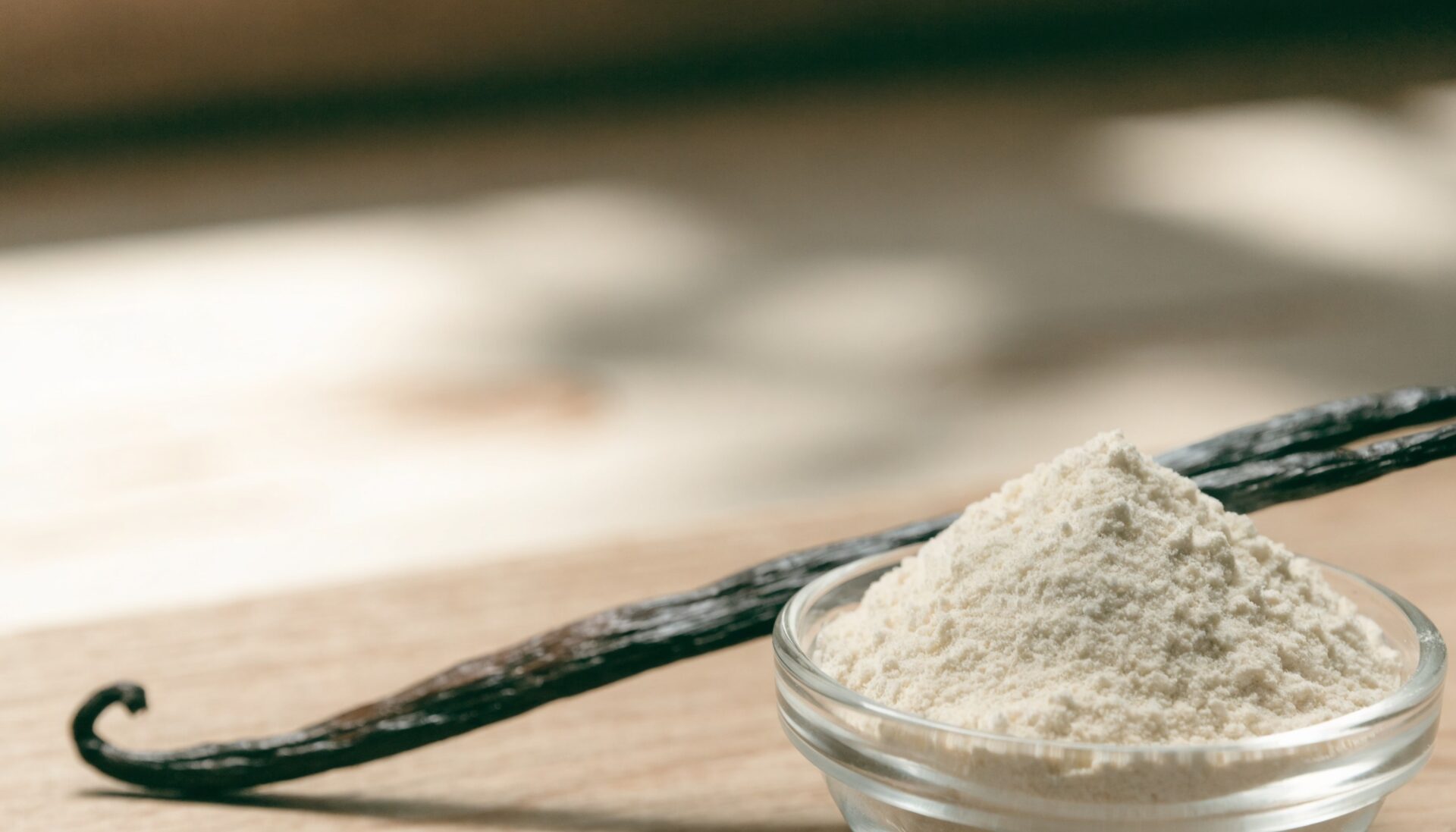
Vanilla powder is produced by drying and finely grinding whole cured vanilla beans (Vanilla planifolia is the most widely cultivated species), sometimes with the seeds and pod both included, or as a pure ground-bean product without added sugar or carriers. Unlike liquid vanilla extract, which is alcohol-based, vanilla powder is dry, alcohol-free, and heat-stable, making it a practical ingredient choice for dry-mix formulations, baking applications sensitive to added liquid, and products where alcohol content must be avoided or declared.
Food Ingredient vs. Fragrance Note: Two Different Products
Searches for “vanilla powder” surface two distinct categories that manufacturers should not confuse: the food-grade ground vanilla bean ingredient covered in this article, and an unrelated fine fragrance called Vanilla Powder by perfume house Matiere Premiere, launched in 2023, which uses “vanilla powder” as an evocative scent name rather than referring to an actual food ingredient. For culinary, beverage, and supplement formulation, the relevant product is always the dried, ground vanilla bean ingredient.
Key Applications of Vanilla Powder
Baking and Food Manufacturing
Vanilla powder is a preferred flavoring ingredient in baked goods, dry cake and cookie mixes, and other applications where the added moisture of liquid extract would affect texture or shelf stability.
Beverage and Coffee Applications
Vanilla powder is increasingly used in coffee creamers, powdered beverage mixes, and protein powders, where its dry, heat-stable form integrates more easily into a powdered product than liquid extract would.
Supplement and Functional Food Flavoring
Beyond pure culinary use, vanilla powder is a common flavor-masking and flavoring ingredient in protein powders, meal replacements, and other functional food and supplement formulations where a clean-label, alcohol-free flavor ingredient is preferred.
Fragrance and Personal Care
Vanilla powder and vanilla-derived aroma compounds are also used in the fragrance and personal care industry, a smaller but notable application distinct from its food and supplement uses.
Grades and Origin
Madagascar remains the benchmark origin for vanilla, producing the majority of the world’s supply and commanding a quality and price premium associated with its bourbon vanilla variety. Origin, curing method, and whether the powder includes visible vanilla bean specks (often a marketing signal of authenticity) all affect both the sensory profile and the price point of vanilla powder as a formulation ingredient.
Common Forms Used in Formulation
- Pure ground vanilla bean powder, the highest-quality format, made from whole cured beans with no additives, used where a clean-label, authentic vanilla claim is required
- Vanilla powder with a carrier (such as maltodextrin or sugar), a more cost-effective, free-flowing format used in dry mixes and blended formulations
- Vanilla extract powder, made by spray-drying liquid vanilla extract onto a carrier, offering vanilla flavor in dry form at a lower cost than pure ground bean powder
Sourcing and Quality Considerations for Manufacturers
Vanilla is subject to significant price volatility tied to weather events and crop yields in Madagascar, so manufacturers sourcing vanilla powder at scale typically diversify origin (Madagascar, Uganda, Indonesia, and increasingly Papua New Guinea) and request documentation on curing method, vanillin content, and whether the product is a pure bean powder or a carrier-blended format, since these significantly affect both cost and flavor strength.
Safety and Considerations
Vanilla powder is broadly recognized as safe for food use and has no meaningful safety concerns at typical culinary or formulation doses. The main practical consideration for manufacturers is accurate labeling: pure vanilla bean powder, carrier-blended vanilla powder, and vanilla extract powder each have different vanillin concentrations and should be labeled and dosed accordingly.
Frequently Asked Questions
Is vanilla powder the same as vanilla extract?
No. Vanilla extract is alcohol-based and liquid, while vanilla powder is dry and alcohol-free, made either from ground whole beans or spray-dried extract on a carrier. They can often be used interchangeably in formulation, with adjustments for concentration.
What is vanilla powder used for?
It’s primarily used as a flavoring ingredient in baking, dry beverage and coffee mixes, and supplement or protein powder formulations, anywhere a dry, alcohol-free vanilla flavor is preferred over liquid extract.
Why does vanilla powder cost more than vanilla extract?
Pure vanilla bean powder requires more of the labor-intensive cured bean per unit of finished product than liquid extract, which is typically diluted, making pure powder formats generally more expensive on a like-for-like flavor basis.
Can vanilla powder be used in gluten-free or allergen-sensitive products?
Pure ground vanilla bean powder is naturally free of common allergens, though carrier-blended versions should be checked individually, since the carrier ingredient (such as maltodextrin) determines the product’s allergen and gluten-free status.
Sourcing vanilla powder for your formulation?
FC Materials supplies vanilla powder and other flavor ingredients to food, beverage, and supplement manufacturers. Tell us your product needs and our team will respond with specs, pricing, and MOQ.