
Goji berry has been used in traditional Chinese medicine for centuries, prized long before “superfood” entered the Western wellness vocabulary. Native to China and cultivated across parts of Asia, these small orange-red berries are now a familiar sight in health food stores worldwide, sold dried, as juice, or as a standardized extract for supplements. With search interest topping 25,000 monthly searches for “goji berry benefits” alone, it remains one of the most consistently popular botanical ingredients in the antioxidant category.
What Is Goji Berry?
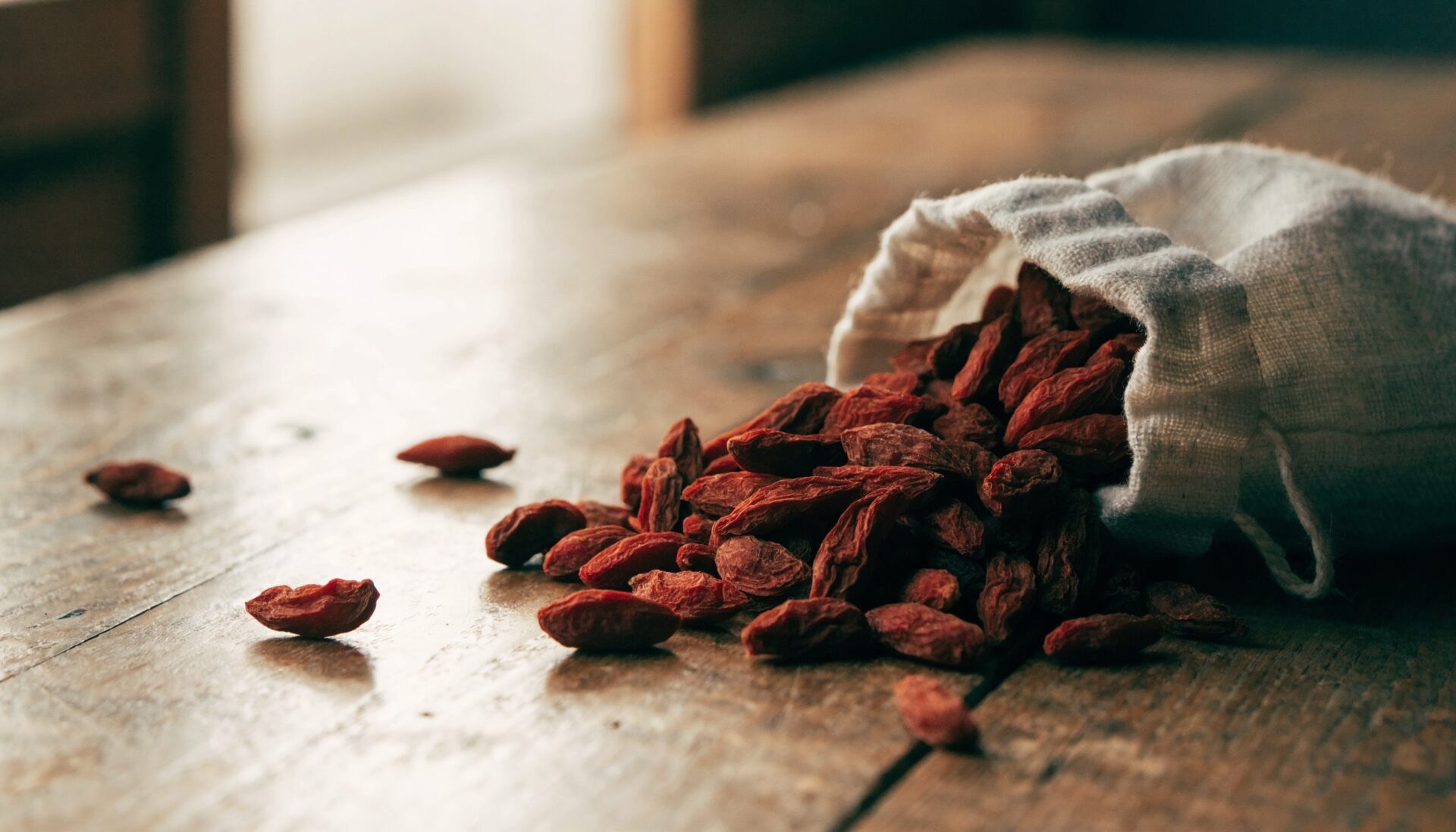
Goji berry (Lycium barbarum), also known as wolfberry, is a small red-orange fruit from a flowering shrub native to China, where it has a documented history of use in traditional medicine stretching back over a thousand years. The fresh berry is delicate and doesn’t travel well, so nearly all goji berry sold internationally is dried, powdered, or processed into a standardized extract or juice concentrate, formats that suit both retail and formulation use.
Key Health Benefits of Goji Berry
Antioxidant Support
Goji berries are rich in carotenoids, particularly zeaxanthin, along with polysaccharides unique to Lycium barbarum that have been the focus of much of the modern research interest in the fruit. This antioxidant density underpins most of goji’s general wellness positioning.
Eye Health
Zeaxanthin, one of goji’s signature compounds, is also found in the retina, and goji berry is frequently formulated into eye-health blends alongside lutein for this reason.
Immune Support
The polysaccharides found in goji berry have been studied for their potential role in supporting healthy immune function, a claim that features prominently in general wellness and immune-support product positioning.
Skin Health
Goji berry benefits for skin are a smaller but meaningful share of search interest, driven by the fruit’s antioxidant and vitamin C content, both relevant to beauty-from-within formulations.
Goji Berry Benefits for Men and Women
Goji berry’s traditional use spans both men’s and women’s health applications. In traditional Chinese medicine, it’s associated with broad vitality and life-force support for both sexes, while modern Western formulations tend to split along more specific lines: general antioxidant and eye-health products for a broad audience, alongside more targeted men’s and women’s vitality blends that draw on goji’s traditional reputation.
Common Forms Used in Formulation
- Dried whole berries, the most familiar consumer format, used in food applications and as a snack ingredient.
- Goji berry powder, used in capsules, smoothie mixes, and functional food formulations.
- Standardized extract, concentrated for polysaccharide or zeaxanthin content, used where a measurable potency claim is needed.
Sourcing and Quality Considerations for Manufacturers
Goji berry quality varies significantly by growing region, harvest method, and drying process, all of which affect polysaccharide content and shelf stability. Ningxia province in China is widely regarded as the benchmark growing region. Buyers formulating for a premium or clinically-positioned product typically request polysaccharide content by percentage, pesticide residue testing, and confirmation of drying method (sun-dried vs. hot-air dried can affect both nutrient retention and appearance).
Safety and Side Effects
Goji berry is well tolerated by most consumers. It has occasionally been the subject of online safety discussion regarding potential interactions with certain blood-thinning (such as warfarin) and diabetes or blood pressure medications, so products intended for at-risk populations typically carry a standard consult-your-doctor note. Available research has not raised specific kidney safety concerns at typical dietary intake levels. Goji berry is not associated with the kind of serious safety concerns that would restrict its use in general wellness formulations, and it remains one of the more broadly accepted botanical ingredients in the antioxidant category.
Frequently Asked Questions
How many goji berries should be used in a serving?
Typical finished-product servings range from a small handful of dried berries (roughly 20-30g) to standardized extract doses calibrated to a specific polysaccharide content, depending on the product format and positioning.
What’s the difference between goji berry juice and dried goji berries?
Both retain goji’s core antioxidant compounds, though juice concentrate is more suited to beverage formulations while dried berries and powder are more versatile across capsules, food, and snack applications.
Is goji berry the same as wolfberry?
Yes, wolfberry is an older common name for the same Lycium barbarum fruit now more widely known as goji berry.
Sourcing goji berry extract for your formulation?
FC Materials supplies goji berry extract and other antioxidant-rich botanical ingredients to supplement, nutraceutical, and food manufacturers. Tell us your product needs and our team will respond with specs, pricing, and MOQ.
Who should avoid goji berries?
Those taking warfarin or other blood-thinning medications, as well as people on diabetes or blood pressure medications, should consult a healthcare provider before regularly consuming goji berries or concentrated extract, since interactions are possible with all three medication types.