
That cooling, sinus-clearing hit of menthol in toothpaste, chest rubs, and after-dinner mints traces back to one plant. Peppermint oil is one of the most widely used essential oils on the market, and for good reason — few natural ingredients pack this much versatility into a single bottle.
What Is Peppermint Oil?
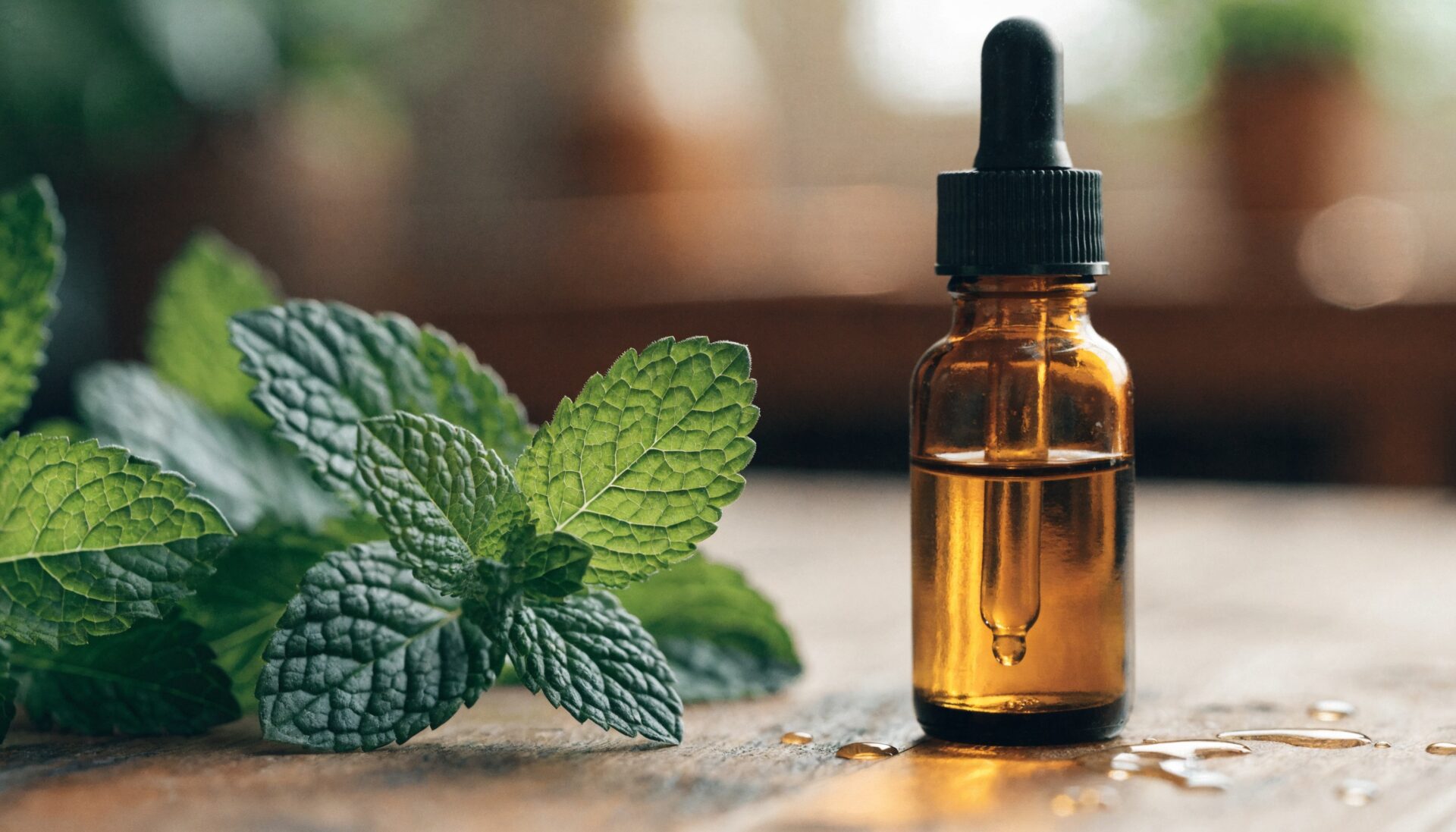
Peppermint oil is steam-distilled from the leaves of the peppermint plant (Mentha piperita), a hybrid of watermint and spearmint. Its defining compound, menthol, is responsible for peppermint’s signature cooling sensation and fresh, sharp scent, which is why it shows up in everything from toothpaste and shampoo to topical pain-relief balms.
Key Benefits of Peppermint Oil
Headache and Tension Relief
Applied topically (diluted) to the temples and forehead, peppermint oil’s cooling effect is commonly used to ease tension headaches, with research suggesting it may reduce both the frequency and intensity of episodes by improving local blood flow and relaxing tight muscles.
Digestive Comfort
Peppermint oil relaxes digestive muscles and is a well-studied ingredient in enteric-coated capsules used to ease bloating, gas, and symptoms of irritable bowel syndrome (IBS). Non-enteric-coated peppermint oil, by contrast, can actually worsen heartburn, which is why capsule formulation matters for this specific use case.
Mental Clarity and Energy
The invigorating aroma has been linked to improved alertness and focus, making peppermint oil a popular choice in diffuser blends for workspaces and study areas.
Muscle and Scalp Support
Its analgesic and circulation-boosting properties make peppermint oil a common addition to muscle-soothing balms, while diluted scalp massage may help support hair growth by increasing blood flow to hair follicles. One clinical study found topical peppermint oil performed comparably to minoxidil, an FDA-approved hair loss treatment, for supporting hair growth, though it works best as part of a broader hair care routine rather than a standalone treatment.
Common Forms Used in Formulation
- Pure essential oil for diffusers, topical dilution, and DIY blends
- Enteric-coated capsules for digestive support supplements
- An active ingredient in toothpaste, mouthwash, and oral care products
- A component in topical balms, roll-ons, and muscle rubs
- An additive in shampoos and scalp treatments
Sourcing and Quality Considerations for Manufacturers
Buyers should request a certificate of analysis confirming menthol content (typically standardized to 30–55%), along with GC/MS purity testing to rule out synthetic adulteration. Peppermint oil quality can vary significantly by growing region and distillation method, so consistent sourcing matters for formulators building products around a specific sensory profile. Food-grade and cosmetic-grade peppermint oil should come with allergen and IFRA compliance documentation.
Safety and Side Effects
Peppermint oil should always be diluted with a carrier oil before topical application, as it can irritate skin and mucous membranes undiluted. It should not be applied near the eyes or on infants and young children’s faces, as menthol can trigger breathing difficulty in this age group. Those with GERD may find that oral peppermint oil worsens heartburn, and enteric-coated capsules should be used under guidance for digestive conditions. Enteric coatings can also break down faster when taken alongside acid-reducing medications, increasing heartburn risk, so spacing doses at least two hours apart from such medications is generally advised.
Frequently Asked Questions
Is peppermint oil safe to apply directly to skin?
No, peppermint oil should be diluted with a carrier oil before topical use to avoid irritation, typically at a 2–5% dilution for adult skin.
Can peppermint oil help with hair growth?
Some research suggests diluted peppermint oil applied to the scalp may increase blood flow and support hair follicle activity, with at least one study finding effects comparable to minoxidil, though it works best as part of a broader hair care routine.
Where do you put peppermint oil on your body?
Common application points include the temples and forehead (diluted) for headache relief, the back of the neck or wrists for an energy boost, and the soles of the feet or sore muscles for pain relief, always with appropriate carrier oil dilution.
What is the difference between peppermint oil and peppermint extract?
Peppermint oil is a concentrated essential oil obtained by steam distillation, intended for topical and aromatic use, while peppermint extract is a diluted, food-safe flavoring typically dissolved in alcohol for culinary use.
Sourcing peppermint oil for your formulation?
FC Materials supplies GC/MS-tested peppermint oil for cosmetic, oral care, and supplement manufacturing. Tell us your product needs and our team will respond with specs, pricing, and MOQ.