
Sakura extract sells a feeling as much as a function – the fleeting beauty of Japan’s cherry blossom season, bottled into a cosmetic ingredient. But behind the seasonal marketing appeal, sakura extract is a genuine botanical active with documented brightening and antioxidant properties that formulators use year-round.
What Is Sakura Extract?
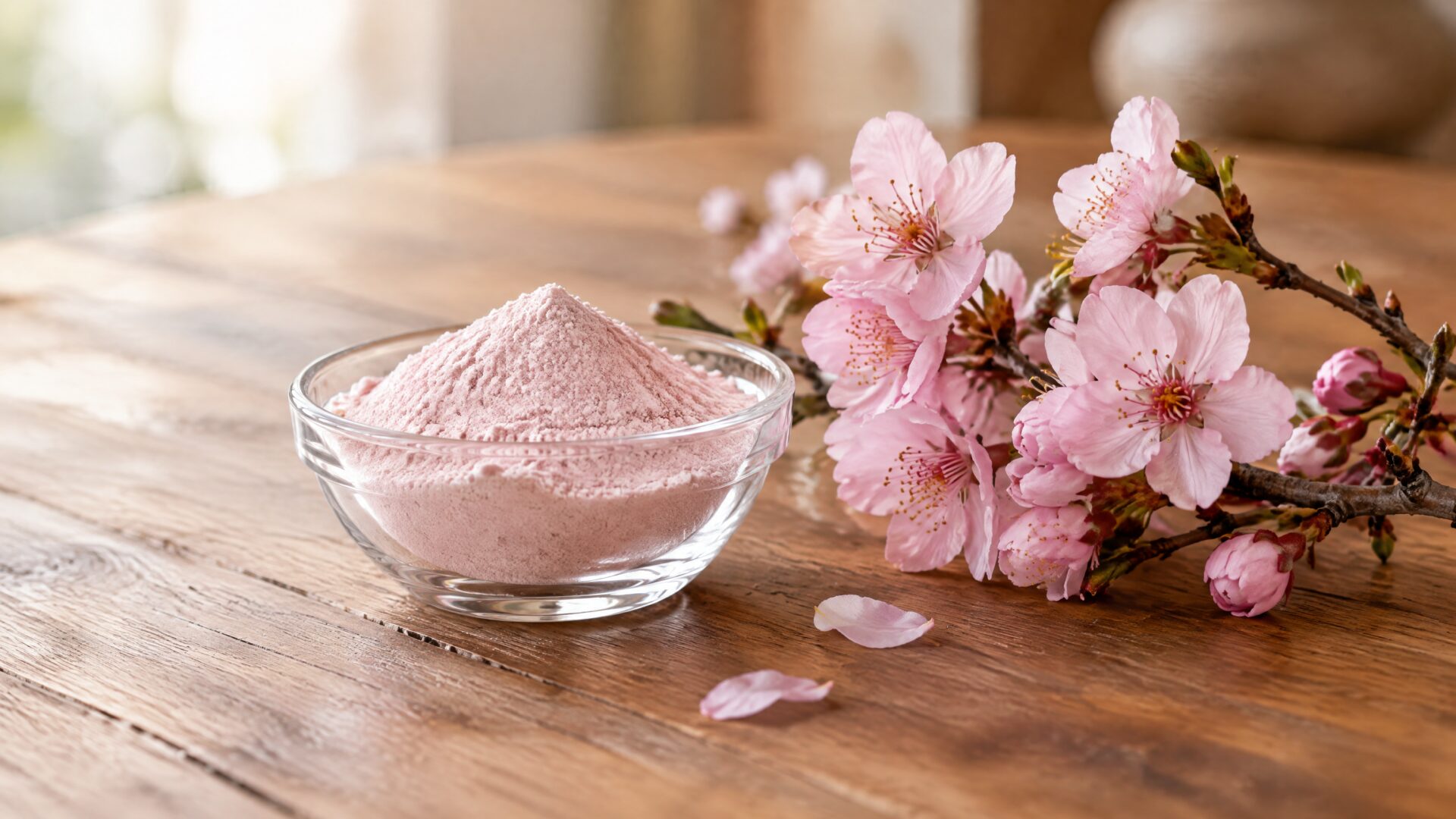
Sakura extract is derived from the flowers, leaves, or bark of the Japanese cherry blossom tree (Prunus species), most commonly Prunus speciosa or Prunus lannesiana. The extract concentrates polyphenols and other plant compounds credited with antioxidant and skin-brightening effects. Traditionally used in Japanese skincare, sakura extract has become a popular ingredient globally, valued both for its functional benefits and its strong cultural and aesthetic appeal in cosmetic marketing.
Key Benefits
Skin Brightening
Sakura extract’s most-marketed cosmetic benefit is skin brightening – its polyphenol content is studied for helping even skin tone and reduce the appearance of dark spots, similar in positioning to other botanical brightening actives.
Antioxidant Protection
Rich in polyphenols, sakura extract helps protect skin cells from oxidative stress caused by environmental factors like UV exposure and pollution.
Hydration and Skin Conditioning
Sakura extract supports skin hydration and has a soothing, conditioning effect, making it suitable for moisturizers and everyday skincare formulations.
Anti-Aging Support
Combining antioxidant and brightening effects, sakura extract is positioned in anti-aging formulations aimed at improving skin tone, texture, and radiance.
Common Forms Used in Formulation
- Sakura flower extract (liquid/glycerin-based) – the standard cosmetic active for serums and creams.
- Sakura leaf extract – used for its polyphenol content in various skincare formats.
- Sakura extract powder – a concentrated, stable form for flexible formulation.
Sourcing and Quality Considerations for Manufacturers
Because “sakura” can refer to several Prunus species, buyers should confirm the specific botanical source and plant part (flower, leaf, or bark) used, since this affects both the active profile and the marketing story. A certificate of analysis should confirm the standardized polyphenol content and extraction method (water/glycerin-based extraction is common and formulator-friendly). Verify origin (Japanese-sourced material commands a premium and supports authenticity claims), preservative system, and microbiological limits, particularly for water-based extracts.
Safety and Side Effects
Sakura extract is well-tolerated in topical cosmetic use and considered gentle on skin. As with any new cosmetic ingredient, patch testing is advisable in finished formulations. It carries no significant safety concerns beyond standard cosmetic ingredient considerations.
Frequently Asked Questions
What is sakura extract used for in skincare?
Sakura (cherry blossom) extract is used for skin brightening, antioxidant protection, hydration, and anti-aging support in serums, creams, and moisturizers.
Does sakura extract really brighten skin?
Its polyphenol content is studied for helping even skin tone and support brightening, similar to other botanical brightening actives, making it a popular natural alternative in Japanese-inspired skincare.
What part of the cherry blossom tree is used for sakura extract?
Sakura extract can be derived from the flowers, leaves, or bark, depending on the supplier and intended active profile – buyers should confirm which part is used.
Is sakura extract safe for sensitive skin?
Yes, it’s generally well-tolerated and gentle, though standard patch testing is recommended for any new cosmetic formulation.
Sourcing sakura extract for your formulation?
FC Materials supplies sakura (cherry blossom) extract in flower and leaf forms for cosmetic manufacturers. Tell us your product needs and our team will respond with specs, pricing, and MOQ.