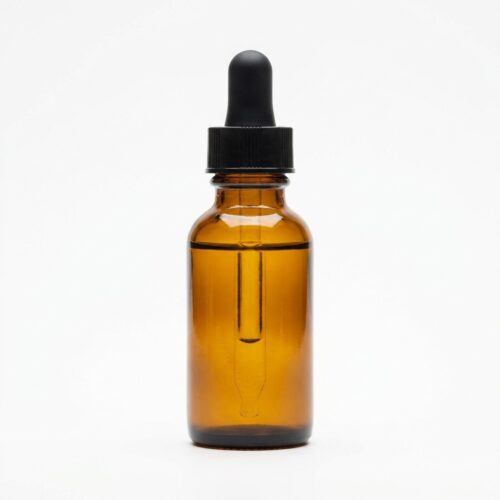
Lavender Essential Oil is a therapeutic-grade oil steam-distilled from the flowering tops of Lavandula angustifolia (true lavender), presenting as colourless to pale yellow. The world’s most popular and widely used essential oil, Lavender Oil is the universal entry point into aromatherapy — its balanced composition of linalool and linalyl acetate delivering simultaneously calming, analgesic, antimicrobial, and skin-healing properties that make it the most versatile and clinically studied essential oil in existence. It is the only essential oil commonly considered safe to apply undiluted to minor burns and insect bites.
Applications:
- Aromatherapy (sleep support, anxiety relief, stress reduction — the most studied EO for these)
- Skincare (burns, minor wounds, acne, eczema, scar-healing formulations)
- Personal Care (shampoos, body washes, deodorants, baby care with calming lavender)
- Fine Fragrance (fresh floral-herbal heart note in feminine, fresh, and fougère compositions)
Key Features & Benefits:
- Colourless to pale yellow – authentic therapeutic-grade true lavender oil
- No animal substance – suitable for vegan and Halal-compliant formulations
- Most widely used and clinically studied essential oil in the world
- Simultaneously calming, analgesic, antimicrobial, and skin-healing
- Universal personal care fragrance with the broadest consumer appeal
True lavender, lavandin or spike lavender
Three different plants are sold as “lavender oil”. True lavender (Lavandula angustifolia) is the reference oil for fine fragrance and skincare. Lavandin (Lavandula × intermedia) is a high-yielding hybrid whose oil is far cheaper, sharper and more camphoraceous. Spike lavender (Lavandula latifolia) is higher again in camphor and 1,8-cineole. Lavandin is the usual substitute or diluent in oil sold as true lavender, and the price gap makes that substitution tempting.
How the chemistry separates them
True lavender is characterised by high linalyl acetate and linalool with low camphor; lavandin and spike carry markedly more camphor. The GC profile, and the camphor figure in particular, is the practical check. An international (ISO) standard defines composition ranges for true lavender oil, and a certificate that reports against it is a good sign.
Formulation notes
Lavender oil contains linalool and other declarable fragrance allergens; in the EU and markets that follow its rules, these must be named on the label above set thresholds in the finished product. Linalool also oxidises in air to more sensitising compounds, so keep stock sealed, cool and away from light, and use it within its shelf life. It is not water-soluble and needs a solubiliser in aqueous products.
What to ask for on the certificate of analysis
- Botanical species confirmed as Lavandula angustifolia, not simply “lavender”.
- GC profile with linalyl acetate, linalool, camphor and 1,8-cineole reported individually.
- Optical rotation, refractive index and specific gravity.
- Peroxide value.
- Country of origin and distillation date.