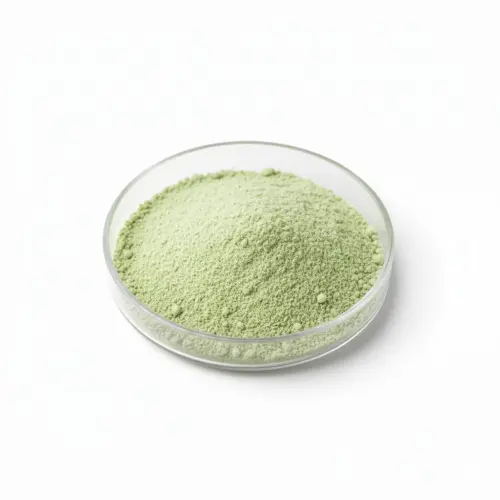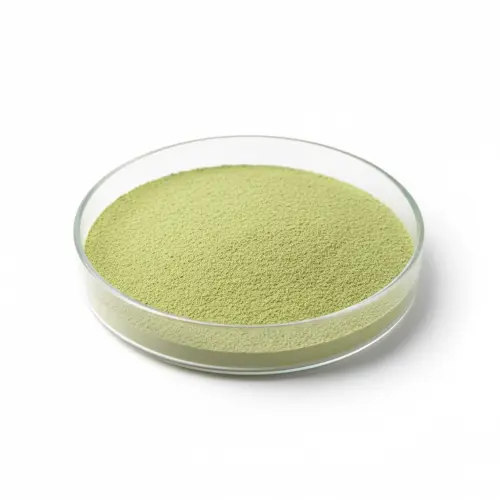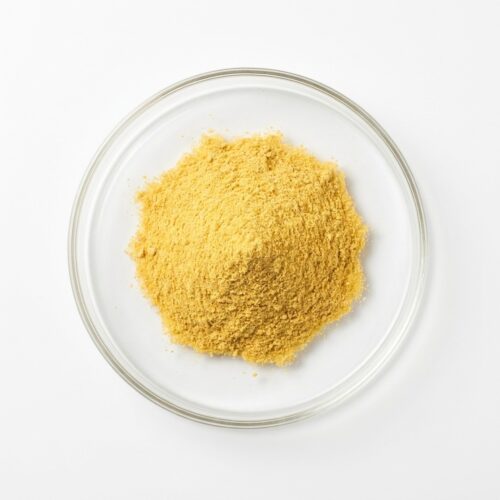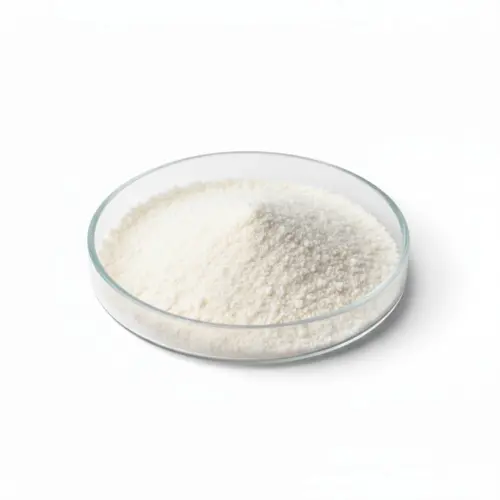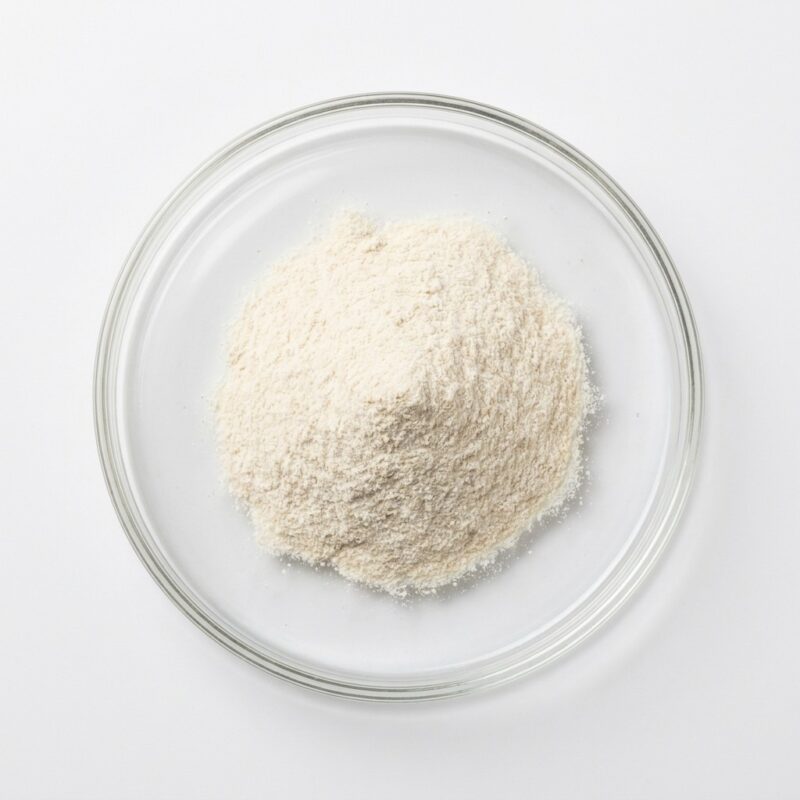
Xanthan Gum F80 is a high-purity polysaccharide thickener and stabiliser produced through fermentation of glucose or sucrose by the bacterium Xanthomonas campestris. This Halal-certified ingredient is one of the most widely used hydrocolloids in the food industry, prized for its outstanding viscosity-building capacity, shear-thinning behaviour, and excellent stability across a wide pH and temperature range.
The F80 grade indicates fine particle size and optimised dispersibility, making it easier to incorporate into both cold and hot formulations without clumping.
Applications:
- Sauces & Dressings (salad dressings, tomato sauces, gravies, marinades)
- Beverages (fruit juices, smoothies, dairy-based drinks, functional beverages)
- Bakery (gluten-free bread, bread improvers, pastry fillings)
- Dairy & Desserts (ice creams, yogurts, puddings, processed cheese)
Key Features & Benefits:
- High viscosity-building capacity at low usage rates
- Excellent stability across wide pH (2–12) and temperature range
- Shear-thinning for easy processing and smooth mouthfeel
- F80 fine grade for superior dispersibility
- Halal-certified & food-grade quality
Dispersion is the whole job
Almost every xanthan complaint traces back to the same mistake: the powder was added to water instead of being dispersed into it. Xanthan hydrates on contact, so particles that touch each other while wetting form “fish eyes” — gelled shells around dry cores that will not disperse no matter how long you mix. Dry-blend it with sugar, salt or another powder in the formula first, or introduce it through a high-shear disperser or an eductor. The F80 grade is coarser than 200-mesh material precisely to make this easier; finer grades hydrate faster but clump more readily.
Synergies and incompatibilities
Xanthan is unusually well-behaved: it tolerates salt, holds viscosity from roughly pH 2 to 12, survives freeze-thaw, and shear-thins so a thick sauce still pumps and pours. Its useful synergies are worth designing around — with guar gum it produces more viscosity than either alone, and with locust bean gum it forms a true elastic gel that neither gum produces by itself. That combination is a cheaper route to a set texture than raising xanthan alone.
The one real vulnerability is enzymatic. Cellulase activity carried in some plant-derived ingredients will depolymerise xanthan and thin the product over shelf life — a slow viscosity loss in a formula containing fruit or vegetable material is usually this, not the gum.
What to ask for on the certificate of analysis
- Viscosity with the method stated — conventionally 1% in 1% KCl, with spindle and rpm. A viscosity number without its conditions cannot be compared between suppliers.
- Mesh or particle size, which determines dispersion behaviour more than anything else.
- Pyruvic acid content, the usual indicator of fermentation quality and viscosity performance.
- Moisture, ash and pH.
- Microbiological profile, heavy metals, and the Halal certificate reference.