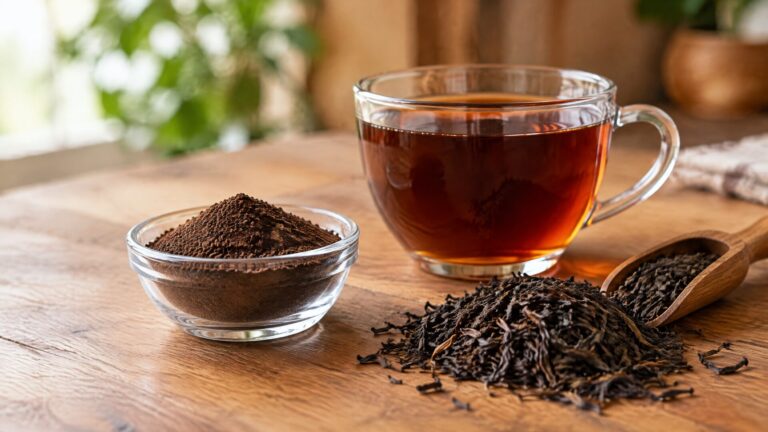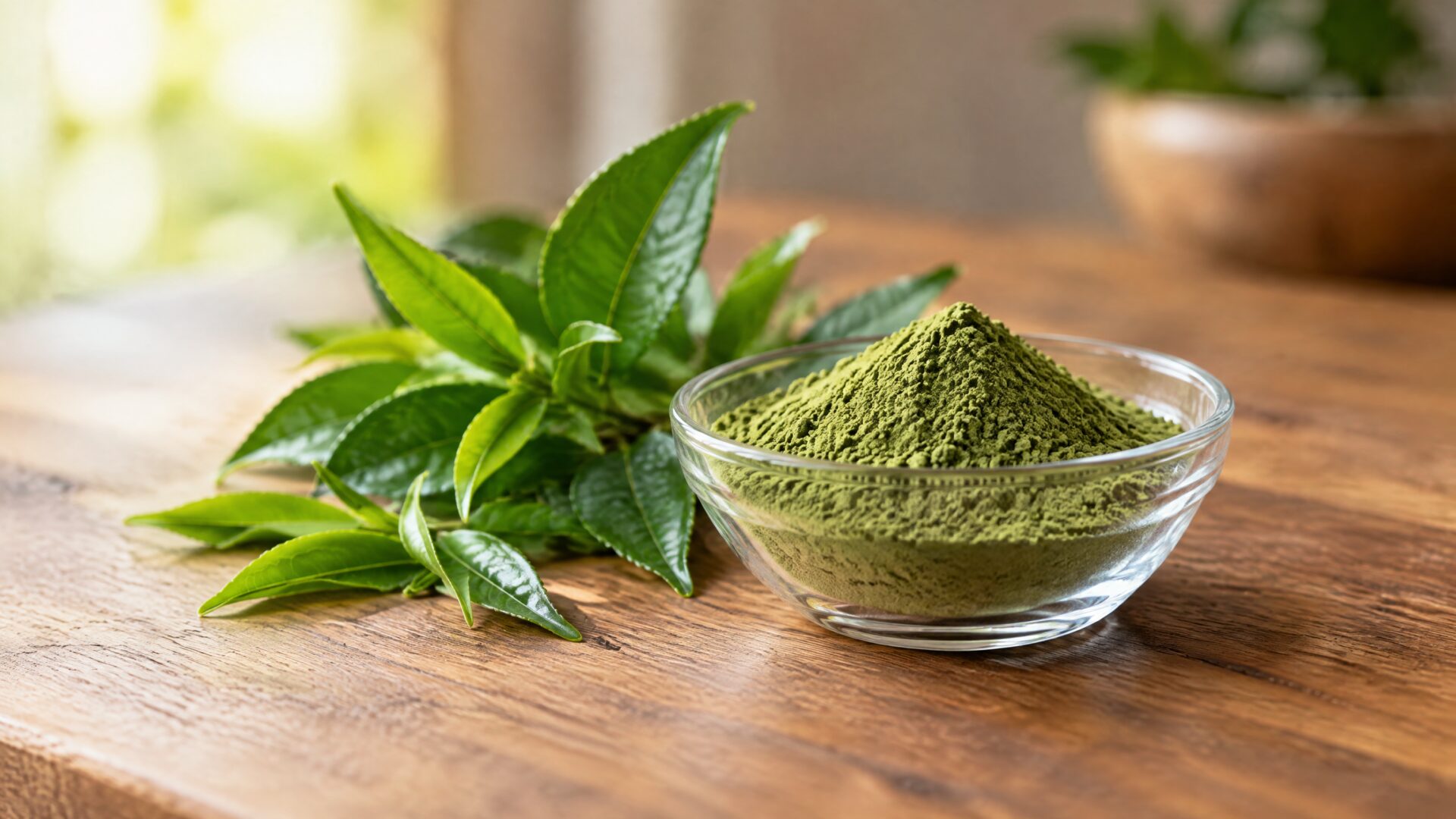

Green tea extract is where a beloved beverage becomes a serious functional ingredient. Concentrated down to its active catechins – especially EGCG – it delivers antioxidant and metabolic benefits far beyond a cup of tea, which is why it appears in everything from weight-management supplements to skincare.
What Is Green Tea Extract?
Green tea extract is a concentrated form of the compounds in Camellia sinensis leaves, produced by extracting and standardizing the tea’s polyphenols. Its most important actives are catechins, a class of antioxidants led by EGCG (epigallocatechin gallate), the compound behind most of green tea’s studied health effects. It may also contain caffeine and L-theanine. As an ingredient it’s supplied as a standardized extract powder, typically defined by its polyphenol, catechin, and EGCG percentages, and used across supplements, functional foods, beverages, and cosmetics.
Key Benefits
Powerful Antioxidant Activity
Green tea extract’s headline benefit is its concentrated antioxidant content. EGCG and other catechins are among the most-studied plant antioxidants, helping neutralize free radicals and combat oxidative stress.
Metabolism and Weight Management
Green tea extract is widely used in weight-management products, with research suggesting its catechins and caffeine may support metabolism and fat oxidation.
Heart and Cholesterol Support
Studies link green tea polyphenols to support for healthy cholesterol levels and cardiovascular wellness, adding to the ingredient’s appeal in heart-health formulations.
Skin and Cosmetic Applications
Thanks to its antioxidant and anti-inflammatory properties, green tea extract is also used topically in skincare to help protect skin from environmental damage.
Common Forms Used in Formulation
- Standardized green tea extract – defined by polyphenol/catechin/EGCG percentages, used in supplements and functional foods.
- Decaffeinated green tea extract – for caffeine-free applications while retaining catechin benefits.
- Cosmetic-grade extract – processed for topical skincare formulations.
Sourcing and Quality Considerations for Manufacturers
Standardization is the key: green tea extracts vary enormously in polyphenol, total catechin, and EGCG content, so buyers should specify and verify these percentages on the certificate of analysis rather than ordering generic “green tea extract.” Caffeine content should also be defined, especially for decaffeinated or caffeine-sensitive applications. Because high-dose concentrated EGCG has drawn some regulatory attention regarding liver safety, sourcing well-characterized, quality-controlled material with proper documentation matters. Confirm heavy metal and pesticide testing, origin, and the extraction/solvent process for clean-label products.
Safety and Side Effects
Green tea extract is generally well-tolerated at normal supplement doses. Because it contains caffeine (unless decaffeinated), caffeine-sensitive individuals should account for this. Very high doses of concentrated EGCG on an empty stomach have been associated with rare liver-related effects, so following recommended dosing and sourcing quality-controlled material is important. It’s best taken with food, and those with liver conditions or on medication should consult a healthcare provider.
Frequently Asked Questions
What is green tea extract used for?
Green tea extract is used for antioxidant support, weight management and metabolism, heart and cholesterol wellness, and topically in skincare – driven by its catechin content, especially EGCG.
What is EGCG in green tea extract?
EGCG (epigallocatechin gallate) is the most abundant and studied catechin in green tea, responsible for most of green tea extract’s antioxidant and health effects. Extract potency is often standardized by EGCG content.
Does green tea extract contain caffeine?
Standard green tea extract contains caffeine, though decaffeinated versions are available that retain the catechin benefits for caffeine-free applications.
Is green tea extract safe?
At normal doses it’s well-tolerated. Very high concentrated EGCG doses on an empty stomach have rarely been linked to liver effects, so following recommended dosing and taking it with food is advised.
Sourcing green tea extract for your formulation?
FC Materials supplies standardized green tea extract (defined polyphenol/EGCG content, regular or decaffeinated) for supplement, food, and cosmetic manufacturers. Tell us your product needs and our team will respond with specs, pricing, and MOQ.