
Kojic acid, known in Malay as asid kojik, is one of the best-known skin-brightening actives in cosmetics. It appears in serums, creams and the popular kojic acid soap. It is also one of the few brightening actives with a legal maximum level in both the EU and the ASEAN cosmetic rules. This guide covers what kojic acid is, what human studies report, the permitted levels, its stability problem and what to check before you buy.
What Is Kojic Acid?
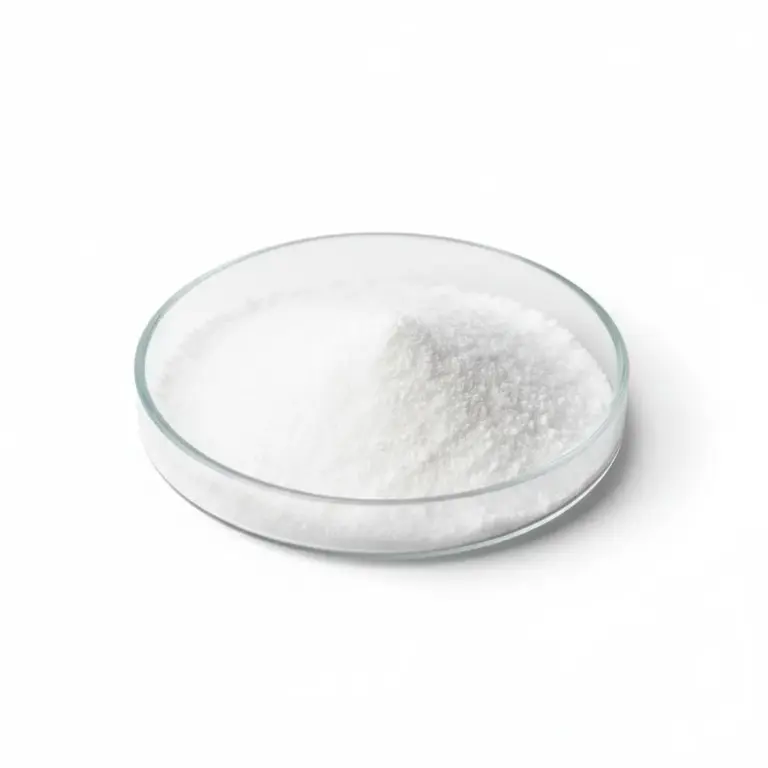
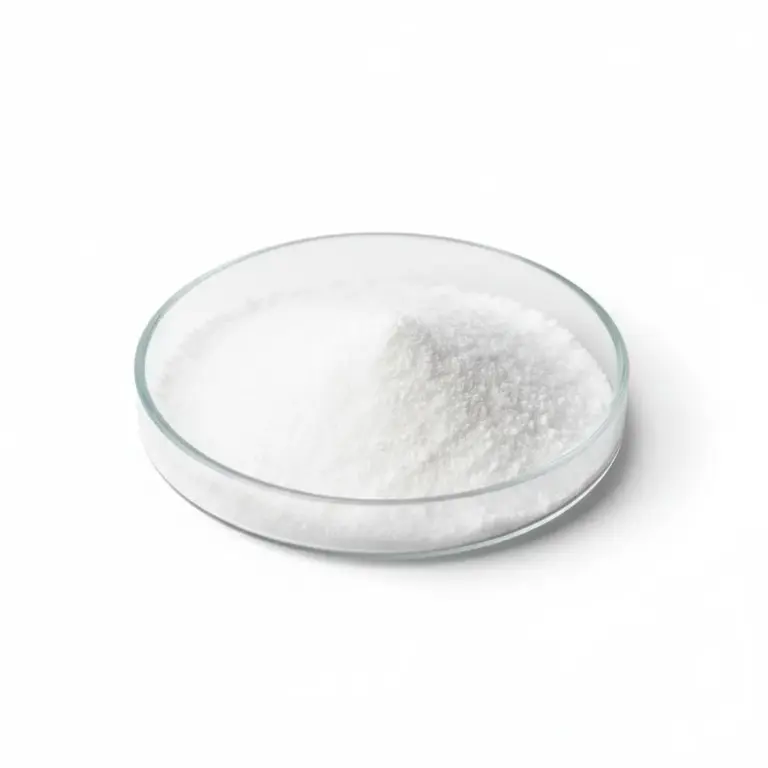
Kojic acid is a small organic compound produced during fermentation by Aspergillus oryzae, the koji mould used in sake and soy sauce production. It is supplied as a white to off-white crystalline powder.
It works by inhibiting tyrosinase, the copper-containing enzyme that controls the rate-limiting step of melanin production. It also binds (chelates) metal ions. In EU law it is described as a skin lightening, whitening or depigmenting agent in cosmetic products [5].
Kojic Acid or Kojic Dipalmitate?
Buyers often meet two related ingredients. They are not interchangeable.
- Kojic acid: the free active. Water-soluble, effective, but prone to discolouration. FC Materials supplies kojic acid of more than 98% purity (HPLC).
- Kojic dipalmitate: an oil-soluble ester of kojic acid, chosen where stability matters more than potency. It is a different ingredient with its own specification and use level. See Kojic Dipalmitate.
Kojic acid is often compared with, or combined with, other brightening actives such as alpha arbutin, niacinamide and tranexamic acid. Each has its own regulatory status, so check them one by one.
What the Research Says
Most human studies test kojic acid in people with melasma, a common pattern of facial pigmentation. The evidence is useful but has clear limits.
- Pooled results. A 2023 meta-analysis covered topical melasma treatments in 45 studies (2,359 patients). Kojic acid improved MASI severity scores by a standardised mean difference of −0.9. That figure is the change from before to after treatment, not a comparison with placebo. Irritation was reported in 5.3% of kojic acid users, against 50.9% for hydroquinone combinations [1].
- Systematic review grading. A 2023 review of 174 randomised or controlled trials gave kojic acid a grade A recommendation for melasma. Hydroquinone, triple combination cream, sunscreens and azelaic acid received the same grade [2].
- Limits of the evidence. A 2022 systematic review of 80 papers found kojic acid effective as an add-on (adjuvant) treatment with minimal side effects. It notes small samples, few recent large studies and little long-term follow-up. Hydroquinone-based treatment remains the reference point [3].
These summaries describe published research on the ingredient. They are not claims for any finished product; claims on finished products must meet the rules of the market where they are sold.
How Much Kojic Acid Is Allowed?
Kojic acid is now a restricted cosmetic ingredient in the EU and in the ASEAN annexes used in Malaysia. Fix your use level against the market, not against a competitor’s label.
- European Union. The EU Scientific Committee on Consumer Safety (SCCS) concluded that kojic acid is safe as a skin lightening agent at up to 1% [4]. Regulation (EU) 2024/996 then listed it in Annex III for face and hand products, at a maximum of 1% [5]. Non-compliant products could not be placed on the EU market from 1 February 2025 [5].
- Malaysia and ASEAN. The Annex III list published by Malaysia’s NPRA (release of 10 June 2026) sets two limits, applying from 29 April 2028. Face, neck and hand leave-on products and all rinse-off products may contain up to 1.0%. Body leave-on products may contain up to 0.2% [6].
- Other markets set their own rules. Check each destination before export.
Under the NPRA listing, a kojic acid soap is a rinse-off product, so the 1.0% limit applies [6]. A body lotion falls under the lower 0.2% limit. For cosmetics notified in Malaysia, our FC | Comply team can help you read the annexes for your product type.
Stability: Why Kojic Acid Turns Yellow
Kojic acid is effective but unstable. Light, heat and traces of iron turn it yellow and then brown. Its metal-binding action is part of how it works, and also why iron causes discolouration. Practical steps used by formulators include:
- a mildly acidic pH range;
- adding kojic acid late in the process, away from high heat;
- a chelating agent in the formula;
- keeping iron out of water, equipment and other raw materials;
- opaque, airtight packaging.
Where colour stability matters more than potency, many brands consider kojic dipalmitate instead. Run your own stability tests in the final pack.
Safety
The SCCS reviewed the human data in its 2022 opinion. It concluded that allergic contact dermatitis from kojic acid occurs at a very low rate. It also found kojic acid slightly photoirritative but not photosensitising [4].
The EU review was triggered by concerns about possible endocrine effects. The SCCS reviewed animal studies that showed thyroid changes after oral dosing. Its 1% conclusion takes these concerns into account [4]. That is why the limits above matter, and why brands should follow the label rules of each market.
What to Check Before You Buy
- Assay by HPLC, with the method stated on the certificate of analysis.
- Appearance and colour. White to off-white. Yellowing means the material has started to degrade.
- Melting range and loss on drying.
- Iron and other heavy metals. Iron matters most, because it drives discolouration.
- A mycotoxin (aflatoxin) statement, since kojic acid is made by Aspergillus fermentation.
- Microbiology suitable for leave-on products.
- Batch number, manufacture and retest dates, and storage advice away from light and heat.
Frequently Asked Questions
Is asid kojik the same as kojic acid?
Yes. Asid kojik is the Malay name for kojic acid. Its INCI name is Kojic Acid.
What is the maximum kojic acid level in skincare?
In the EU, 1% in face and hand products only [5]. In the NPRA Annex III list, from 29 April 2028: 1.0% in face, neck and hand leave-on products and all rinse-off products. Body leave-on products are limited to 0.2% [6].
Is kojic acid soap allowed in Malaysia?
Yes, within the limits. Soap is a rinse-off product, so the NPRA listing allows up to 1.0% kojic acid [6]. Confirm the current annex before you launch.
What is the difference between kojic acid and kojic dipalmitate?
Kojic dipalmitate is an oil-soluble ester of kojic acid, used where stability matters more than potency. It has its own specification and use level, so do not swap one for the other at the same percentage.
What kojic acid grade does FC Materials supply?
Our Kojic Acid is more than 98% pure by HPLC. We also supply Kojic Dipalmitate. Ask us for the specification and certificate of analysis.
References
- Chang YF, Lee TL, Oyerinde O, et al. Efficacy and safety of topical agents in the treatment of melasma: what’s evidence? A systematic review and meta-analysis. J Cosmet Dermatol. 2023;22(4):1168-1176. doi:10.1111/jocd.15566
- Sarkar R, Handog EB, Das A, et al. Topical and systemic therapies in melasma: a systematic review. Indian Dermatol Online J. 2023;14(6):769-781. doi:10.4103/idoj.idoj_490_22
- González-Molina V, Martí-Pineda A, González N. Topical treatments for melasma and their mechanism of action. J Clin Aesthet Dermatol. 2022;15(5):19-28. PubMed 35642229
- Scientific Committee on Consumer Safety (SCCS). Opinion on kojic acid. SCCS/1637/21; final version 15-16 March 2022, corrigendum 10 June 2022. European Commission.
- Commission Regulation (EU) 2024/996 of 3 April 2024 amending Regulation (EC) No 1223/2009 as regards the use of Vitamin A, Alpha-Arbutin and Arbutin and certain substances with potential endocrine disrupting properties in cosmetic products. EUR-Lex.
- National Pharmaceutical Regulatory Agency (NPRA), Malaysia. Annex III: list of substances which cosmetic products must not contain except subject to restrictions and conditions laid down. Release 2026-1, 10 June 2026. NPRA.
Source it from FC Materials: Kojic acid and Kojic dipalmitate – specification, COA and SDS on request.
Sourcing kojic acid for your skincare range?
FC Materials supplies kojic acid and kojic dipalmitate to cosmetic, skincare and soap manufacturers. Tell us your product needs and our team will respond with specs, pricing and MOQ.