
Sennosides are the reason senna works, and the number that matters most on a senna extract specification. This guide explains what sennosides are, how sennoside A and B differ, how they act, and how to read the sennoside figure on a certificate of analysis.
What are sennosides?
Sennosides are natural compounds found in the leaves and pods of the senna plant, Senna alexandrina (also called Cassia angustifolia or Cassia acutifolia). Chemically, they are dianthrone glycosides, part of the wider anthraquinone family. Each molecule has two anthrone units linked together, with sugar (glucose) groups attached.
The main sennosides are sennoside A and sennoside B. They have the same formula and differ only in the 3D arrangement around the central bond, so they are stereoisomers. Senna also contains smaller amounts of sennosides C and D and related glycosides.
| Compound | CAS number | Note |
|---|---|---|
| Sennoside A | 81-27-6 | Main active glycoside |
| Sennoside B | 128-57-4 | Stereoisomer of sennoside A; often the reference for assays |
| Calcium sennosides | — | Calcium salt form used in many pharmaceutical laxatives |
Mechanism of action: how sennosides work
Sennosides are prodrugs. After oral administration they pass through the stomach and small intestine largely unchanged, because the sugar groups stop them being absorbed. In the large intestine, the human intestinal flora remove the sugars and convert sennosides into rhein anthrone, the active form. Rhein anthrone acts in two ways: it stimulates colonic muscle contractions, and it increases the secretion of water and electrolytes into the colon while reducing their absorption. The stool becomes softer and moves faster, which produces a bowel movement.
How quickly do sennosides work?
Because sennosides must reach the colon before they act, the laxative effect usually appears 6 to 12 hours after oral senna. That is why senna products are often taken at bedtime.
Is senna a stool softener or a laxative?
Senna is a stimulant laxative, not a stool softener. Stool softeners work by letting water into the stool. Stimulant laxatives such as senna and bisacodyl make the colon contract. Sennosides are the active ingredient in many over-the-counter senna laxatives, and they are used to treat constipation in the short term.
Sennosides in senna extract, leaf and powder
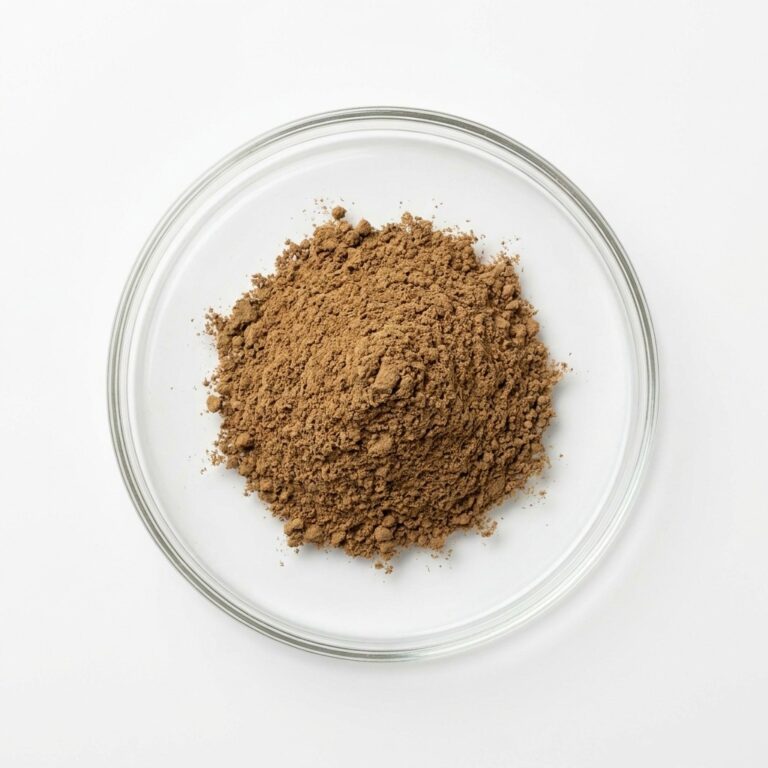
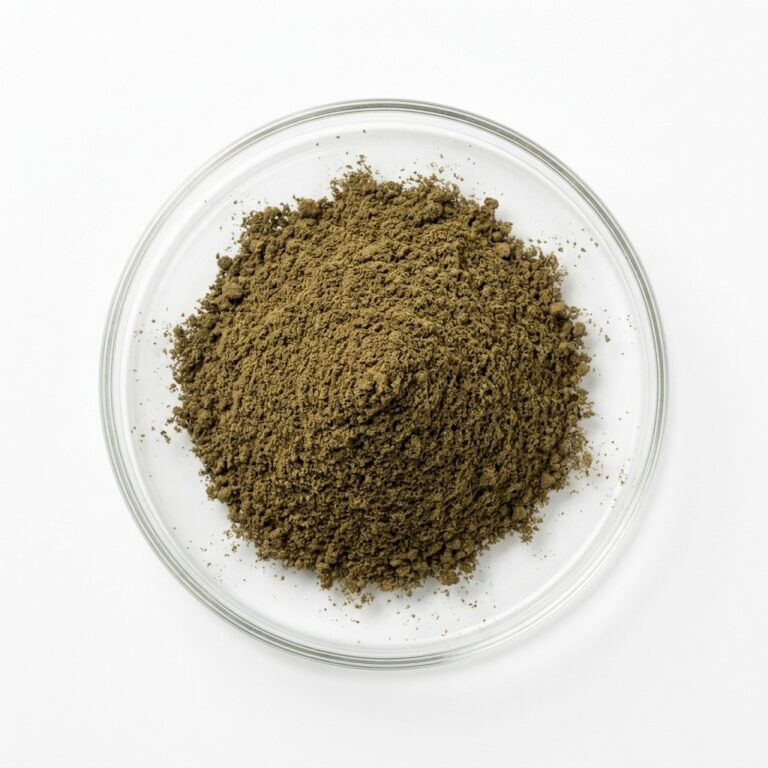
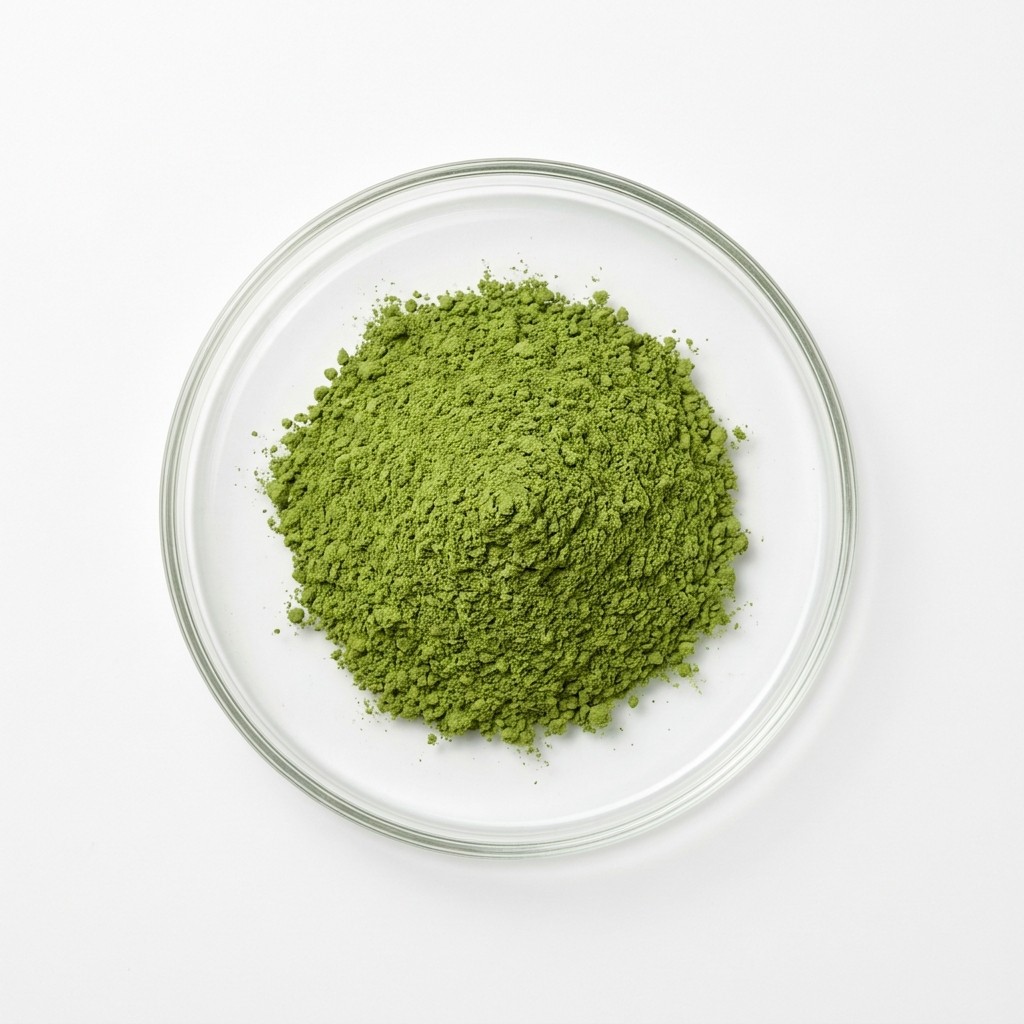
Dried senna leaf naturally contains a few percent of sennosides. The amount varies with origin, harvest and storage. Senna extract concentrates them and is standardised to a declared sennoside content, such as 20% or 60%. Senna powder is usually ground leaf, so its content is closer to the leaf. For tablets and capsules, a standardised extract gives the most consistent dose. FC Materials supplies senna leaf extract standardised to 60% sennosides (UV).
Reading the sennoside figure on a COA: UV vs HPLC
Two kinds of method are used to measure sennosides, and they do not give the same number.
- UV (spectrophotometric) methods measure a group of related glycosides together. The result is usually expressed as one reference compound, such as sennoside B. It is a total figure.
- HPLC methods separate the compounds and measure sennoside A and sennoside B individually. The sum of A + B can be lower than a UV total for the same material, because UV also picks up related glycosides.
So a “60% sennosides (UV)” extract and a “60% sennosides A + B (HPLC)” extract are not the same thing. When you compare offers or set a label dose, compare like with like: the same method, and the same reference compound.
What to ask for on a senna extract certificate of analysis
- Sennoside content, with the method (UV or HPLC) and the reference compound;
- botanical name and plant part (leaf or pod), and the extraction solvent;
- identity test (TLC or HPLC fingerprint);
- loss on drying and particle size;
- heavy metals and pesticide residues;
- microbiology: total plate count, yeast and mould, E. coli and Salmonella;
- batch number, manufacture and retest dates, and the Halal certificate where needed.
Stability and formulation
Sennosides can degrade with moisture, light and heat, and in solution over time. Store senna extract sealed, cool and dry, away from light. In tablets and capsules, protect the powder from moisture during processing. For liquids and teas, check sennoside content over the shelf life, not only at release.
What are sennosides used for?
- Constipation products. Tablets, capsules and teas for occasional constipation.
- Bowel preparation. Sennoside A + B regimens are used before colonoscopy. [2]
- Traditional medicine products. Senna (sana makki) is used in Islamic and Ayurvedic preparations.
Products containing sennosides are regulated as medicines or traditional products in many markets. In Malaysia, confirm the product category and permitted claims with NPRA before launch. Labels should give a clear dose and limit use to the short term.
Dosage
The dosage of a finished product is set by its registration and label, and it differs between tablets, liquids and teas. In the constipation trial we cite, adults took senna 1.0 g a day for 28 days. [1] For a manufacturer, the practical point is that the dose on the label depends on the sennoside content of the raw material, which is why the COA figure matters.
Side effects of sennosides
Short-term use of sennosides is generally well tolerated. Reported adverse effects include abdominal cramps [3] and intolerance of high bowel-preparation doses [2]. Diarrhoea is the expected result of too high a dose. Prolonged use can cause electrolyte loss, including low potassium, and dependence on laxatives. Senna should not be used with intestinal blockage or inflammatory bowel disease such as colitis, and pregnant women and children should use it only on medical advice. Long-term use of anthraquinone laxatives can darken the colon lining (melanosis coli), which one hospital study linked with more colorectal polyps. [5] Observational data on colorectal cancer are inconclusive. [4] See our senna leaf guide for the full safety picture.
What the research says
- In a 28-day double-blind trial in 90 adults with chronic constipation, senna 1.0 g a day improved overall symptoms in 69.2% of patients versus 11.7% on placebo. [1]
- In a randomised trial in 705 adults, a sennoside A + B bowel preparation achieved adequate cleansing more often than a sodium picosulfate regimen (70.1% vs 56.3%), with more intolerance (7.0% vs 0.7%). [2]
- A Cochrane review found low-certainty evidence that senna increased abdominal cramps when used after childbirth. [3]
- A 2022 meta-analysis of observational studies found a non-significant association between anthraquinone laxatives and colorectal cancer (OR 1.41, 95% CI 0.94–2.11). [4]
These summaries describe published research on the ingredient. They are not claims for any finished product; claims on finished products must meet the rules of the market where they are sold.
References
- Morishita D, et al. Senna versus magnesium oxide for the treatment of chronic constipation: a randomized, placebo-controlled trial. Am J Gastroenterol. 2021;116(1):152-161. doi:10.14309/ajg.0000000000000942
- Durak I, et al. Comparison of sennoside A + B and sodium picosulfate-based regimens for bowel preparation: a prospective randomized trial. Tech Coloproctol. 2026;30(1). doi:10.1007/s10151-026-03336-2
- Turawa EB, et al. Interventions for preventing postpartum constipation. Cochrane Database Syst Rev. 2020;8(8):CD011625. doi:10.1002/14651858.CD011625.pub3
- Lombardi N, et al. Anthraquinone laxatives use and colorectal cancer: a systematic review and meta-analysis of observational studies. Phytother Res. 2022;36(3):1093-1102. doi:10.1002/ptr.7373
- Kassim SA, et al. Retrospective study on melanosis coli as risk factor of colorectal neoplasm: a 3-year colonoscopic finding in Zhuhai Hospital, China. Int J Colorectal Dis. 2020;35(2):213-222. doi:10.1007/s00384-019-03435-7
Need a standardised sennoside extract?
FC Materials supplies senna leaf extract standardised to 60% sennosides (UV), with a lot-specific COA. Tell us your format and volume, and our team will send the specification and pricing.