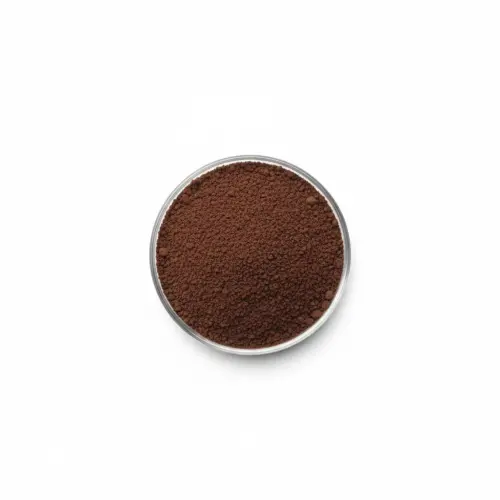
Clery Powder is a multi-purpose flavoring and seasoning ingredient widely used in food processing and culinary applications. Its concentrated flavor profile makes it suitable for enhancing taste, aroma, and overall palatability in both savory and snack products.
As a Halal-certified ingredient, Clery Powder ensures safe use across diverse food systems while maintaining high-quality standards. It can be easily blended with other seasonings, making it a preferred choice for manufacturers of convenience foods, ready-to-eat products, and snack seasonings.
Applications:
Savory snacks (chips, crackers, extruded snacks)
Seasoning blends & spice mixes
Soups, sauces, and gravies
Processed foods & ready-to-eat meals
Key Features & Benefits:
✅ Concentrated flavoring and seasoning base
✅ Enhances aroma and taste in savory products
✅ Halal-certified & food-grade quality
✅ Versatile use in multiple applications
✅ Easy to blend with other ingredients
Celery powder for seasoning
Celery powder is made from dried celery (Apium graveolens) stalks and leaves; celery seed is a separate, more pungent spice. It adds a savoury, green note to soups, sauces, snack seasonings and spice blends such as Curry Seasoning Powder.
Allergen and nitrate
Celery is a declared allergen in some markets, including the EU, so check labelling rules if you export. Celery is naturally rich in nitrate, which is why cultured celery powder is used as a “natural” curing agent in some meat products; regulators may treat this use like added nitrite. If you use it for curing, ask for the nitrate or nitrite content.
Spice safety
Like other dried vegetables and spices, celery powder can carry a high microbial load. Ask how it was treated to reduce bacteria (for example steam treatment) and for pesticide results.
Halal certification
This ingredient is listed as “Celery Powder” on FC Materials’ Halal certificate (Sijil Pengesahan Halal, MS 1500:2019), issued through the Penang Islamic Religious Council (MAINPP) and the Department of Islamic Development Malaysia (JAKIM). Reference JAKIM.700-2/3/1 105-07/2022, valid until 15 October 2028. Ask us for a copy.
What to ask for on the certificate of analysis
- Plant part (stalk and leaf, or seed) and microbial reduction treatment
- Nitrate content, if used for curing
- Moisture, ash and particle size
- Pesticide residues
- Heavy metals (lead, arsenic, cadmium, mercury)
- Microbiology: total plate count, yeast and mould, E. coli, Salmonella
- Batch number, manufacture and retest dates; compliance with the food additive specification of your market (for example JECFA or the Malaysian Food Regulations)