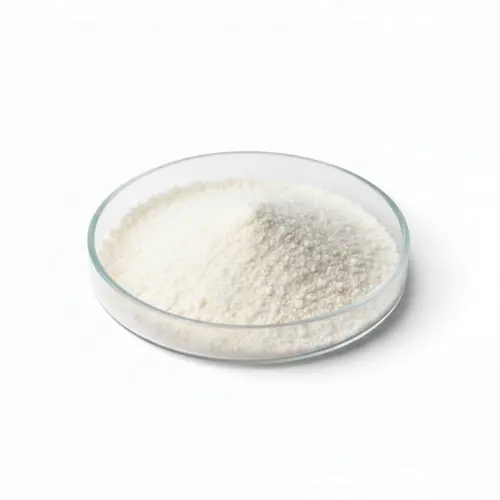
Maltodextrin is a mildly sweet, easily digestible polysaccharide produced by partial hydrolysis of starch (corn, rice, or potato). With a DE (dextrose equivalent) of 3–20, it provides rapidly available carbohydrate energy, excellent spray-drying carrier properties, and neutral flavour — making it the most widely used encapsulation and carrier matrix in the nutraceutical and food industries globally.
Applications:
- Encapsulation and spray-drying carrier for sensitive actives
- Sports nutrition and energy drink carbohydrate base
- Food thickener, bulking agent, and texture modifier
- Pharmaceutical tablet filler and film coating excipient
Key Features & Benefits:
- Excellent spray-drying carrier — protects heat-sensitive actives
- Rapidly digestible — fast energy delivery for sports applications
- Neutral flavour — does not affect product taste profile
- No animal substance – halal-certified
- Available in DE 10, DE 15, DE 18-20 grades
What the DE value tells you
Maltodextrin is made by partly breaking down starch with acid or enzymes. The dextrose equivalent (DE) measures how far the breakdown has gone: by definition maltodextrin is below DE 20, and above that the product is a glucose syrup solid. Low-DE grades are less sweet, more viscous and better at forming films, which suits spray-drying and encapsulation. Higher-DE grades are sweeter, dissolve faster, take up more moisture and brown more readily. Choose the DE for the job, and ask for it on every certificate.
Starch source and labelling
Maltodextrin can be made from corn, tapioca, potato, rice or wheat starch. The source matters for allergen labelling (wheat), GMO declarations and some customer specifications, so confirm it for each lot. Maltodextrin is a digestible carbohydrate and counts towards total carbohydrate on the nutrition label. It is not the same as resistant dextrin, which is designed to resist digestion and counts as dietary fibre.
Formulation notes
As a spray-drying carrier, it is often used at a high share of the solids to protect flavours and oils. In sports drinks it supplies quickly digested carbohydrate with less sweetness than dextrose. For products where a slower glucose rise is wanted, formulators compare it with isomaltulose.
What to ask for on the certificate of analysis
- Dextrose equivalent (DE) with the method
- Starch source (corn, tapioca, potato, rice or wheat)
- Moisture, pH of a solution, solubility and sulphated ash
- Bulk density and particle size, if specified
- Heavy metals (lead, arsenic, cadmium, mercury)
- Microbiology: total plate count, yeast and mould, E. coli, Salmonella
- Batch number, manufacture and retest dates; compliance with the food additive specification of your market (for example JECFA or the Malaysian Food Regulations)