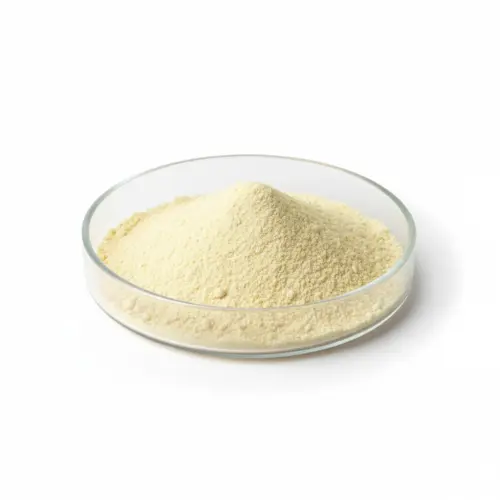
Dextrose Monohydrate (D-Glucose Monohydrate) is crystalline glucose with one molecule of water of crystallisation, providing a pure, rapidly absorbed monosaccharide energy source. As the simplest carbohydrate with a glycaemic index of 100, it is the reference standard for GI measurement and is widely used in sports nutrition for rapid glycogen replenishment, pharmaceutical oral rehydration solutions, and food manufacturing.
Applications:
- Sports nutrition and post-workout glycogen replenishment
- Oral rehydration solutions and electrolyte drinks
- Pharmaceutical tablet excipient and coating agent
- Food manufacturing sweetener and fermentation substrate
Key Features & Benefits:
- GI of 100 — fastest-absorbing carbohydrate, rapid energy delivery
- Rapidly replenishes muscle glycogen post-exercise
- No animal substance – halal-certified
- White crystalline powder, highly water-soluble and stable
- Food grade and pharmaceutical grade available
Monohydrate or anhydrous
Dextrose is D-glucose made from starch. Dextrose monohydrate carries one molecule of water per glucose molecule, about 9% of its weight, so it supplies slightly less glucose per kilogram than anhydrous dextrose. Use the right form when calculating carbohydrate content and when replacing one grade with another.
How it behaves
Dextrose is less sweet than sucrose and dissolves with a noticeable cooling effect, which suits mints and pressed tablets. It is a reducing sugar, so it browns readily in baking and with amino acids. It is easily fermented by yeast and bacteria, which is why it is used as a fermentation substrate. In oral rehydration drinks, glucose is used together with sodium, for example from sodium citrate, because glucose helps the gut absorb sodium and water.
Grades
Food-grade and pharmacopoeial grades differ in their test limits. For tablets, oral rehydration products or other pharmaceutical uses, ask whether the lot meets a pharmacopoeia (for example BP or USP). For carbohydrate blends, compare with maltodextrin, which is less sweet, and fructose.
What to ask for on the certificate of analysis
- Assay (as anhydrous glucose) and water content (confirms monohydrate or anhydrous)
- Specific optical rotation, acidity and sulphated ash
- Pharmacopoeia compliance, if required (for example BP or USP)
- Heavy metals (lead, arsenic, cadmium, mercury)
- Microbiology: total plate count, yeast and mould, E. coli, Salmonella
- Batch number, manufacture and retest dates; compliance with the food additive specification of your market (for example JECFA or the Malaysian Food Regulations)