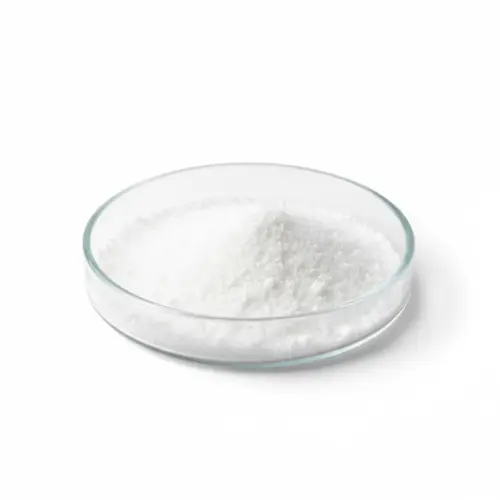
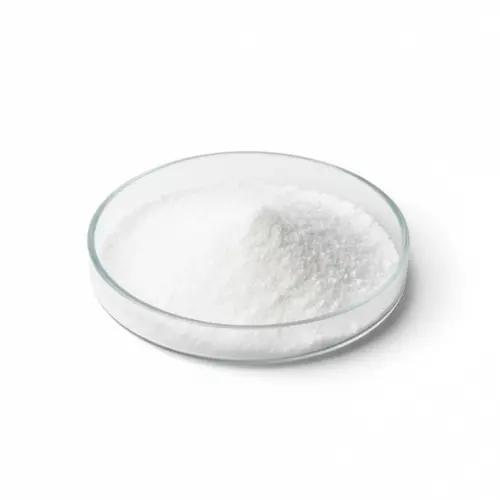
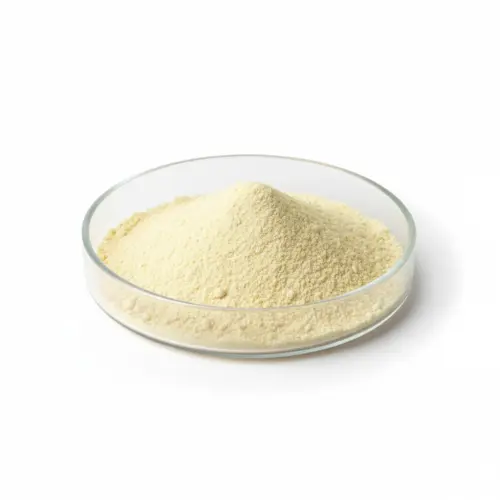
Sodium Citrate is a sodium salt of citric acid widely used as a food-grade buffering agent, emulsifier, and flavouring ingredient. This Halal-certified ingredient provides a mildly salty, slightly tart flavour and is highly effective at stabilising pH levels in food and beverage formulations, improving shelf life, texture, and safety.
As a sequestrant and emulsifier, Sodium Citrate also plays a critical role in dairy applications — particularly in processed cheese and cheese analogues — where it helps maintain smooth, homogeneous texture.
Applications:
- Beverages (carbonated drinks, sports beverages, electrolyte mixes)
- Dairy (processed cheese, cheese sauces, dairy analogues)
- Bakery & Confectionery (candies, jellies, pH-adjusted formulations)
- Nutraceuticals (electrolyte supplements, mineral buffering agents)
Key Features & Benefits:
- Effective pH buffering and stabilisation
- Emulsifying properties for dairy and processed food
- Mildly salty-tart flavour enhancer
- Improves shelf life and microbial stability
- Halal-certified & food-grade quality
Which sodium citrate
Food-grade sodium citrate is usually trisodium citrate dihydrate. Mono- and disodium citrates also exist and give a lower pH. Trisodium citrate dihydrate contains about 23% sodium, which counts towards the sodium on the nutrition label, so include it in reduced-salt calculations.
How it works
Together with citric acid, sodium citrate forms a buffer that holds the pH of drinks and confectionery steady and softens sourness. In processed cheese and cheese sauces it acts as an emulsifying salt: it binds calcium, which loosens the casein so the fat and protein stay evenly mixed and the cheese melts smoothly. It also binds metal ions that would otherwise speed up oxidation and colour changes.
Electrolyte and rehydration drinks
The oral rehydration salts formula recommended by WHO includes trisodium citrate dihydrate together with glucose such as dextrose. For medical rehydration products, use a pharmacopoeial grade and follow the product rules of your market.
What to ask for on the certificate of analysis
- Assay (as trisodium citrate, anhydrous basis) with the method
- Water content (confirms the dihydrate)
- pH of a solution, alkalinity, oxalate, sulphate and readily carbonisable substances
- Pharmacopoeia compliance, if required
- Heavy metals (lead, arsenic, cadmium, mercury)
- Microbiology: total plate count, yeast and mould, E. coli, Salmonella
- Batch number, manufacture and retest dates; compliance with the food additive specification of your market (for example JECFA or the Malaysian Food Regulations)