Fructose (D-Fructose) is a naturally occurring monosaccharide found in fruits, honey, and root vegetables. With a sweetness approximately 1.2–1.8 times that of sucrose and a low glycaemic index of 19, fructose is widely used as a low-GI sweetener in diabetic-friendly formulations and sports nutrition products where sustained energy release is preferred over rapid glucose spikes.
Applications:
- Diabetic-friendly food and beverage sweetening
- Sports nutrition and sustained energy formulations
- Pharmaceutical syrup and oral liquid sweetener
- Confectionery and bakery product sweetening
Key Features & Benefits:
- GI of 19 — significantly lower than sucrose (GI 65) and glucose (GI 100)
- 1.2–1.8x sweeter than sucrose — lower use levels possible
- No animal substance – halal-certified
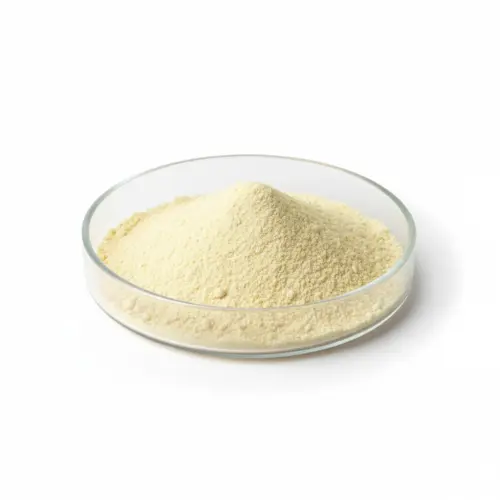
- White crystalline powder, highly water-soluble
- Enhances fruit and berry flavour perception in formulations
Crystalline fructose in brief
Crystalline fructose is pure D-fructose, the sugar found in fruit and honey. It is sweeter than sucrose, and its sweetness is strongest when cold and in acidic drinks; in hot drinks the advantage is smaller. Because it is sweeter, less can be used for the same sweetness. Like all sugars, it provides energy, and it counts as a sugar on nutrition labels.
Processing behaviour
Fructose is very soluble and very hygroscopic, so keep packs sealed and control humidity. It is a reducing sugar and browns faster than glucose or sucrose in baking, so bake temperatures and times may need adjusting. It lowers water activity well, which helps keep soft baked goods and fillings moist.
Who should avoid it
People with hereditary fructose intolerance must avoid fructose, and people with fructose malabsorption may get digestive symptoms from larger amounts. Claims such as “diabetic-friendly” need care; see the research summary below. Other options for reduced-sugar products include isomaltulose and sucralose.
What the research says
- A 2012 meta-analysis of 18 controlled feeding trials (209 people with diabetes) found that replacing other carbohydrates with the same calories of fructose lowered glycated blood proteins, equivalent to about 0.53% in HbA1c, without changing fasting glucose or insulin. Most trials lasted under 12 weeks and were of relatively low quality, and the authors call for longer trials that also look for adverse metabolic effects. [1]
- A 2022 meta-analysis of 51 controlled trials found that fructose-containing sugars that added extra calories to the diet, especially from sugar-sweetened drinks, increased liver fat. When they replaced other carbohydrates with the same calories, there was no effect. The trials covered many food sources of sugar, not crystalline fructose alone. [2]
These summaries describe published research on the ingredient. They are not claims for any finished product; claims on finished products must meet the rules of the market where they are sold.
References
- Cozma AI, et al. Effect of fructose on glycemic control in diabetes: a systematic review and meta-analysis of controlled feeding trials. Diabetes Care. 2012;35(7):1611-20. doi:10.2337/dc12-0073
- Lee D, et al. Important food sources of fructose-containing sugars and non-alcoholic fatty liver disease: a systematic review and meta-analysis of controlled trials. Nutrients. 2022;14(14):2846. doi:10.3390/nu14142846
What to ask for on the certificate of analysis
- Assay of fructose (%) by HPLC, with the method
- Glucose and other sugars, loss on drying and residue on ignition
- Colour of a solution and specific optical rotation
- Heavy metals (lead, arsenic, cadmium, mercury)
- Microbiology: total plate count, yeast and mould, E. coli, Salmonella
- Batch number, manufacture and retest dates; compliance with the food additive specification of your market (for example JECFA or the Malaysian Food Regulations)