
If you have seen crystal-clear sugar sails on a cake or a glass-like sugar sculpture, it was probably made from isomalt, not regular sugar. Isomalt is a sugar substitute that resists crystallising and browning, which makes it a favourite of pastry chefs and cake decorators. It is also the main ingredient of many sugar-free hard candies, lozenges and chewable tablets.
What is isomalt made of?
Isomalt is made from sucrose (table sugar) in two steps. First, an enzyme rearranges sucrose into isomaltulose. Then the isomaltulose is hydrogenated, which turns it into a roughly equal mixture of two sugar alcohols: 1,6-GPS (glucopyranosyl-sorbitol) and 1,1-GPM (glucopyranosyl-mannitol). So although it is made from sugar, isomalt is no longer a sugar: it is a polyol, or sugar alcohol, like sorbitol, maltitol and xylitol.
Isomalt vs sugar
| Isomalt | Sugar (sucrose) | |
|---|---|---|
| Sweetness | Roughly half as sweet | Reference (100%) |
| Energy for labelling | 2.4 kcal/g (EU); 2.0 kcal/g (US) | 4 kcal/g |
| Counts as sugar on the label | No (declared as a polyol) | Yes |
| Browning when cooked | Very little | Caramelises |
| Crystallising after cooking | Resists; stays clear | Recrystallises easily |
| Moisture pick-up | Low | Higher once cooked to candy |
| Effect on teeth | Not fermented by mouth bacteria to the same extent | Fermented; promotes decay |
Because isomalt is only partly digested, it raises blood glucose much less than sugar, and part of it is fermented in the large intestine. That is also why too much at once can have a laxative effect.
Why bakers use isomalt for sugar art
- It stays clear and colourless after cooking, so pieces look like glass
- It does not brown easily, so colours stay true
- It resists crystallising, so cooled pieces stay clear for longer
- It picks up less moisture than cooked sugar, so decorations are less sticky in humid weather
Working with isomalt: melt it slowly in a clean pan or in short microwave bursts until fully liquid, avoid stirring in air bubbles, and pour into silicone moulds or onto a silicone mat. Wear heat-resistant gloves, since melted isomalt is extremely hot. Keep finished pieces in an airtight container with a desiccant: even isomalt will go cloudy and sticky in very humid air.
Isomalt is not a one-for-one replacement for sugar in cakes and cookies. It is less sweet, does not brown, and behaves differently in doughs and batters, so baked goods usually need reformulating.
Isomalt in food and pharmaceutical manufacturing
- Sugar-free hard candy and lozenges: its glassy, low-hygroscopic melt gives clear, non-sticky candy
- Chewable and compressed tablets: agglomerated grades such as isomalt DC 101 flow and compress well for direct compression
- Chewing gum, chocolate and coatings: as a bulk sweetener in sugar-free recipes
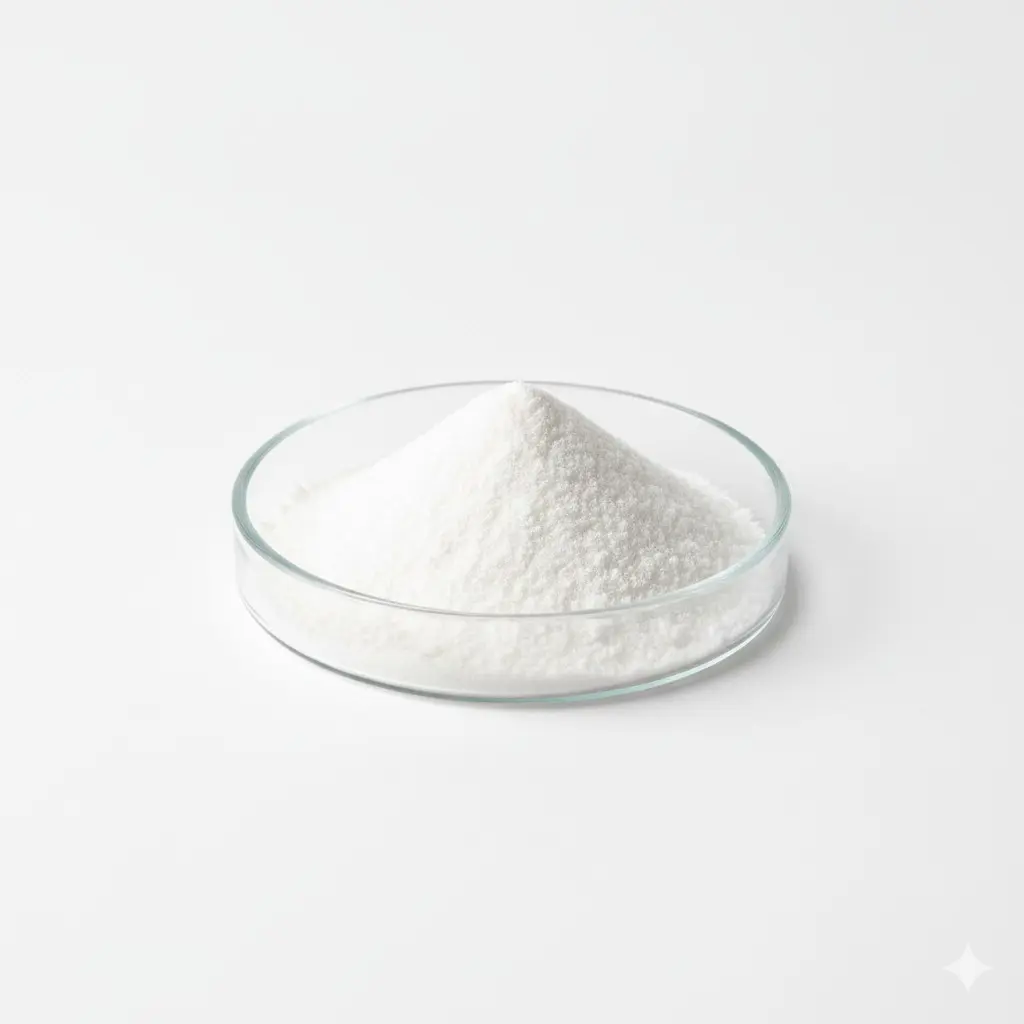
For manufacturers, grade matters. Standard crystalline grades are used for cooking candy and sugar art; agglomerated direct-compression grades are made for tablet presses. FC Materials supplies isomalt DC 101 (GPM + GPS ≥ 98% of dry matter, particle size 0.1–0.8 mm, made in Germany under FSSC 22000, Halal and Kosher certificates available).
Is isomalt safe? Side effects and who should avoid it
- Isomalt is an approved food additive (E 953) and is widely used in sugar-free foods.
- The main side effect is digestive: large amounts can cause wind, bloating or a laxative effect. In the EU, foods with more than 10% added polyols must say “excessive consumption may produce laxative effects”.
- People with hereditary fructose intolerance should avoid isomalt, because it releases sorbitol and mannitol, which they must avoid.
- Isomalt is not the same as isomaltulose or isomalto-oligosaccharides, which are different ingredients.
What the research says
- In a randomised, double-blind crossover trial, 19 healthy adults ate 30 g of isomalt or sucrose a day for 4 weeks. Isomalt was well tolerated, did not change blood lipids or mineral balance, and moderately increased stool frequency without changing stool consistency [1].
- In the same design, isomalt shifted gut bacteria towards more bifidobacteria compared with sucrose, while most other gut markers did not change. Both studies were small (19 volunteers) [2].
These summaries describe published research on the ingredient. They are not claims for any finished product; claims on finished products must meet the rules of the market where they are sold.
References
- Gostner A, et al. Effects of isomalt consumption on gastrointestinal and metabolic parameters in healthy volunteers. Br J Nutr. 2005;94(4):575-581. doi:10.1079/bjn20051510
- Gostner A, et al. Effect of isomalt consumption on faecal microflora and colonic metabolism in healthy volunteers. Br J Nutr. 2006;95(1):40-50. doi:10.1079/bjn20051589
How to store isomalt
Keep unopened isomalt in its sealed packaging in a cool, dry place. The DC 101 grade we supply has a minimum durability of three years when stored at 20 ± 5 °C and 20–60% relative humidity. After opening, reseal tightly: moisture is the main enemy of both the powder and finished sugar art.
Frequently asked questions
Is isomalt sugar?
No. Isomalt is made from sugar but is a sugar alcohol (polyol). It is roughly half as sweet and is labelled at 2.4 kcal/g in the EU instead of 4 kcal/g.
Does isomalt raise blood sugar?
Much less than sugar, because it is only partly digested. It still provides some energy, so it should be counted in a diabetic diet.
Is isomalt Halal?
Isomalt is made from sugar, not from animal sources. The isomalt DC 101 that FC Materials supplies has a Halal certificate available on request.
Can you eat isomalt sugar decorations?
Yes, isomalt is edible. Eat decorations in moderation, as large amounts can have a laxative effect.
Why does my isomalt go cloudy or sticky?
Usually moisture: from humid air, from water left in the melt, or from storage without a desiccant. Overheating can also cause yellowing.
Can I use isomalt instead of sugar in baking?
Not one-for-one. It is less sweet, does not brown and behaves differently in doughs, so recipes need adjusting.
Buying isomalt for production?
FC Materials supplies isomalt DC 101 for sugar-free tablets and confectionery, with specification, COA, SDS and Halal certificate. Request a quote or WhatsApp us.