
Inulin, FOS and resistant dextrin are the three soluble fibres most often added to drinks, dairy, bars and supplements. All three pass the small intestine undigested and are fermented in the large intestine, and all three are sold as “prebiotic fibre”. They behave very differently in a formulation, though, and their evidence base is not the same. This guide compares them for product developers and buyers.
What counts as a prebiotic?
An expert panel convened by the International Scientific Association for Probiotics and Prebiotics (ISAPP) defined a prebiotic in 2017 as “a substrate that is selectively utilized by host microorganisms conferring a health benefit”. The panel kept the requirement for a selective, microbiota-mediated effect, and said health benefits must be documented before a substance is called a prebiotic [1]. In other words, being a fermentable fibre is not enough on its own; the label needs evidence behind it.
Inulin and FOS are the same family
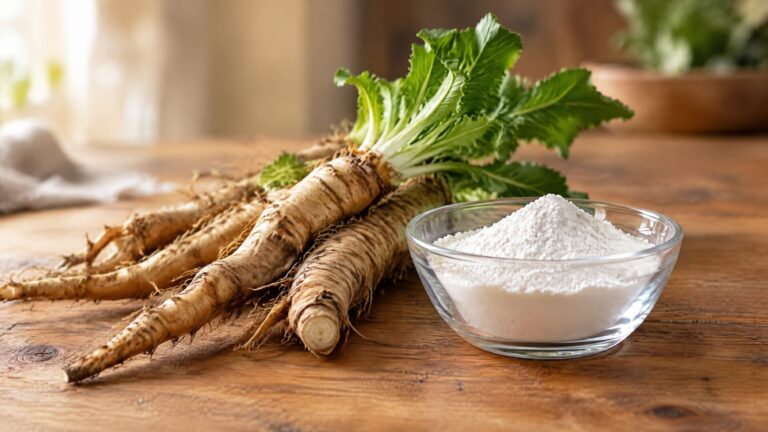
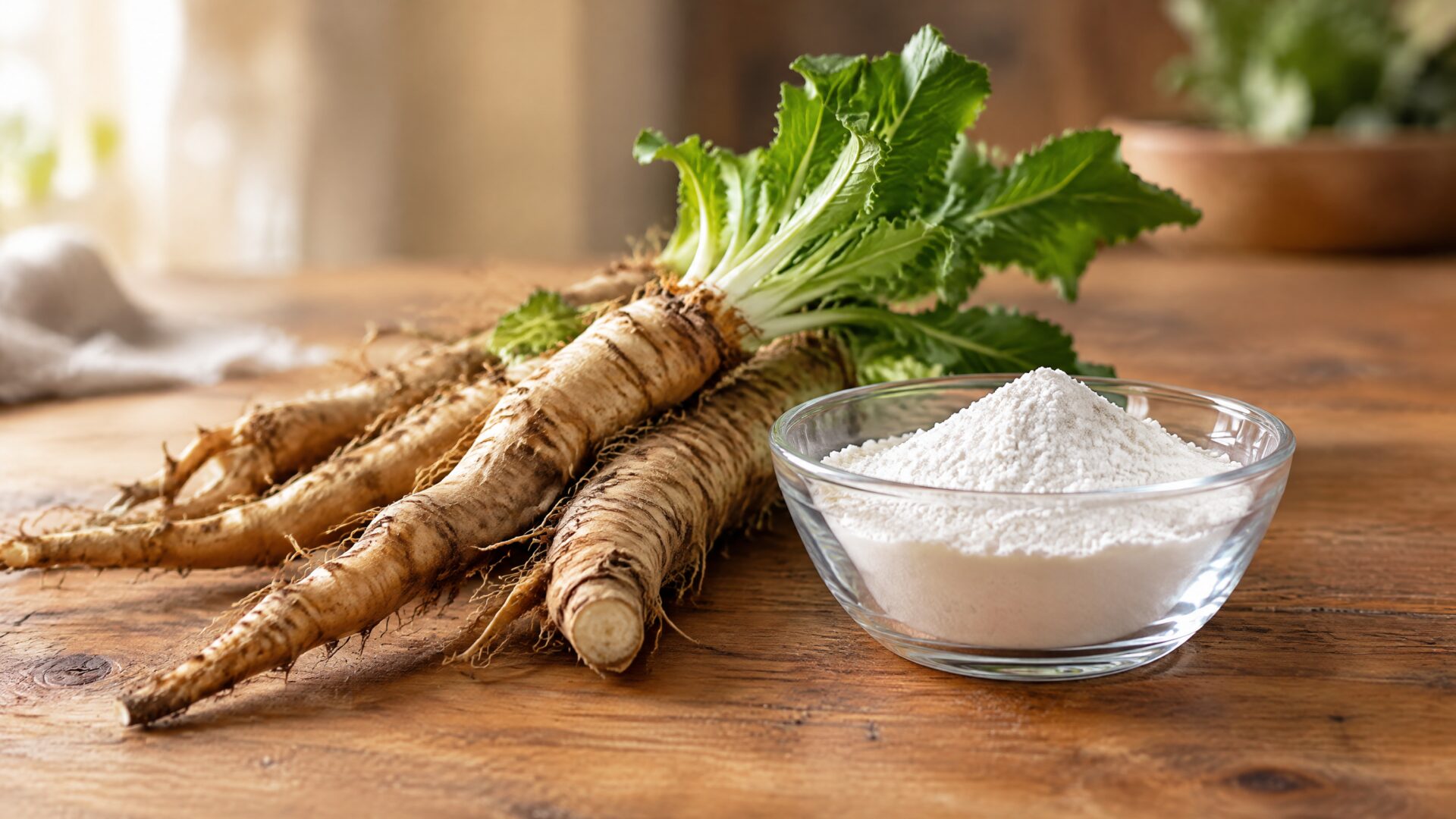
Inulin is a fructan: a chain of fructose units joined by β(2→1) bonds, usually ending in a glucose unit. Chicory root is the main commercial source; Jerusalem artichoke, agave, onion, leek, garlic and banana also contain it. The chain length (degree of polymerisation, DP) varies:
- FOS, oligofructose or fructo-oligosaccharides: the short chains, DP about 2–10. Made by partial breakdown of chicory inulin or built up from sucrose with enzymes. Sweeter (roughly a third as sweet as sugar) and very soluble.
- Standard chicory inulin: a mix of short and long chains, average DP about 10–12. Slightly sweet and moderately soluble. FC Materials’ inulin powder is this type (average DP ≥ 10, min. 90% inulin).
- Long-chain (“high-performance”) inulin: the short chains removed, average DP above about 20. Hardly sweet, less soluble, forms creamy gels and is used as a fat replacer.
So “inulin vs FOS” is really a question of chain length. Shorter chains taste sweeter, dissolve more easily and are fermented faster, earlier in the colon; longer chains are fermented more slowly. Many products use a blend (“oligofructose-enriched inulin”) to get both.
Resistant dextrin is a different molecule
Resistant dextrin (also called resistant maltodextrin, or soluble corn fibre when made from maize) is made of glucose, not fructose. Starch is heated with a little acid so that its chains break and re-link with bond types that human enzymes cannot digest, and the digestible remainder is then removed. The result is a clear, almost tasteless, low-viscosity fibre that is very stable to heat and acid. FC Materials’ resistant dextrin is made from corn starch.
What about GOS and other prebiotics?
Galacto-oligosaccharides (GOS) are made from lactose and are widely used in infant formula, often together with long-chain inulin (the “GOS/FOS” combination). Other non-digestible oligosaccharides, such as xylo-oligosaccharides (XOS), are also sold as prebiotic fiber. For most food and supplement products in Asia, though, the practical choice is between inulin-type fructans (inulin and fructooligosaccharides) and glucose-based soluble fibers such as resistant dextrin.
Prebiotics are different from probiotics: probiotics are live beneficial bacteria (for example Lactobacillus and Bifidobacterium strains), while prebiotics are the non-digestible substrates that such bacteria ferment. “Synbiotic” products combine the two, and inulin or FOS is the usual partner for probiotic strains.
Side-by-side comparison
| Inulin | FOS (oligofructose) | Resistant dextrin | |
|---|---|---|---|
| Building block | Fructose (chains end in glucose) | Fructose | Glucose |
| Chain length | Mixed, average DP ≥ 10 | Short, DP about 2–10 | Branched glucose polymer |
| Typical source | Chicory root | Chicory inulin or sucrose | Corn, tapioca or wheat starch |
| Sweetness | Slight | Noticeable | Very low |
| Solubility | Moderate; rises sharply with heat | High | High |
| Viscosity / texture | Low; creamy gel at high levels | Low | Very low |
| Best fit | Dairy, bakery, bars, sachets, fat and sugar reduction | Drinks, sweetness with fibre | Clear drinks, powders, sachets, high fibre levels |
| Fibre method | AOAC 997.08 or 999.03, or integrated methods | AOAC 997.08 or 999.03 | AOAC 2009.01 or 2011.25 |
Tolerance: how much is comfortable?
All fermentable fibres can cause wind and bloating if the single serving is large. Chain length and fibre type make a difference:
- In a randomised crossover study of 26 healthy adults given a single fibre breakfast, native inulin up to 10 g and oligofructose up to 5 g were well tolerated. A 10 g dose of oligofructose substantially increased gastrointestinal symptoms, mainly flatulence and bloating [2].
- In a randomised crossover study using a validated symptom score, 20 g of inulin (18 g fibre) raised symptoms significantly compared with placebo while 10 g did not. A branded soluble corn fibre was tolerated up to 40 g of fibre in one dose and 65 g spread over the day, about twice the inulin threshold [3].
For product design this means: FOS-rich products work best at smaller servings; standard inulin is usually comfortable at moderate servings; glucose-based soluble fibres such as soluble corn fibre and resistant dextrin suit high-fibre products. Splitting the daily amount across servings also helps.
What the research says about each
- Inulin-type fructans (inulin and FOS): a 2022 meta-analysis of 50 studies (2,525 participants) found that 3–20 g/day of chicory inulin-type fructans increased bifidobacteria and improved bowel function in healthy people [4]. A 2024 meta-analysis of 55 randomised trials found small falls in LDL cholesterol, triglycerides and body weight, with low to very low certainty [5].
- Resistant dextrin: a 2026 meta-analysis of 13 randomised trials found small falls in fasting glucose and HOMA-IR, with no significant change in HbA1c or fasting insulin; effects were larger in people with overweight, obesity or diabetes [6].
The fructan evidence is larger and focuses on gut bacteria and bowel function; the resistant dextrin evidence is smaller and focuses on glucose control. Neither supports dramatic claims, and claims on finished products must follow the rules of the market where they are sold.
These summaries describe published research on the ingredient. They are not claims for any finished product; claims on finished products must meet the rules of the market where they are sold.
Which should you choose?
- Clear drink, high fibre per serving: resistant dextrin.
- Dairy, bakery, bars, or a fat or sugar reduction role: standard or long-chain inulin.
- A little sweetness with fibre in a small serving: FOS or an oligofructose-enriched blend.
- The best-documented prebiotic effect on bifidobacteria: inulin-type fructans.
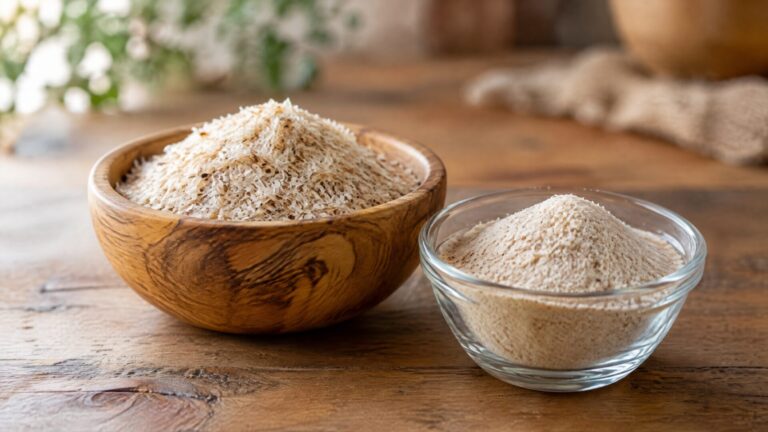
- Blends: inulin plus resistant dextrin (or psyllium husk) spreads fermentation and lets you reach a fibre target with better tolerance.
References
- Gibson GR, et al. Expert consensus document: The International Scientific Association for Probiotics and Prebiotics (ISAPP) consensus statement on the definition and scope of prebiotics. Nat Rev Gastroenterol Hepatol. 2017;14(8):491-502. doi:10.1038/nrgastro.2017.75
- Bonnema AL, et al. Gastrointestinal tolerance of chicory inulin products. J Am Diet Assoc. 2010;110(6):865-868. doi:10.1016/j.jada.2010.03.025
- Housez B, et al. Evaluation of digestive tolerance of a soluble corn fibre. J Hum Nutr Diet. 2012;25(5):488-496. doi:10.1111/j.1365-277X.2012.01252.x
- Nagy DU, et al. Effect of chicory-derived inulin-type fructans on abundance of Bifidobacterium and on bowel function: a systematic review with meta-analyses. Crit Rev Food Sci Nutr. 2022;63(33):12018-12035. doi:10.1080/10408398.2022.2098246
- Talukdar JR, et al. The effects of inulin-type fructans on cardiovascular disease risk factors: systematic review and meta-analysis of randomized controlled trials. Am J Clin Nutr. 2024;119(2):496-510. doi:10.1016/j.ajcnut.2023.10.030
- Chen S, et al. Effects of resistant dextrin on glycemic traits: a systematic review and meta-analysis of randomized controlled trials. Nutr J. 2026;25(1). doi:10.1186/s12937-026-01292-z
Frequently asked questions
What is the difference between inulin and FOS?
FOS (oligofructose) is the short-chain part of inulin. Both are chains of fructose; FOS chains are shorter, so FOS is sweeter, more soluble and fermented faster.
Can inulin and FOS be used together?
Yes. Oligofructose-enriched inulin blends are common and combine the sweetness of FOS with the slower fermentation of longer chains.
Is resistant dextrin a prebiotic?
It is a fermentable soluble fibre. Its human evidence is smaller than for inulin-type fructans and mostly concerns glucose control, so check what your market allows before calling it a prebiotic on a label.
Which prebiotic fibre is best for clear drinks?
Resistant dextrin, because it is clear, low in viscosity, almost tasteless and stable to heat and acid.
Do prebiotic fibres cause bloating?
They can at large single servings. In studies, FOS caused symptoms at lower doses than inulin, and a glucose-based soluble corn fibre was tolerated at higher doses than inulin.
Where can I buy inulin or resistant dextrin in Malaysia?
FC Materials in Penang supplies chicory inulin powder and resistant dextrin to manufacturers, with specifications, COA and Halal certificates. WhatsApp us for a quote.
Choosing a fibre for your formulation?
Tell us the product, target fibre per serving and volume. We supply chicory inulin powder, resistant dextrin, psyllium husk and glucomannan with full documents. Request a quote or WhatsApp us.