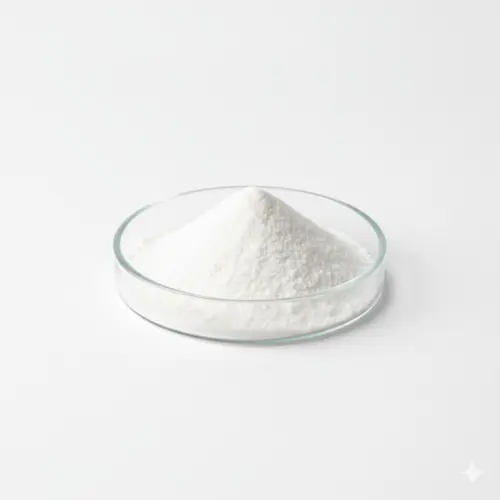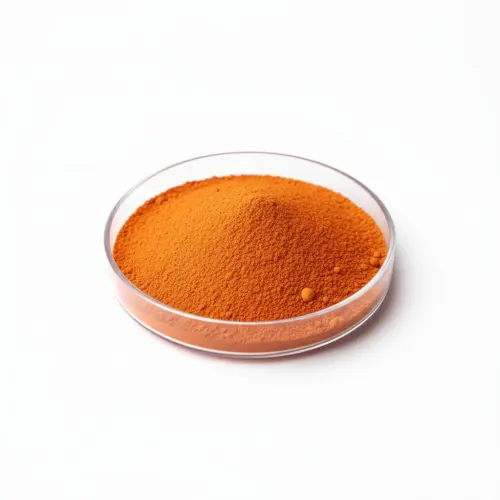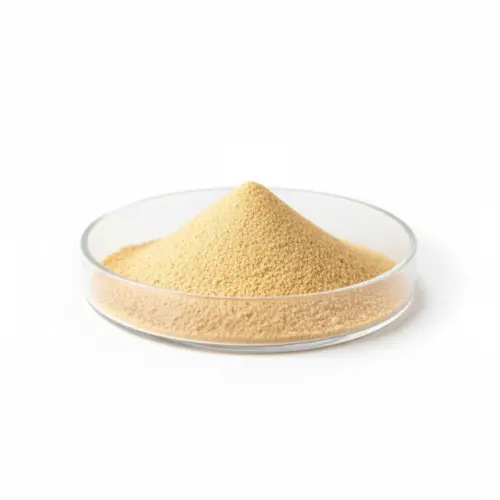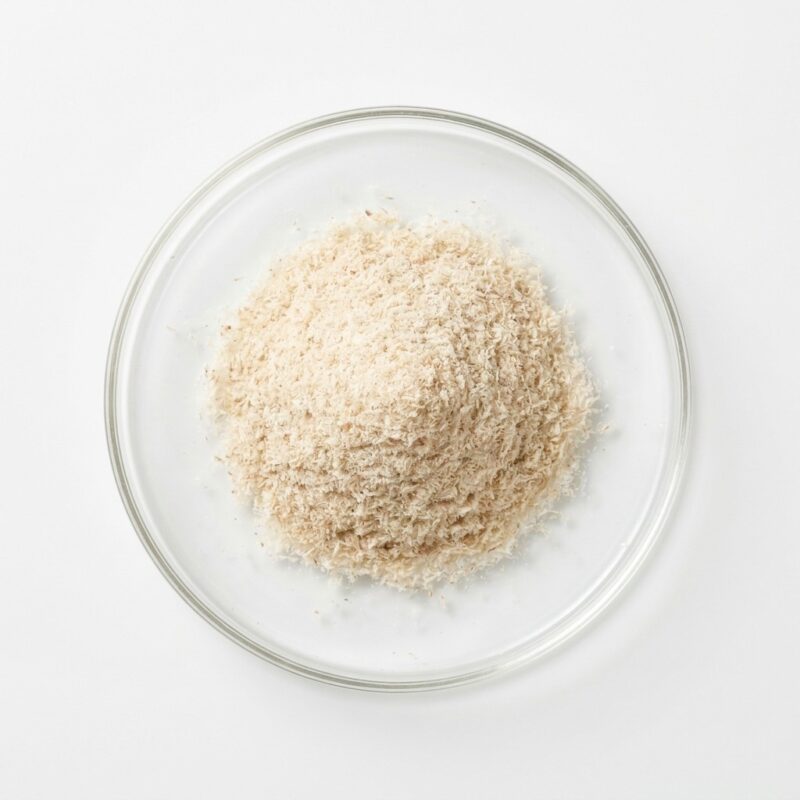
Psyllium Husk is a natural soluble dietary fibre derived from the seed husks of Plantago ovata, a plant native to India and the Mediterranean. This Halal-certified ingredient is one of the richest known sources of soluble fibre and has been widely studied for its clinically demonstrated benefits in digestive health, blood sugar regulation, and cholesterol management.
Psyllium Husk absorbs water to form a viscous gel in the digestive tract, slowing digestion, promoting satiety, and supporting regular bowel movement. It is a key ingredient in high-fibre functional food formulations.
Applications:
- Nutraceuticals (fibre supplements, digestive health capsules and sachets)
- Functional Foods (high-fibre breads, cereals, protein bars)
- Beverages (fibre-enriched health drinks, meal replacement shakes)
- Bakery (gluten-free baking binder, moisture retention)
Key Features & Benefits:
- One of the richest sources of soluble dietary fibre
- Clinically studied for digestive, cholesterol, and blood sugar benefits
- Forms a viscous gel in aqueous systems
- Promotes satiety and healthy bowel function
- Halal-certified & food-grade quality
Grades and particle size
Psyllium is traded as whole husk and as milled powder, and the two are not interchangeable. Milling raises viscosity and speeds hydration but changes mouthfeel and dust behaviour, so a supplement sachet, a bakery binder and a beverage each want a different mesh. Specify husk purity and mesh together — purity alone does not describe the material you will receive.
Handling and formulation notes
Psyllium hydrates almost on contact and absorbs many times its own weight in water, which is the functional point and also the main processing problem: tipped into water it forms lumps with a wetted skin and a dry core that never hydrates. Dry-blend it with the other powders in the formula, or add it through a high-shear disperser, rather than adding it to a still liquid. In bakery it competes for water with flour and hydrocolloids, so the water addition has to be raised or the crumb comes out tight.
Two practical cautions worth designing around. Finished products are normally labelled to be taken with ample fluid, because the gel forms whether or not there is water to form it in. And fine psyllium dust is a recognised occupational respiratory sensitiser, so dust extraction and PPE belong in the handling procedure, not just the safety data sheet.
What the research says
- A 2018 meta-analysis of 28 randomised controlled trials (1,924 participants) found that psyllium, at a median dose of about 10 g a day, lowered LDL cholesterol by an average of 0.33 mmol/L, and also lowered non-HDL cholesterol and apolipoprotein B. [1]
- An earlier meta-analysis of 67 controlled trials found that soluble fibre from psyllium, oats and pectin lowered total and LDL cholesterol by similar amounts, with a small effect per gram of fibre. [2]
- A 2021 review of systematic reviews listed psyllium among foods high in soluble fibre that produce at least moderate LDL reductions (0.20–0.40 mmol/L), with high certainty of evidence. [3]
These summaries describe published research on the ingredient. They are not claims for any finished product; claims on finished products must meet the rules of the market where they are sold.
References
- Jovanovski E, et al. Effect of psyllium (Plantago ovata) fiber on LDL cholesterol and alternative lipid targets: a systematic review and meta-analysis of randomized controlled trials. Am J Clin Nutr. 2018;108(5):922–932. doi:10.1093/ajcn/nqy115
- Brown L, et al. Cholesterol-lowering effects of dietary fiber: a meta-analysis. Am J Clin Nutr. 1999;69(1):30–42. doi:10.1093/ajcn/69.1.30
- Schoeneck M, Iggman D. The effects of foods on LDL cholesterol levels: a systematic review of the accumulated evidence from systematic reviews and meta-analyses of randomized controlled trials. Nutr Metab Cardiovasc Dis. 2021;31(5):1325–1338. doi:10.1016/j.numecd.2020.12.032
What to ask for on the certificate of analysis
- Husk purity (%) and mesh or particle-size distribution — the two together define performance.
- Swell volume or viscosity, stated with the method and concentration used. A viscosity figure without its method is not comparable between suppliers.
- Moisture and loss on drying.
- Microbiological profile including Salmonella. Psyllium is a raw agricultural husk, not a synthesised powder, and has a documented history of recalls on this point — treat it as a required test rather than an optional one.
- Heavy metals and foreign matter.
- Halal certificate reference where the finished product requires it.