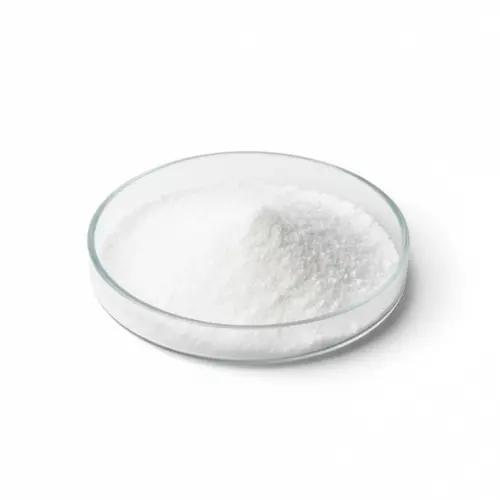
Calcium Lactate is a food-grade mineral ingredient used to enhance calcium content, improve texture, and support stability in food, beverage, and supplement formulations. With a purity of 98.0–101.0%, it offers a safe and effective source of calcium for fortification.
This Halal-certified mineral is highly soluble and bioavailable, making it suitable for applications in dairy, beverages, bakery, and nutraceuticals. Beyond fortification, Calcium Lactate also functions as a firming agent, leavening aid, and stabilizer, ensuring versatility across product categories.
Applications:
-
Beverages (fortified juices, dairy drinks, sports nutrition)
-
Bakery & Confectionery (breads, pastries, candies)
-
Nutraceuticals (calcium supplements, tablets, capsules)
-
Food Processing (firming agent, stabilizer, texturizer)
Key Features & Benefits:
-
✅ High purity: 98.0–101.0%
-
✅ Excellent source of calcium fortification
-
✅ Improves stability, texture, and firmness
-
✅ Halal-certified & food-grade quality
-
✅ Versatile use in food, beverage, and nutraceuticals
Calcium content depends on the hydrate
Calcium lactate is the calcium salt of lactic acid. It is usually sold as the pentahydrate, which contains about 13% calcium by weight; anhydrous grades contain more. Always calculate calcium fortification from the calcium assay on the certificate. For comparison, calcium carbonate contains far more calcium per gram but is insoluble in water.
Why formulators choose it
Calcium lactate dissolves much better than calcium carbonate or tricalcium phosphate and has a milder taste than many calcium salts, so it suits clear drinks, liquid supplements and effervescent tablets. It is also used as a firming agent: calcium ions strengthen the pectin in canned and fresh-cut fruit and vegetables.
Halal and sourcing
The lactic acid is normally made by fermentation. Ask which raw materials and fermentation media were used and whether the halal certificate covers them, and whether the product is the L- or DL-form if your customer specifies it.
What to ask for on the certificate of analysis
- Assay of calcium lactate and calcium content (%), with the method
- Loss on drying (confirms the hydrate form)
- Acidity or alkalinity, chloride, sulphate and volatile fatty acids
- L- or DL-form, if specified
- Heavy metals (lead, arsenic, cadmium, mercury)
- Microbiology: total plate count, yeast and mould, E. coli, Salmonella
- Batch number, manufacture and retest dates; compliance with the food additive specification of your market (for example JECFA or the Malaysian Food Regulations)