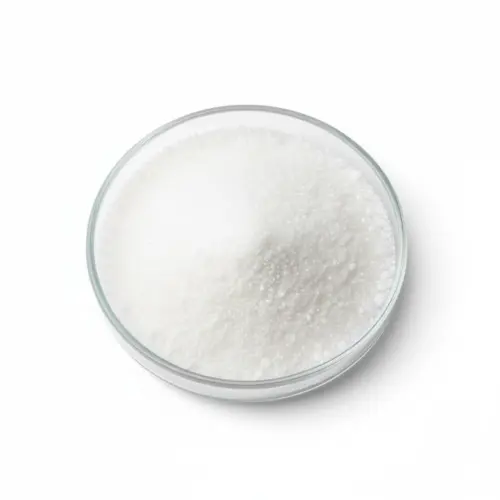
Tricalcium Phosphate (TCP) is a calcium salt of phosphoric acid used widely as a food-grade anti-caking agent, calcium mineral supplement, and acidity regulator. This Halal-certified ingredient is one of the most bioavailable forms of calcium, making it a dual-function ingredient that improves powder flowability while simultaneously fortifying products with essential minerals.
With its fine white powder form, excellent dispersibility, and neutral taste, Tricalcium Phosphate is a preferred choice for both food processing applications and nutritional fortification programmes.
Applications:
- Powdered Foods (anti-caking in spice blends, seasoning mixes, milk powders)
- Beverages (calcium-fortified drinks, mineral water, sports nutrition)
- Bakery & Confectionery (flour treatment, leavening blends)
- Nutraceuticals (calcium supplements, bone health formulations, mineral mixes)
Key Features & Benefits:
- Dual function – anti-caking agent and calcium supplement
- Highly bioavailable calcium source
- Neutral taste and fine white powder form
- Improves flowability in powdered formulations
- Halal-certified & food-grade quality
What food-grade tricalcium phosphate is
Food-grade tricalcium phosphate (TCP, E341(iii)) is a mixture of calcium phosphates with a variable composition, made by reacting a calcium source with phosphoric acid. It is a fine white powder that is practically insoluble in water. Ask for the calcium content (and phosphorus, if specified) on every certificate rather than relying on a theoretical formula.
Anti-caking and fortification
Its fine, porous particles coat other powders and absorb moisture, which keeps salt, sugar, seasoning and milk powders free-flowing. It is also used to add calcium to soy drinks, powders and tablets; in liquids it stays suspended rather than dissolved, so stabilisers are needed to prevent settling. For a soluble calcium source, see Calcium Lactate; for higher calcium per gram, Calcium Carbonate.
Contaminants
Phosphates made from mined phosphate rock can carry fluoride, arsenic, lead and cadmium. Food-grade specifications set limits for these, so make sure each lot is tested against the specification required in your market.
What to ask for on the certificate of analysis
- Calcium (and phosphorus) content with the method
- Fluoride, arsenic, lead and cadmium
- Loss on ignition and particle size
- Batch number, manufacture and retest dates; compliance with the food additive specification of your market