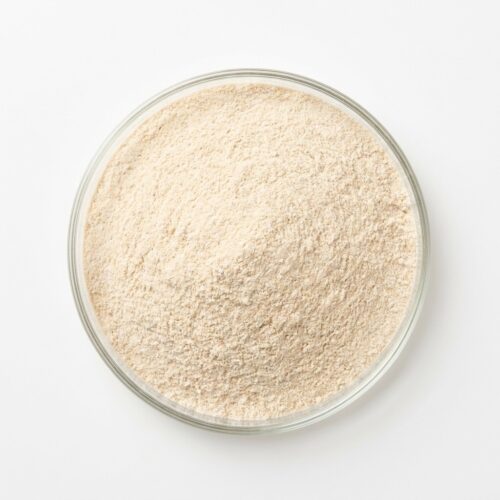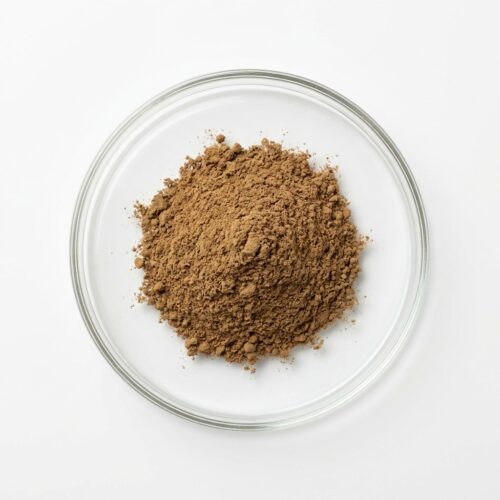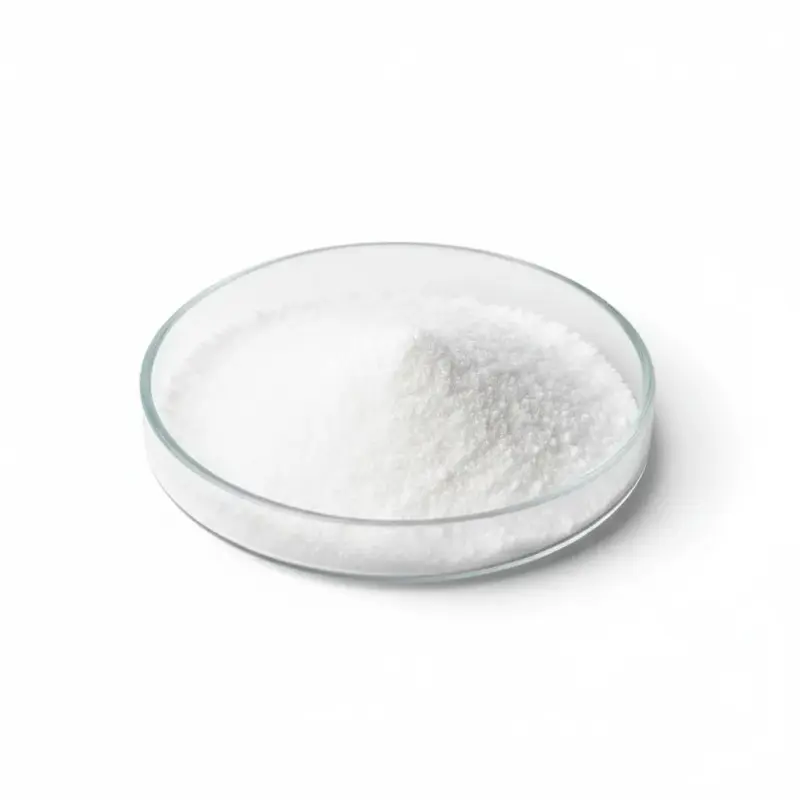
Calcium Carbonate is the most widely used calcium supplement and food fortification ingredient, providing 40% elemental calcium — the highest among all calcium salts. It is inexpensive, highly versatile, and functions simultaneously as a calcium source, antacid, and food-grade filler/excipient in tablet manufacturing.
Applications:
- Calcium supplement and bone health formulations
- Food and beverage calcium fortification
- Antacid and gastrointestinal relief products
- Tablet excipient (filler, binder) in nutraceutical manufacturing
Key Features & Benefits:
- 40% elemental calcium — highest calcium content of all salts
- Most cost-effective calcium source for supplementation
- Functions as antacid, filler, and calcium source simultaneously
- No animal substance (from mineral/limestone) – halal-certified
- Food grade, USP grade, and DC grade available
Heavy versus light grade — the choice that decides your tablet
Calcium carbonate is sold as ground (GCC) and precipitated (PCC) material, and colloquially as “heavy” and “light”. The chemistry is identical; the bulk density is not, and it can differ by roughly a factor of two. That single property decides whether a 500 mg elemental dose fits your capsule shell, how a direct-compression blend flows, and how chalky a chewable feels in the mouth. Specify the grade and the density, not just the assay — two lots both meeting 98% assay can behave completely differently on the press.
Source and formulation notes
Origin matters for more than certification. Limestone-derived material is mineral and straightforwardly vegan and Halal; oyster shell, coral and dolomite sources are marine and carry both a different certification story and a different heavy-metal risk profile. Particle size drives perceived grittiness in chewables and suspension stability in liquids.
Two interaction points to design around: calcium carbonate needs gastric acid for absorption, which is why it is normally directed to be taken with food and why calcium citrate is sometimes preferred for older users; and it reacts with acids, so co-formulating it with an acidic active or acidulant in the same phase will effervesce and can destabilise a tablet.
What to ask for on the certificate of analysis
- Assay and elemental calcium content, plus the source material (limestone, oyster shell, coral, dolomite).
- Bulk and tapped density and particle-size distribution — request these even when they are not on the standard sheet.
- Heavy metals with lead reported specifically. Lead contamination in calcium supplements is a documented, recurring issue and is most associated with natural shell and dolomite sources. This is the single line on the certificate worth checking first.
- Acid-insoluble matter, and loss on drying.
- Microbiological profile and Halal certificate reference.