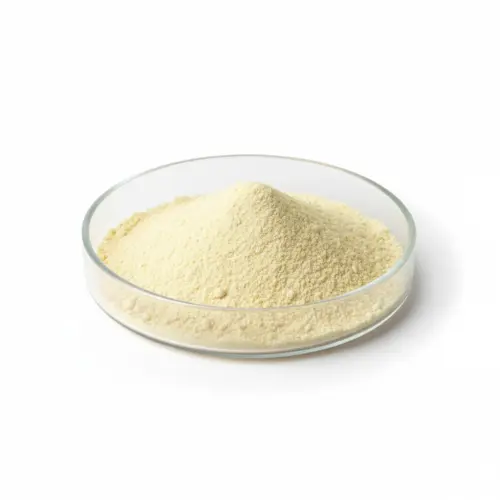
Skim Milk Powder is a high-quality low-fat dairy ingredient produced by removing water and fat from fresh pasteurised cow’s milk through spray-drying. This Halal-certified ingredient retains the full protein, calcium, and lactose profile of whole milk with minimal fat content, making it one of the most widely used dairy ingredients across food, beverage, and nutrition formulations.
With high protein content, excellent solubility, and a neutral dairy flavour, Skim Milk Powder provides consistent functional performance in a broad range of applications.
Applications:
- Beverages (flavoured milk drinks, instant dairy mixes, protein shakes)
- Bakery & Confectionery (milk breads, biscuits, cakes, dairy-based coatings)
- Dairy & Desserts (yogurts, ice creams, recombined milk products)
- Nutraceuticals (protein supplements, meal replacements, sports nutrition)
Key Features & Benefits:
- High protein, low fat dairy ingredient
- Excellent solubility and dispersibility
- Consistent neutral dairy flavour
- Halal-certified & food-grade quality
- Widely used across food, beverage, and nutrition industries
Heat class matters
Skim milk powder is classified by the heat treatment it received before drying, measured as the whey protein nitrogen index (WPNI). Low-heat powder keeps more native whey protein and suits recombined milk, cheese and fresh dairy drinks. High-heat powder has denatured whey proteins that bind more water and give better volume and texture in bakery and some confectionery. Ask for the heat class and WPNI on every lot.
Composition and labelling
Skim milk powder is mainly lactose (about half its weight) and milk protein, with very little fat. The Codex standard for milk powders sets limits for fat and moisture and a minimum protein content; ask whether your lots comply. It contains milk and lactose, both of which must be declared on the label. Because lactose is a reducing sugar, the powder browns readily in baking and with heat during storage.
Storage and use
Keep it dry and cool: moisture uptake causes caking and speeds browning. Instantised grades disperse more easily in cold water. For full-fat flavour, see Whole Milk Powder; for a dairy-free whitener, see Non Dairy Creamer; and for a lower-cost dairy solid, Sweet Whey Powder.
What the research says
- A 2020 meta-analysis pooled 6 trials in 618 healthy postmenopausal women, mostly using milk. Dairy raised bone mineral density, for example at the total hip (SMD 0.37). [1]
- The total-hip effect appeared from 12 months and the femoral-neck effect from 18 months. [1]
- A 2025 network meta-analysis of 60 trials (6,284 women) found that no dairy or soy food significantly improved bone outcomes compared with control. [2]
- Several authors of the 2025 review work for a dairy company (Yili). [2]
- These trials used milk and other dairy foods; their abstracts do not report milk powder or skim milk separately. [1][2]
These summaries describe published research on the ingredient. They are not claims for any finished product; claims on finished products must meet the rules of the market where they are sold.
References
- Shi Y, et al. Effects of dairy products on bone mineral density in healthy postmenopausal women: a systematic review and meta-analysis of randomized controlled trials. Arch Osteoporos. 2020;15(1):48. doi:10.1007/s11657-020-0694-y
- You L, et al. Comparing the effects of dairy and soybean on bone health in women: a food- and component-level network meta-analysis. Nutrients. 2025;17(17):2833. doi:10.3390/nu17172833
What to ask for on the certificate of analysis
- Heat class and whey protein nitrogen index (WPNI)
- Moisture, fat, protein and lactose (or carbohydrate) with methods
- Solubility index, scorched particles and titratable acidity
- Microbiology: total plate count, coliforms, E. coli, Salmonella, Staphylococcus aureus, yeast and mould
- Aflatoxin M1 and veterinary drug residues as required by your market
- Batch number, manufacture and expiry dates; country of origin; halal certificate covering the plant