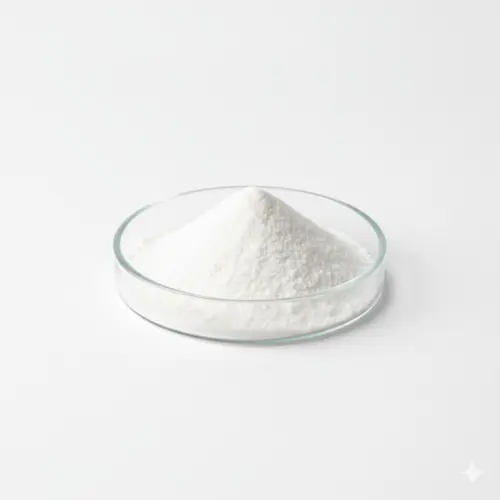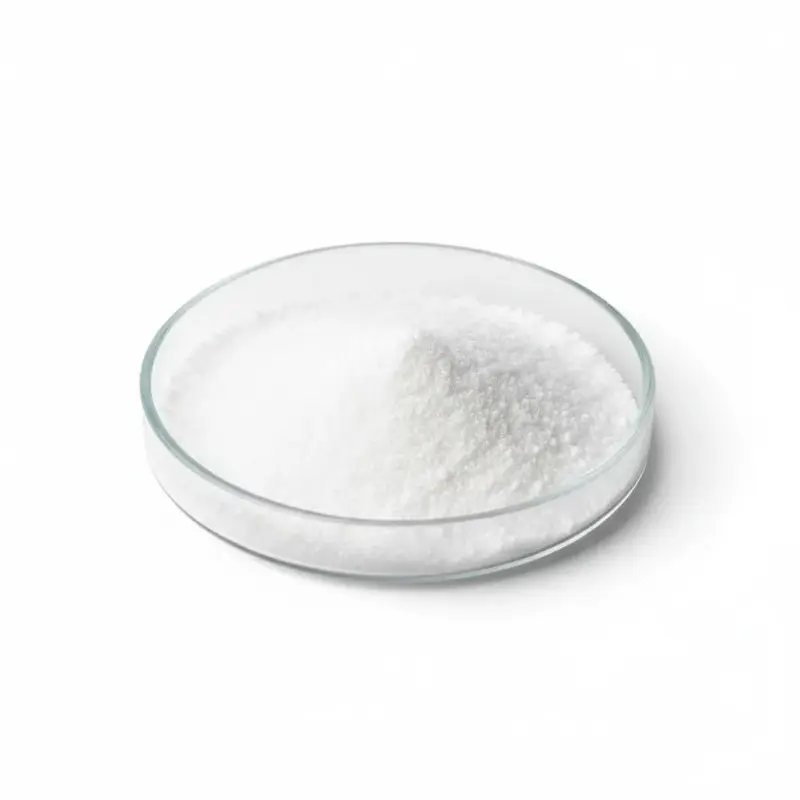
Glucomannan is a water-soluble dietary fibre derived from the konjac plant (Amorphophallus konjac). It has the highest viscosity of any known dietary fibre and absorbs up to 50 times its weight in water, forming a thick gel in the stomach that promotes satiety, slows gastric emptying, and reduces post-meal glucose and cholesterol absorption. It carries EFSA-approved health claims for body weight management and blood cholesterol reduction.
Applications:
- Weight management and satiety supplement formulations
- Blood glucose and cholesterol management products
- Constipation relief and gut health supplements
- Keto and low-calorie food product texturiser
Key Features & Benefits:
- EFSA-approved health claim for weight management (3g/day)
- Highest viscosity of any dietary fibre — exceptional satiety effect
- Absorbs 50x its weight in water — gastric volume expansion
- No animal substance – halal-certified
- Also approved for cholesterol and blood glucose reduction
Viscosity is the specification that matters
Glucomannan (konjac glucomannan, E425(ii) as a food additive) is bought on viscosity. Two powders with the same glucomannan percentage can give very different viscosity, depending on molecular weight, degree of acetylation and processing, and viscosity drives both texturising performance and how the material behaves in a capsule or drink. Viscosity should be specified with its test conditions (concentration, temperature, time after dispersion and instrument), because a figure without conditions cannot be compared. Particle size matters too: finer powders hydrate faster but lump more easily.
Dispersion and synergies
Like other high-viscosity gums, glucomannan must be dispersed before it hydrates, for example by dry-blending with sugar or other powders, or by adding slowly under strong agitation. It forms synergistic gels with xanthan gum and with kappa-carrageenan, and it forms a heat-stable gel when treated with alkali, which is how konjac noodles and jellies are made. For other fibres in the range, see Psyllium Husk and Inulin.
Choking risk and claims
Because glucomannan swells strongly on contact with water, it carries a choking risk if taken without enough fluid, and konjac has been restricted in some bite-sized jelly confectionery for this reason. In the EU, the authorised weight-management claim applies only under specific conditions (including a daily amount taken in divided doses with water, alongside an energy-restricted diet) and requires warning statements. EU authorisation does not transfer automatically to Malaysia or other markets, where local rules on supplement and food claims apply.
What the research says
- A 2008 meta-analysis of 14 randomised controlled trials (531 participants) found that glucomannan lowered total cholesterol by 19.3 mg/dL, LDL cholesterol by 16.0 mg/dL, triglycerides by 11.1 mg/dL, body weight by 0.79 kg and fasting blood glucose by 7.4 mg/dL compared with control. It did not change HDL cholesterol or blood pressure. [1]
- A 2023 meta-analysis of 6 randomised trials (440 people with type 2 diabetes) found that glucomannan lowered total and LDL cholesterol, fasting and 2-hour post-meal blood glucose, and fasting insulin compared with control. [2]
These summaries describe published research on the ingredient. They are not claims for any finished product; claims on finished products must meet the rules of the market where they are sold.
References
- Sood N, Baker WL, Coleman CI. Effect of glucomannan on plasma lipid and glucose concentrations, body weight, and blood pressure: systematic review and meta-analysis. Am J Clin Nutr. 2008;88(4):1167–1175. doi:10.1093/ajcn/88.4.1167
- Zhang Z, et al. Effects of glucomannan supplementation on type II diabetes mellitus in humans: a meta-analysis. Nutrients. 2023;15(3):601. doi:10.3390/nu15030601
What to ask for on the certificate of analysis
- Glucomannan content and the test method
- Viscosity, with concentration, temperature, time and instrument stated
- Particle size (mesh), loss on drying, ash and pH
- Sulfur dioxide residue
- Heavy metals: lead, arsenic, cadmium and mercury
- Microbiology: total plate count, yeast and mould, E. coli, Salmonella
- Origin, GMO and allergen statements, Halal certificate, batch and retest dates