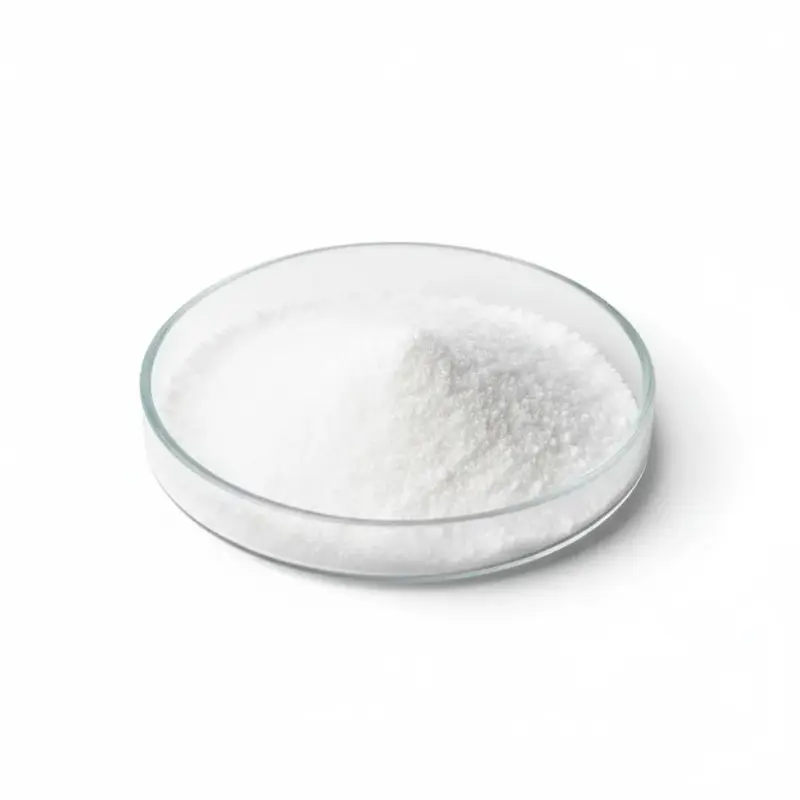
Isomaltulose (also marketed under the trademark Palatinose™) is a naturally sourced disaccharide of glucose and fructose, produced from sucrose through an enzymatic rearrangement of the glycosidic bond. Where sucrose links its two sugars by an α-1,2 bond, isomaltulose is joined by a more stable α-1,6 bond — the small structural change that gives it a uniquely low glycaemic index (GI of 32 vs. sucrose GI of 65) and a completely different metabolic profile. The raw material is sucrose derived from sugar beet, making isomaltulose a naturally sourced, non-GMO carbohydrate.
Because that α-1,6 bond is hydrolysed 4–5 times more slowly than sucrose, isomaltulose is digested gradually along the full length of the small intestine. It is fully digestible and delivers the same 4 kcal/g as sugar, but releases glucose into the bloodstream slowly and steadily — providing sustained energy over roughly four hours without the sharp glycaemic spike of conventional sugars. This makes it a preferred sugar replacer for sports nutrition, diabetic-friendly products, functional foods and hydration beverages.
Slow-release, sustained energy
Isomaltulose is a low-glycaemic, slow-release carbohydrate. Its steady glucose delivery avoids the peak-and-crash cycle of fast sugars and supports a more balanced insulin response — the basis for its use in endurance and sustained-energy formulations. Lower blood glucose and insulin responses have been confirmed in more than 30 human trials, in subjects ranging from healthy adults and children to overweight, obese and glucose-intolerant individuals (including type 1 and type 2 diabetes).
Weight management & fat burning
By keeping insulin lower through slower glucose release, isomaltulose promotes fat oxidation (fat burning) rather than fat storage. In a 12-week randomised, double-blind study in overweight and obese adults, replacing sucrose with isomaltulose in an energy-reduced diet significantly reduced caloric intake, increased fat burning, and led to greater body-weight and body-fat loss. Separate intervention studies in Asian middle-aged and elderly adults reported less visceral (abdominal) fat accumulation.
Healthier blood glucose management
Slow, low glucose release also drives a favourable gut-hormone response, promoting GLP-1 secretion — a hormone associated with improved insulin release, increased satiety and better blood-glucose control. Low-GI diets are supported by international scientific consensus (ICQC) as beneficial for reducing blood glucose levels and the risk of diabetes and heart disease.
Cardiovascular health
In studies where sedentary or older adults replaced high-GI carbohydrates with isomaltulose, researchers observed preserved insulin sensitivity, lower daylong glucose and insulin levels, and reduced markers of arterial stiffness and endothelial dysfunction — pointing to a supportive role in long-term metabolic and cardiovascular health.
Enhanced hydration
Isomaltulose is stable at low pH and helps a beverage maintain its isotonicity over time, while its gradual, sodium-dependent absorption supports steadier fluid uptake and better fluid retention. In controlled human studies, isomaltulose-based electrolyte drinks improved the Beverage Hydration Index by around 25% versus rapidly absorbed carbohydrates, with lower urine output and maintained plasma volume — valuable for sports, functional and everyday hydration products.
Tooth-friendly
Isomaltulose is non-cariogenic (tooth-friendly), as it is not readily fermented by oral bacteria into acids that damage tooth enamel.
Applications:
- Sports & hydration nutrition (isotonic and electrolyte drinks, energy gels, endurance formulations)
- Diabetic-friendly products (low-GI confectionery, beverages, functional foods)
- Functional foods (low-GI bakery, health and meal-replacement bars, breakfast products)
- Nutraceuticals (sustained-energy supplements, weight-management and blood-sugar blends)
- Dairy and dairy-alternative beverages
Key Features & Benefits:
- Low glycaemic index (GI 32) — slow, sustained energy release without blood-sugar spikes
- Naturally sourced from sugar beet sucrose — non-GMO, clean-label appeal
- Fully digestible, 4 kcal/g, and tooth-friendly
- Promotes fat oxidation and supports weight management
- Supports enhanced hydration and isotonic beverage stability
- Backed by 30+ human clinical trials
- Halal-certified & food-grade quality
Conditions of use apply to specific health benefits. Documentation and specifications are available on request for product development and regulatory purposes.
Buyer checklist
Isomaltulose is made from sucrose with the enzyme sucrose isomerase and is usually sold as a crystalline monohydrate. It is about half as sweet as sucrose, so it is often combined with a high-intensity sweetener. It is a reducing sugar, so it can brown with proteins under heat, and it is stable in acidic drinks. It provides the same energy as sugar and counts as a sugar on nutrition labels.
Claims
Claims about fat burning, weight loss or heart health are not authorised health claims for isomaltulose in most markets, so use only the claims your market permits. Related carbohydrates include maltodextrin and the sugar alcohol isomalt, which is a different substance made from isomaltulose.
What the research says
- A 2022 meta-analysis of 11 randomised trials (175 participants) found moderate-certainty evidence that isomaltulose gave a smaller blood glucose rise than sucrose at 30 minutes, and low-certainty evidence that the glucose response was lower but more prolonged, with a lower insulin response. The trials were small and tested isomaltulose dissolved in water. [1]
- A 2025 meta-analysis of 10 studies (367 participants) found lower blood glucose 60 minutes after a meal with isomaltulose than with sucrose. The authors say the effect may be modest in clinical terms and that results varied between studies. [2]
These summaries describe published research on the ingredient. They are not claims for any finished product; claims on finished products must meet the rules of the market where they are sold.
References
- Xie J, et al. Effect of isomaltulose on glycemic and insulinemic responses: a systematic review and meta-analysis of randomized controlled trials. Adv Nutr. 2022;13(5):1901-1913. doi:10.1093/advances/nmac057
- Chen Z, et al. Impact of isomaltulose on glycemic response in diabetic and healthy populations: a meta-analysis. Nutrients. 2025;17(11):1940. doi:10.3390/nu17111940
Halal certification
This ingredient is listed as “Palatinose” on FC Materials’ Halal certificate (Sijil Pengesahan Halal, MS 1500:2019), issued through the Penang Islamic Religious Council (MAINPP) and the Department of Islamic Development Malaysia (JAKIM). Reference JAKIM.700-2/3/1 105-07/2022, valid until 15 October 2028. Ask us for a copy.
What to ask for on the certificate of analysis
- Assay of isomaltulose (%) by HPLC, with the method
- Other sugars (sucrose, glucose, fructose, trehalulose)
- Water content (confirms the monohydrate), pH and ash
- Heavy metals (lead, arsenic, cadmium, mercury)
- Microbiology: total plate count, yeast and mould, E. coli, Salmonella
- Batch number, manufacture and retest dates; compliance with the food additive specification of your market (for example JECFA or the Malaysian Food Regulations)