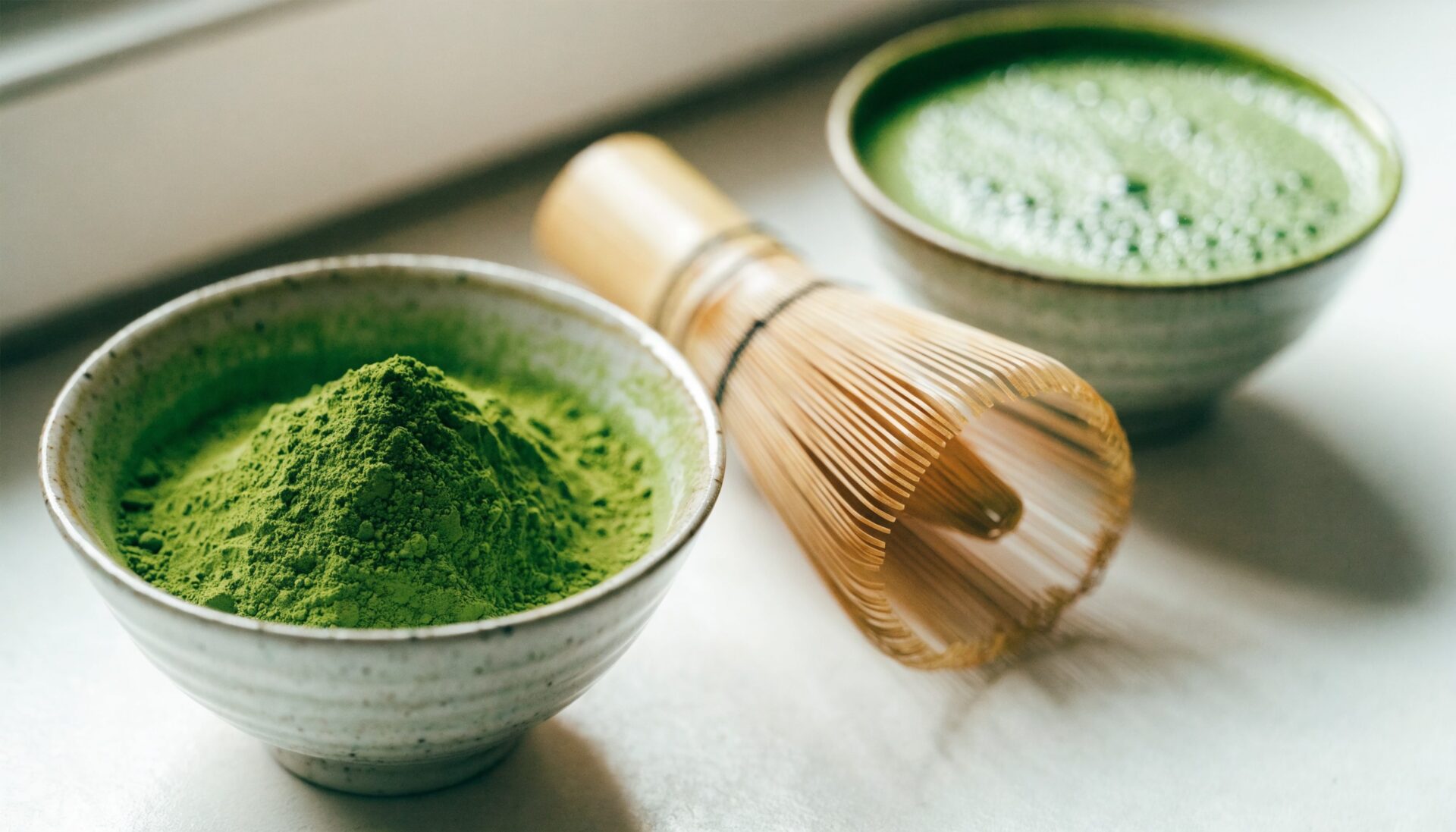

Matcha has grown from a centuries-old component of the Japanese tea ceremony into one of the most searched food ingredients globally, with “matcha powder” alone drawing well over 100,000 monthly searches. Unlike regular green tea, matcha is made from whole, stone-ground tea leaves, which means consumers and formulators alike are getting the complete leaf, not just a steeped extract, a distinction that matters for both flavor and nutrient content.
What Is Matcha Powder?
Matcha is produced from shade-grown Camellia sinensis tea leaves, which are steamed, dried, de-stemmed, and stone-ground into a fine, vivid green powder. The shading process before harvest boosts chlorophyll and amino acid content, particularly L-theanine, which is part of why matcha has a smoother, more umami flavor profile than standard green tea. Matcha is graded primarily into ceremonial grade, intended for traditional whisked preparation, and culinary grade, better suited to lattes, baking, and food and supplement formulation where matcha is one ingredient among several.
Key Health Benefits of Matcha Powder
Antioxidant Support
Matcha is exceptionally rich in catechins, particularly EGCG (epigallocatechin gallate), a polyphenol widely studied for its antioxidant activity. Because matcha uses the whole tea leaf rather than a water-based extract, its catechin concentration is significantly higher than a standard cup of brewed green tea.
Calm, Focused Energy
Matcha pairs caffeine with L-theanine, an amino acid associated with a calmer, more sustained energy release than caffeine alone. This combination is a significant part of matcha’s appeal in the functional beverage and nootropic-adjacent supplement space, and drives much of the search interest in the benefits of drinking matcha in the morning.
Skin Health
Matcha’s antioxidant content has made it a popular ingredient in beauty-from-within formulations, where EGCG and related catechins are positioned to help support skin against oxidative stress.
Metabolic and Weight Management Support
Green tea catechins, including those concentrated in matcha, have been studied for a potential supporting role in metabolism, which is why matcha frequently appears in weight-management-positioned functional beverages and supplements.
Matcha Benefits for Men and Women
Matcha’s appeal is broad and not strongly gender-segmented compared to some other botanical ingredients, though weight-management and skin-focused formulations do skew toward female-oriented marketing, while focus- and energy-positioned products draw a more mixed audience, including professionals and students looking for a smoother alternative to coffee.
Common Forms and Grades Used in Formulation
- Ceremonial grade, the highest quality, made from the youngest tea leaves, intended for traditional whisked preparation; less commonly used in manufacturing due to cost.
- Culinary grade, a more cost-effective grade well suited to lattes, baked goods, and supplement or functional food formulation, where matcha is blended with other ingredients.
- Matcha extract, a further concentrated format used where a standardized catechin or EGCG content is required for a specific claim.
Sourcing and Quality Considerations for Manufacturers
Matcha quality is heavily influenced by growing region (Japanese matcha, particularly from Uji or Nishio, commands a quality premium), shading duration before harvest, and grinding method (traditional stone-milling vs. faster mechanical grinding, which can generate heat and degrade catechin content). Manufacturers sourcing matcha for supplement or functional food use typically request color grading, particle size, and heavy metal and pesticide residue testing alongside catechin/EGCG content.
Safety and Side Effects
Matcha is well tolerated by most consumers, though as a caffeine-containing ingredient it carries the same general considerations as coffee or tea, including potential sleep disruption or mild stomach upset in caffeine-sensitive individuals at high doses. Because matcha’s caffeine can compound the stimulant effects of prescription stimulant medications such as those used for ADHD, products should carry standard guidance for consumers on such medications to consult their prescriber. Matcha’s fine powder form means it delivers more concentrated catechins and caffeine per serving than steeped green tea, which is worth reflecting accurately in formulation and labeling.
Frequently Asked Questions
What is the difference between matcha and regular green tea?
Matcha uses the whole, stone-ground tea leaf, while regular green tea is typically steeped and the leaves discarded. This means matcha delivers a higher concentration of catechins, caffeine, and other tea compounds per serving.
Which matcha grade should manufacturers use?
Culinary grade matcha is generally the more practical and cost-effective choice for food, beverage, and supplement manufacturing, reserving ceremonial grade for products specifically marketed around traditional preparation.
Does matcha contain more caffeine than coffee?
Matcha generally contains less caffeine per serving than coffee, though more than steeped green tea, with the added presence of L-theanine contributing to its reputation for a smoother energy effect.
Sourcing matcha powder for your formulation?
FC Materials supplies matcha powder and other tea-derived antioxidant ingredients to food, beverage, and supplement manufacturers. Tell us your product needs and our team will respond with specs, pricing, and MOQ.
Is it safe to drink matcha every day?
For most healthy adults, one to two servings of matcha daily is well within typical caffeine intake guidelines; those on stimulant medications or with caffeine sensitivity should moderate intake accordingly.