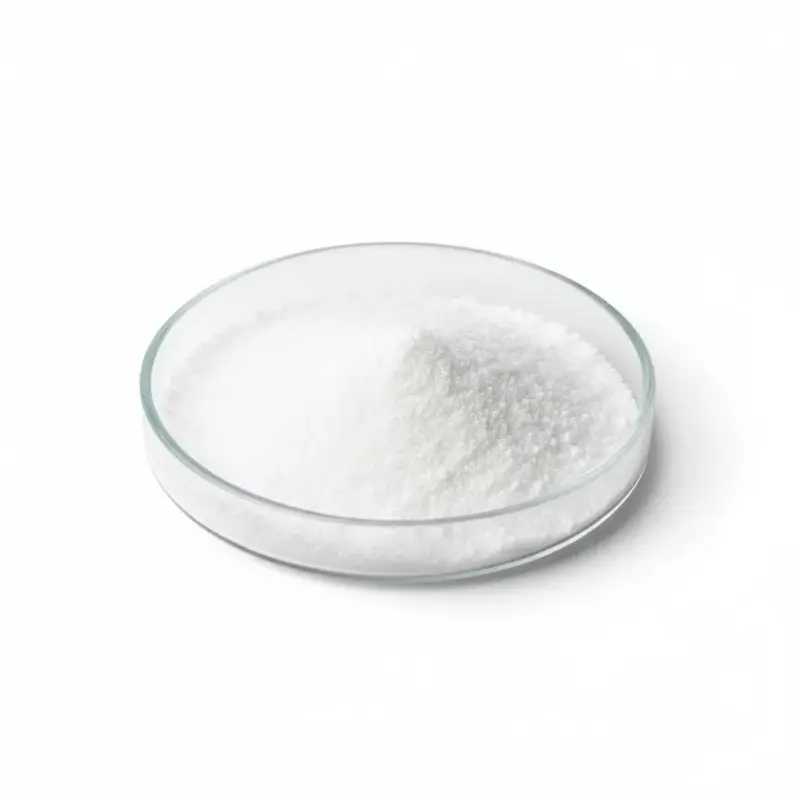
L-Carnitine Base is a high-purity amino acid derivative with an L-Carnitine content of more than 98% (HPLC), serving as the foundational free-form L-Carnitine ingredient for supplement formulations. L-Carnitine plays an essential physiological role in the transport of long-chain fatty acids across the inner mitochondrial membrane — the critical step that allows fat to be burned as fuel for energy production. Without adequate L-Carnitine, fatty acids cannot enter the mitochondria and cannot be oxidised for energy.
L-Carnitine is one of the most widely used and clinically studied weight management and sports nutrition ingredients globally, with robust evidence supporting its roles in fat metabolism, exercise performance, recovery, and cardiovascular health.
Applications:
- Weight Management (fat burning capsules, slimming supplements, body composition formulations)
- Sports Nutrition (pre-workout fat metabolism, endurance, and recovery supplements)
- Cardiovascular Health (heart health formulations, peripheral artery disease support)
- Men’s Health (sperm motility and male fertility support supplements)
Key Features & Benefits:
- L-Carnitine >98% (HPLC) – high purity free-form base
- Essential mitochondrial fatty acid transporter for fat-burning energy production
- Clinically studied for weight management, sports performance, and cardiovascular health
- Halal-certified & food-grade quality
- Suitable for capsule, liquid, powder, and beverage formulations
Base, tartrate or fumarate: carnitine content by salt
L-carnitine is traded as the free base and as salts, and the salt changes how much carnitine each gram delivers. From molecular weights alone: the base is essentially all carnitine; L-carnitine L-tartrate (2:1) carries roughly 68% carnitine; L-Carnitine Fumarate (1:1) carries roughly 58%. Label claims and dosing must be calculated on carnitine content, not on the weight of the salt, so the form has to be fixed before the formula is costed.
Handling the free base
L-carnitine base is strongly hygroscopic: it picks up moisture quickly from humid air and can cake or liquefy. In Malaysian conditions it needs sealed, lined packaging, low-humidity dispensing and prompt re-sealing, and it is usually a poor fit for tablets unless the process is humidity-controlled; that is the main reason the tartrate and fumarate salts exist. A faint fishy odour points to trimethylamine from degradation and is worth checking on receipt.
L-form only
Only the L-isomer is the nutritionally relevant form, and D-carnitine is undesirable. Specific optical rotation on the certificate confirms that the material is L-carnitine rather than a racemic DL mixture. Related sports-nutrition amino acids: L-Arginine and Taurine.
What the research says
- A 2020 meta-analysis of 37 randomised controlled trials (2,292 participants) found that L-carnitine reduced body weight by 1.21 kg, BMI by 0.24 kg/m² and fat mass by 2.08 kg compared with control. It did not change waist circumference or body-fat percentage. The dose-response analysis suggested the largest effect at about 2,000 mg a day. [1]
- A second meta-analysis of 43 randomised trials found a similar reduction in body weight (1.13 kg), seen only in people who were overweight or obese. [2]
These summaries describe published research on the ingredient. They are not claims for any finished product; claims on finished products must meet the rules of the market where they are sold.
References
- Talenezhad N, et al. Effects of L-carnitine supplementation on weight loss and body composition: a systematic review and meta-analysis of 37 randomized controlled clinical trials with dose-response analysis. Clin Nutr ESPEN. 2020;37:9–23. doi:10.1016/j.clnesp.2020.03.008
- Askarpour M, et al. Beneficial effects of L-carnitine supplementation for weight management in overweight and obese adults: an updated systematic review and dose-response meta-analysis of randomized controlled trials. Pharmacol Res. 2020;151:104554. doi:10.1016/j.phrs.2019.104554
What to ask for on the certificate of analysis
- Form (free base) and assay by HPLC or titration
- Specific optical rotation, confirming the L-form
- Water content (Karl Fischer) and residue on ignition
- Heavy metals: lead, arsenic, cadmium and mercury
- Microbiology: total plate count, yeast and mould, E. coli, Salmonella
- Production route (fermentation or synthesis), GMO and allergen statements
- Halal certificate, batch number, manufacture and retest dates