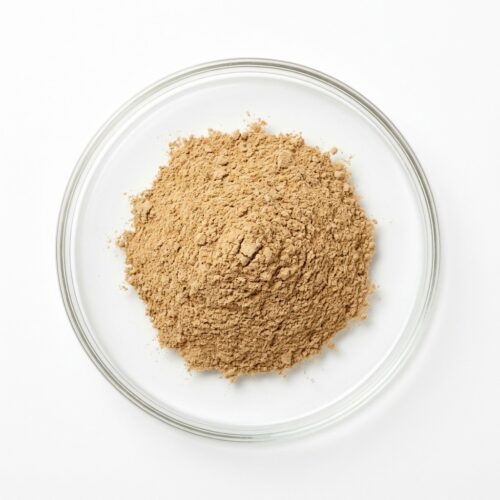
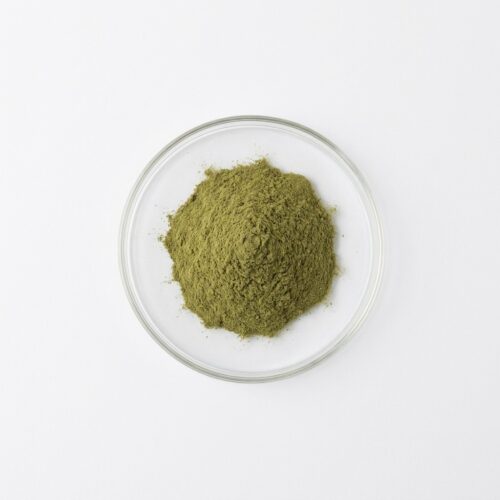
CLA (Conjugated Linoleic Acid) is a naturally occurring fatty acid found in meat and dairy from ruminant animals, available as a supplement in free fatty acid or triglyceride form derived from safflower oil. CLA is one of the most extensively studied body composition ingredients, with clinical evidence supporting reduced body fat mass, preserved lean muscle, and improved metabolic markers.
Applications:
- Body composition and weight management supplements
- Sports nutrition and lean muscle preservation formulations
- Metabolic health and anti-obesity nutraceuticals
- Functional food enrichment (spreads, beverages)
Key Features & Benefits:
- Clinically studied for body fat reduction and lean mass preservation
- Derived from safflower oil — plant-based, halal-certified
- Available as free fatty acid (liquid) or powder forms
- Supports metabolic rate and fat oxidation
- No animal substance in supplement form – halal-certified
Isomers and how CLA is made
Supplement CLA is made by isomerising linoleic acid from a plant oil such as safflower oil. The product is mainly a mixture of two isomers, cis-9,trans-11 and trans-10,cis-12, often in roughly equal amounts. Ask for total CLA and the isomer distribution by GC, and for the form: free fatty acid, triglyceride or a microencapsulated powder.
Oxidation control
Conjugated fatty acids oxidise readily. Ask for peroxide value and anisidine value at release, the antioxidant used, and storage conditions. Powders depend on the quality of the encapsulation, so check oil-on-surface or stability data if available.
Formulation notes
Liquid CLA suits softgels; powder grades suit capsules, sachets and drink mixes. Body-composition blends often combine it with L-Carnitine Base or Green Tea Extract. For a linoleic-acid source that is not conjugated, see Safflower Oil Powder.
What the research says
- A 2024 meta-analysis of 70 randomised trials (4,159 adults) found small reductions in body weight (about 0.35 kg), fat mass (0.44 kg) and body fat (0.8 percentage points), and a small rise in fat-free mass. In the high-quality studies, CLA did not change fat mass or body-fat percentage. The authors say the weight effect may not be clinically important. [1]
- A 2023 meta-analysis of 20 trials of CLA combined with exercise found lower body fat and insulin resistance than exercise alone, but no effect on body weight, exercise performance or blood lipids. Adverse events were not significantly more common. [2]
These summaries describe published research on the ingredient. They are not claims for any finished product; claims on finished products must meet the rules of the market where they are sold.
References
- Asbaghi O, et al. The effects of conjugated linoleic acid supplementation on anthropometrics and body composition indices in adults: a systematic review and dose-response meta-analysis. Br J Nutr. 2024;131(3):406-428. doi:10.1017/S0007114523001861
- Liang CW, et al. Effects of conjugated linoleic acid and exercise on body composition and obesity: a systematic review and meta-analysis. Nutr Rev. 2023;81(4):397-415. doi:10.1093/nutrit/nuac060
What to ask for on the certificate of analysis
- Source oil and form (free fatty acid, triglyceride or powder with carrier)
- Total CLA and isomer distribution (c9,t11 and t10,c12) by GC
- Peroxide value and anisidine value; antioxidant used
- Heavy metals and, for powders, loss on drying
- Microbiology (powder grades): total plate count, yeast and mould, E. coli, Salmonella
- Batch number, manufacture and retest dates