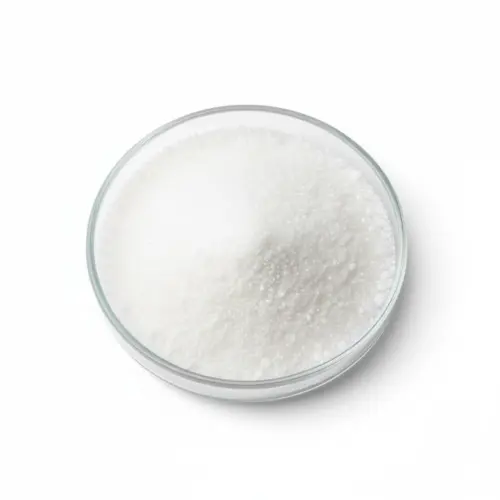
Sodium Carboxymethyl Cellulose (Sodium CMC) is a cellulose derivative produced by chemical modification of natural cellulose fibres. This Halal-certified food-grade hydrocolloid is widely used as a thickener, stabiliser, emulsifier, and water-binding agent across a broad range of food and beverage applications. Its high water-holding capacity and pseudoplastic behaviour make it a versatile functional ingredient.
Sodium CMC is effective at very low usage rates and remains stable across a wide pH range, making it suitable for both neutral and acidic food systems.
Applications:
- Beverages (fruit drinks, flavoured waters, dairy-based beverages)
- Bakery (moisture retention in breads, anti-staling agent, gluten-free formulations)
- Dairy (ice cream stabiliser, yogurt thickener, processed cheese)
- Sauces & Condiments (ketchup, mayonnaise, salad dressings)
Key Features & Benefits:
- High water-binding and moisture retention capacity
- Effective thickener and stabiliser at low usage rates
- Stable across wide pH (4–10) range
- Pseudoplastic – flows easily under shear, thickens at rest
- Halal-certified & food-grade quality
What defines a CMC grade
Sodium carboxymethyl cellulose (CMC, cellulose gum, E466) is made by reacting cellulose with monochloroacetic acid. Two numbers define a grade: the degree of substitution (DS), which affects solubility, clarity and acid and salt tolerance, and the viscosity of a standard solution. Food grades must also meet a purity limit, because the reaction leaves sodium chloride and sodium glycolate as by-products.
Where it is used
CMC dissolves in hot or cold water to give clear, smooth solutions. In acidified milk drinks and yoghurt drinks it coats the milk proteins and stops them clumping when the pH drops. In ice cream it slows ice crystal growth, and in bakery it holds moisture and slows staling. It does not gel on its own.
Formulation notes
Disperse CMC before it hydrates, for example by premixing with sugar or adding it under high shear, to avoid lumps. Viscosity drops at very low pH and with heat, and multivalent metal ions can make some grades precipitate. Related thickeners include guar gum, xanthan gum and carrageenan (Satiagel MM-50).
What to ask for on the certificate of analysis
- Assay (purity, dried basis) with the method
- Degree of substitution (DS)
- Viscosity of a stated solution with the viscometer, spindle, speed and temperature
- pH, loss on drying, sodium chloride and sodium glycolate
- Heavy metals (lead, arsenic, cadmium, mercury)
- Microbiology: total plate count, yeast and mould, E. coli, Salmonella
- Batch number, manufacture and retest dates; compliance with the food additive specification of your market (for example JECFA or the Malaysian Food Regulations)