
Maca has been cultivated in the harsh, high-altitude climate of Peru’s Andes mountains for thousands of years, prized as a staple food long before it became a popular Western supplement ingredient. With “maca root benefits” drawing over 25,000 monthly searches, maca has carved out a distinct niche in the energy, vitality, and hormone-support supplement category.
What Is Maca?
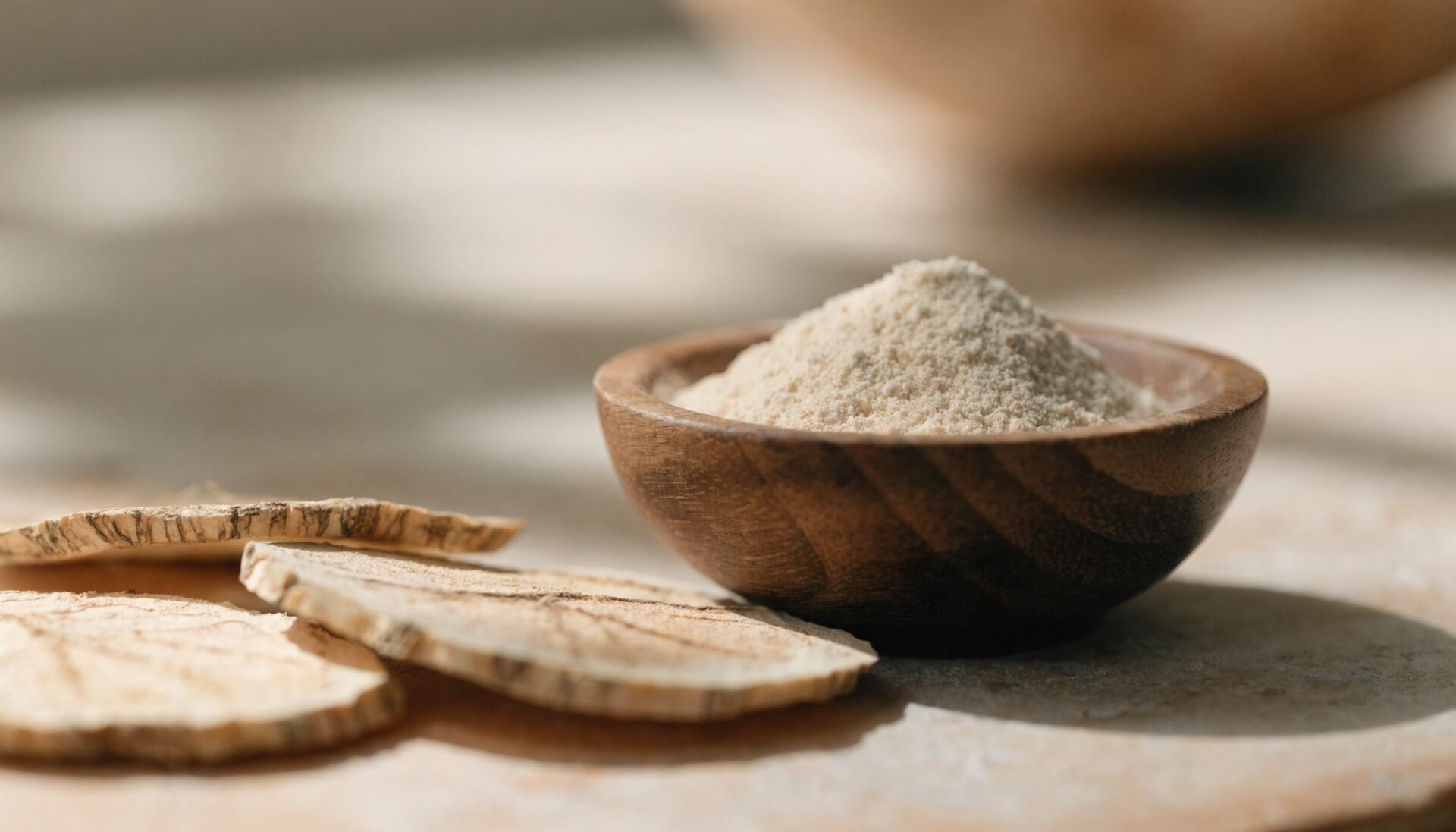
Maca (Lepidium meyenii) is a cruciferous root vegetable, related to broccoli and radish, that grows almost exclusively at extreme altitudes in the Peruvian Andes. The root is traditionally dried and ground into a powder, which is how it’s most commonly supplied for both food and supplement use. Maca comes in several color varieties, yellow, red, and black, each associated with slightly different traditional uses and, increasingly, different marketing positioning in modern formulations.
Key Health Benefits of Maca
Energy and Stamina
Maca’s most established reputation is as a natural energy and stamina ingredient, without the stimulant effect of caffeine, making it a popular addition to pre-workout and general vitality formulations.
Hormonal Balance and Libido Support
Maca has a long traditional association with libido and hormonal balance for both men and women, and this remains one of its primary modern supplement positionings, though it’s worth noting maca doesn’t contain hormones itself; its effects are generally attributed to broader nutrient and adaptogen-like properties.
Mood and Cognitive Support
Maca is increasingly formulated into mood-support and cognitive-wellness blends, an application supported by emerging research interest, alongside its more established energy and vitality use cases.
Fertility Support
Both maca root benefits for women’s fertility and men’s reproductive health are meaningful search segments, reflecting the ingredient’s traditional Andean use and its modern positioning in fertility-adjacent wellness products.
Maca Benefits for Men vs. Women
Maca benefits for women draw notably higher search volume than for men, with women’s health content centered on hormonal balance, energy, and fertility, while men’s health content focuses more on libido, stamina, and testosterone-adjacent vitality claims. Black maca in particular is frequently marketed toward male-specific formulations, while red maca is more often positioned for women’s hormonal health, though scientific differentiation between the color varieties is still an evolving area.
Common Forms Used in Formulation
- Raw maca powder, the most common and cost-effective format, used in capsules, smoothie mixes, and food applications.
- Gelatinized maca, a pre-cooked format that removes starches, making it easier to digest and more concentrated, a common premium alternative to raw powder.
- Color-specific extracts (yellow, red, black), used where a product is positioned around a specific traditional use case tied to that maca variety.
Sourcing and Quality Considerations for Manufacturers
Authentic Peruvian origin, ideally from the Junin region where maca has traditionally been grown, is a key quality and marketing consideration for this ingredient, since maca is now also cultivated in China at a lower cost but with less established traditional pedigree. Manufacturers should request origin documentation, processing method (raw vs. gelatinized), and color variety confirmation as standard due-diligence for maca sourcing.
Safety and Side Effects
Maca is well tolerated by most people at typical supplemental doses. Some people report mild digestive discomfort, particularly with raw (non-gelatinized) maca powder, and because of maca’s traditional hormonal-health associations, products intended for people with hormone-sensitive conditions typically carry a standard consult-your-doctor note.
Frequently Asked Questions
What’s the difference between yellow, red, and black maca?
The three color varieties come from the same species but are traditionally associated with different use cases: yellow maca is the most common and general-purpose, red maca is more often positioned for women’s health, and black maca is more often positioned for men’s vitality and cognitive support.
How long does it take to feel maca’s effects?
Consumer and product guidance commonly suggests several weeks of consistent use before noticing effects, consistent with maca’s traditional positioning as a gradual, adaptogen-like ingredient rather than one with immediate, stimulant-like effects.
Is gelatinized maca better than raw maca powder?
Gelatinized maca is generally easier to digest and considered more concentrated, but raw maca powder is more cost-effective and retains a fuller nutrient profile; the right choice depends on the product’s positioning and target consumer.
Sourcing maca root powder or extract for your formulation?
FC Materials supplies maca root powder and extract to supplement and functional food manufacturers. Tell us your product needs and our team will respond with specs, pricing, and MOQ.
Is maca or ashwagandha better?
They serve different roles: ashwagandha is primarily studied for stress and cortisol regulation, while maca is more associated with libido, fertility, and energy support; some formulations combine both for broader adaptogen coverage rather than treating them as interchangeable.