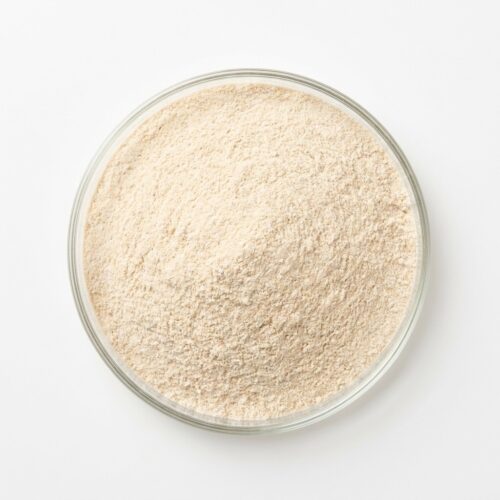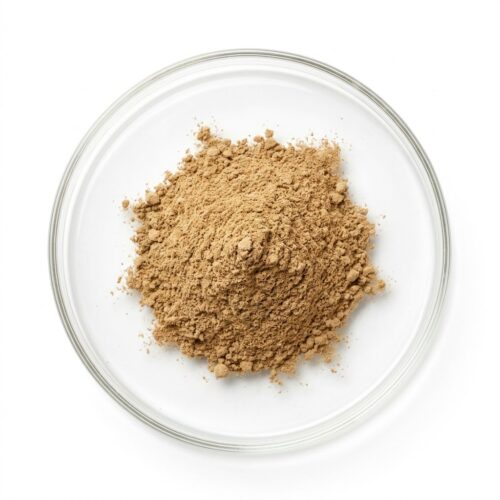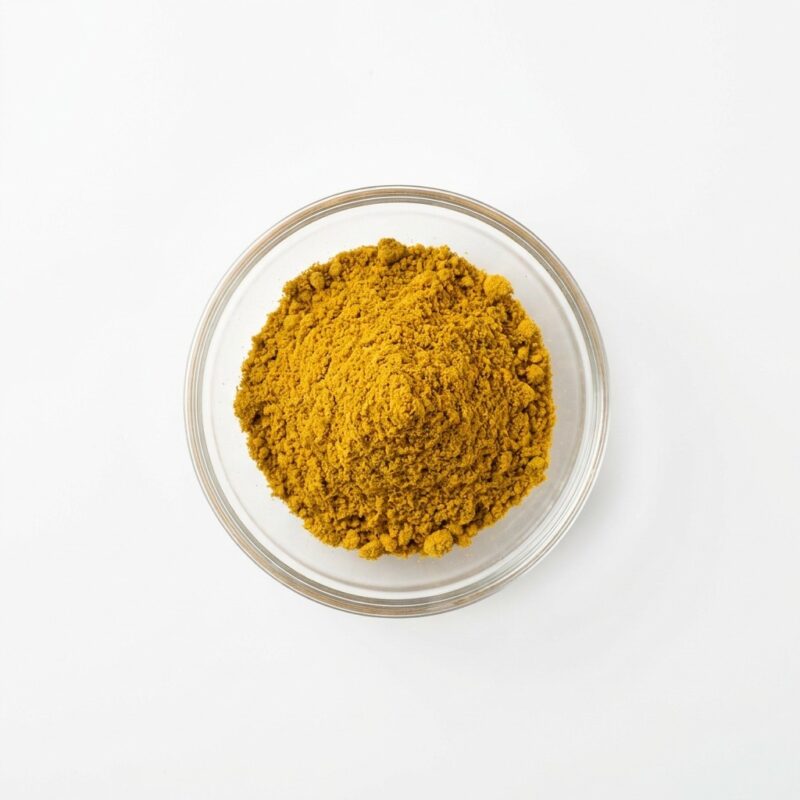
Coenzyme Q10 (CoQ10) is a naturally occurring fat-soluble quinone compound found in virtually every cell of the human body, with the highest concentrations in energy-demanding organs such as the heart, liver, and kidneys. With a CoQ10 content of more than 10% (HPLC), this high-purity ingredient serves as a critical component of the mitochondrial electron transport chain — the cellular machinery responsible for ATP (energy) production.
CoQ10 is one of the most widely researched and best-selling nutraceutical ingredients globally, with robust clinical evidence supporting its roles in cardiovascular health, mitochondrial function, anti-ageing, and statin-induced CoQ10 depletion management.
Applications:
- Nutraceuticals (cardiovascular health capsules, anti-ageing supplements, mitochondrial support)
- Sports Nutrition (energy production supplements, endurance and recovery blends)
- Beauty Supplements (cellular anti-ageing formulations, skin energy supplements)
- Functional Foods (CoQ10-fortified health products)
Key Features & Benefits:
- >10% CoQ10 content (HPLC) – high purity and potency
- Essential cofactor for mitochondrial ATP energy production
- Clinically studied for cardiovascular health and anti-ageing benefits
- Addresses CoQ10 depletion caused by statin medications
- Suitable for softgel, capsule, and powder formulations
Ubiquinone or ubiquinol?
CoQ10 is sold in two forms. Ubiquinone is the oxidised form: it is the most common, the most stable and the lower-cost option. Ubiquinol is the reduced form. It is more expensive and oxidises readily, so it needs protection from air and is usually supplied for softgels. The two are not interchangeable on a label or a price sheet, so confirm which form is on the specification.
What a >10% grade means
Pure CoQ10 is an orange crystalline powder that does not dissolve in water and disperses poorly. A 10% grade is a formulated powder in which CoQ10 is carried on or with other materials to make it usable in tablets, capsules, powders and beverages. The arithmetic matters when you set a dose: at 10%, every 100 mg of CoQ10 needs 1 g of powder. Ask for the full composition of the carrier, because it appears on your label and affects capsule fill weight.
Handling and processing
CoQ10 is light-sensitive and has a low melting point (around 48–52 °C for the pure substance), so avoid prolonged heat and light exposure during processing and storage. The natural, fermentation-derived molecule is the all-trans isomer; ask how the material was produced and for its related-substances profile.
What the research says
- In the Q-SYMBIO trial, 420 patients with moderate to severe chronic heart failure took 100 mg of CoQ10 three times a day, or placebo, alongside standard treatment for 2 years. Major adverse cardiovascular events occurred in 15% of the CoQ10 group versus 26% on placebo, and cardiovascular deaths were 9% versus 16%. There was no change in the 16-week endpoints. [1]
- Evidence on statin-associated muscle symptoms is mixed. A 2018 meta-analysis of 12 randomised trials (575 patients) found that CoQ10 reduced muscle pain, weakness, cramps and tiredness, without changing creatine kinase. [2] A 2020 meta-analysis of 7 trials (321 patients) found no benefit on muscle pain or on staying on statin treatment. [3]
These summaries describe published research on the ingredient. They are not claims for any finished product; claims on finished products must meet the rules of the market where they are sold.
References
- Mortensen SA, et al. The effect of coenzyme Q10 on morbidity and mortality in chronic heart failure: results from Q-SYMBIO: a randomized double-blind trial. JACC Heart Fail. 2014;2(6):641–649. doi:10.1016/j.jchf.2014.06.008
- Qu H, et al. Effects of coenzyme Q10 on statin-induced myopathy: an updated meta-analysis of randomized controlled trials. J Am Heart Assoc. 2018;7(19):e009835. doi:10.1161/JAHA.118.009835
- Kennedy C, Köller Y, Surkova E. Effect of coenzyme Q10 on statin-associated myalgia and adherence to statin therapy: a systematic review and meta-analysis. Atherosclerosis. 2020;299:1–8. doi:10.1016/j.atherosclerosis.2020.03.006
What to ask for on the certificate of analysis
- CoQ10 assay by HPLC, and the form (ubiquinone or ubiquinol).
- Composition of the carrier in a 10% grade.
- Related substances, including the cis isomer.
- Loss on drying, heavy metals and residual solvents.
- Microbiological profile.
Related ingredients
Other antioxidants often formulated alongside CoQ10: Astaxanthin and Superoxide Dismutase (SOD).