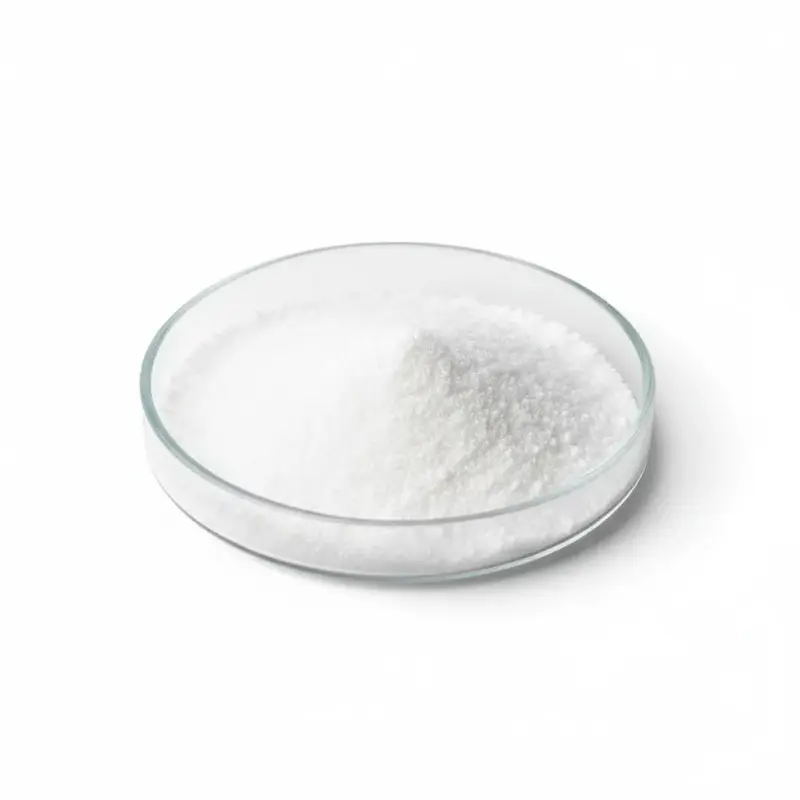
Potassium Iodide is a high-purity inorganic iodine compound with an assay of 99.0–100.5% on a dried basis, serving as the most widely used pharmaceutical and food-grade iodine source for thyroid health support and iodine fortification applications. Iodine is an essential trace mineral required for the synthesis of thyroid hormones (thyroxine T4 and triiodothyronine T3) — the primary regulators of metabolism, growth, and development in the human body.
Iodine deficiency is one of the most prevalent micronutrient deficiencies worldwide and is the leading preventable cause of intellectual disability globally, making Potassium Iodide a critical ingredient for iodine fortification programmes and thyroid health supplement formulations.
Applications:
- Nutraceuticals (thyroid health supplements, iodine fortification capsules, mineral blends)
- Food Fortification (iodised salt programmes, fortified foods and beverages)
- Women’s Health (pregnancy and maternal nutrition, fetal neurodevelopment support)
- General Wellness (metabolism support, energy, and cognitive health formulations)
Key Features & Benefits:
- 99.0–100.5% assay (dried basis) – pharmaceutical grade purity
- Most widely used and bioavailable iodine source for supplementation
- Essential for thyroid hormone synthesis and metabolic regulation
- Halal-certified & food-grade quality
- Suitable for capsule, tablet, and food fortification applications
Iodine content and the iodate alternative
By molecular weight, potassium iodide (KI) is about 76% iodine. Fortification and supplement doses are set as iodine, so the KI amount is the iodine target divided by that fraction. Potassium iodate (KIO3), at about 59% iodine, is the main alternative. Iodate is more stable in moist, warm conditions, which is why it is widely preferred for salt iodisation in hot, humid climates. The choice between the two is usually a stability decision.
Stability
Potassium iodide slowly oxidises in the presence of moisture, light, air and acidic ingredients, releasing free iodine. This shows as yellowing and means iodine is lost from the product. Stabilisers (such as dextrose or sodium thiosulfate in salt) and dry, sealed, dark storage protect it. Check compatibility with acidic ingredients and with oxidising minerals in premixes.
Dosing at microgram levels
Iodine is dosed in micrograms, so KI is almost always added via a premix or trituration on a carrier to achieve even distribution. Content uniformity in the finished product, not just the raw-material assay, decides whether every unit delivers the labelled amount. Potassium iodide is also a pharmaceutical active, so confirm product classification and permitted claims for the target market. For other minerals, see Calcium Carbonate.
What to ask for on the certificate of analysis
- Assay on the dried basis, and the pharmacopoeia or food standard tested against
- Iodate, free iodine, thiosulfate and other related impurities
- Loss on drying, pH or alkalinity of a stated solution
- Heavy metals: lead, arsenic, cadmium and mercury
- Particle size, if used in premixes
- Grade (food, pharmaceutical), Halal certificate if applicable
- Batch number, manufacture and retest dates