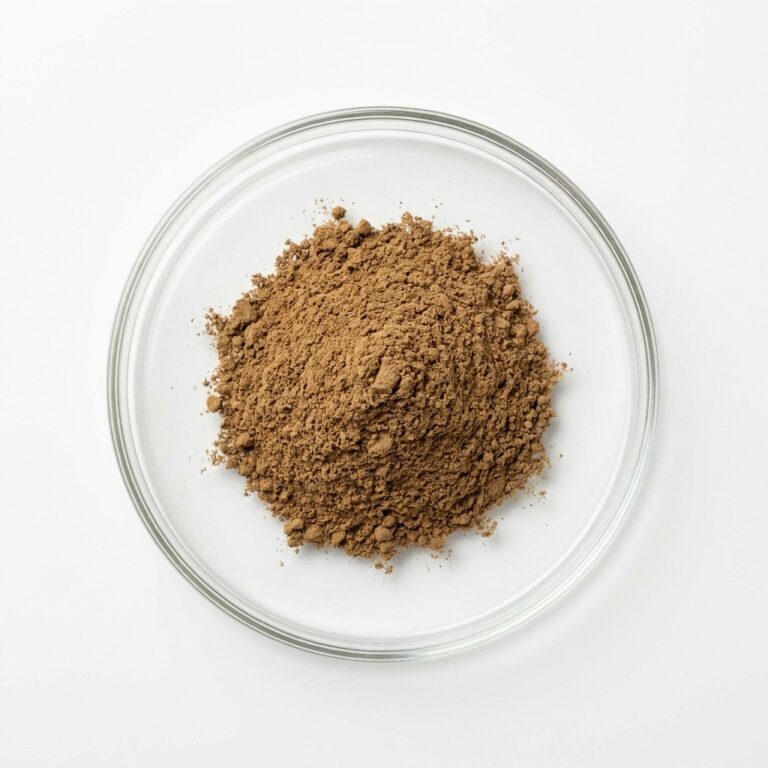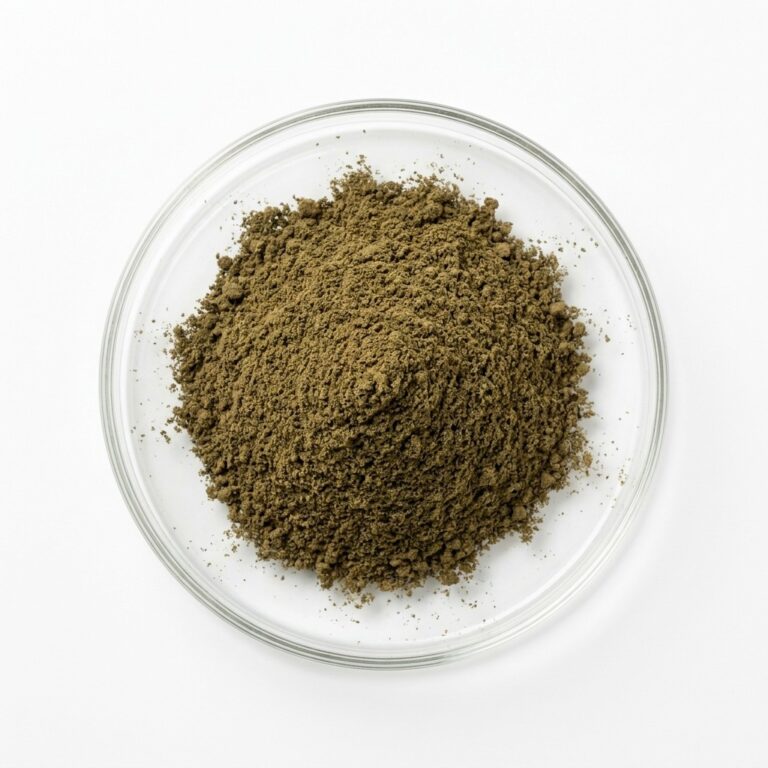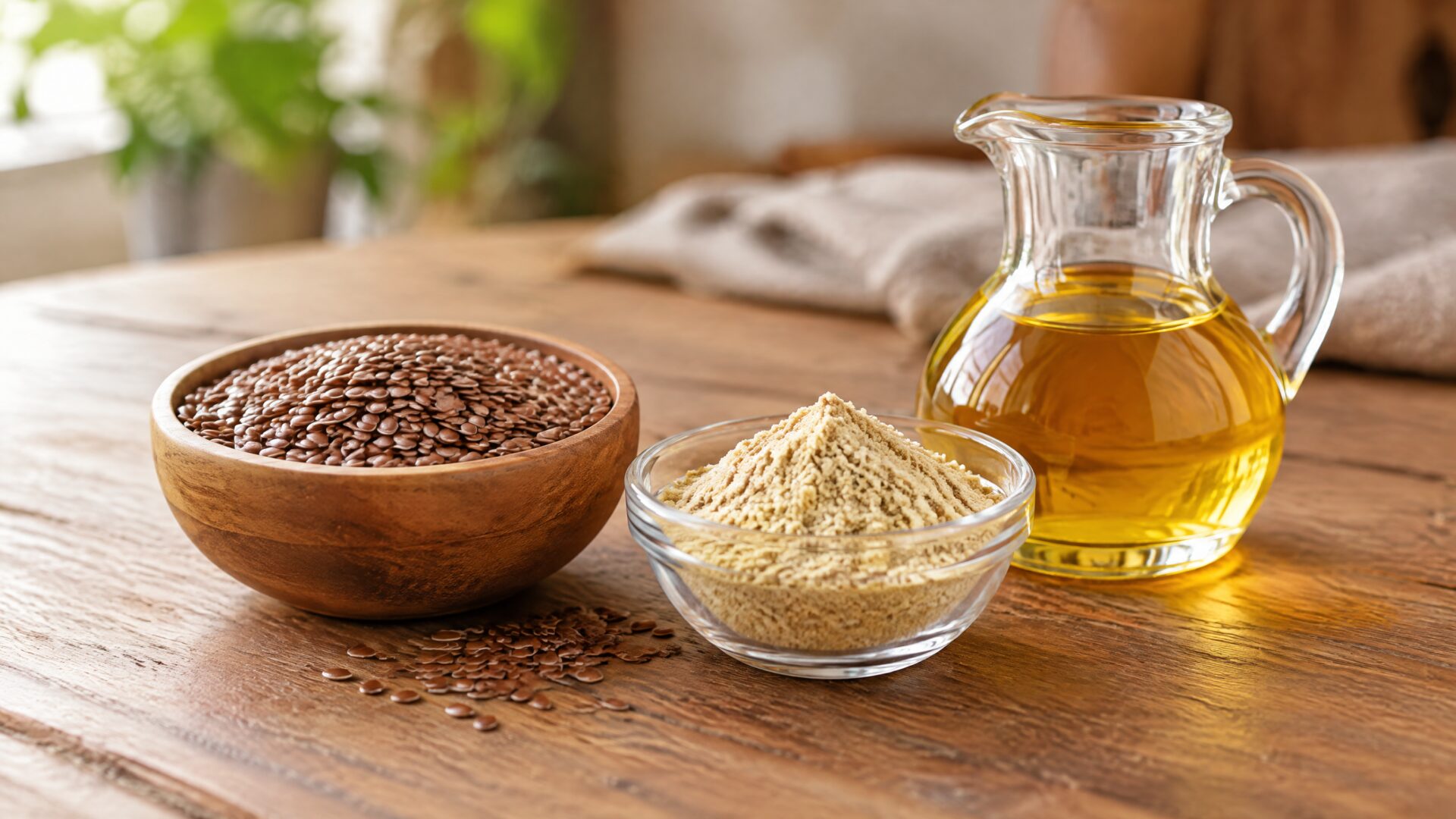

Flaxseed is the small brown or golden seed of the flax plant, Linum usitatissimum. It is also called linseed, and in Malay it is often searched as biji flax. Flaxseed is one of the richest plant sources of the omega-3 fat alpha-linolenic acid (ALA), and it also supplies fibre and lignans. This guide explains the main forms of flaxseed, what human studies report, and what manufacturers should check before they buy.
What Is Flaxseed?
Flax is grown both for its stem fibre, which is used to make linen, and for its seed. The seed is eaten whole, ground into meal, or pressed for its oil. Researchers describe flaxseed as a rich dietary source of three groups of compounds: alpha-linolenic acid, lignans and fibre. Each form of flaxseed keeps a different share of these.
ALA is a plant omega-3. It is not the same as EPA and DHA, the longer-chain omega-3s found in fish and algae oils. The body can convert some ALA into EPA, but the conversion is limited in men, and conversion to DHA is very low. Women convert a larger share [5]. That is why flaxseed is best described as an ALA source, not as a replacement for fish oil.
Forms of Flaxseed Used in Manufacturing
- Whole flaxseed: used in bread, cereals, granola and snack bars.
- Ground flaxseed (flax meal): milled seed that keeps the fibre, lignans and oil. It is used in bakery, smoothies and fibre blends. Once milled, the oil is exposed to air, so shelf life is shorter.
- Flaxseed oil: cold-pressed oil, rich in ALA but with no fibre. It oxidises very quickly. FC Materials supplies Flaxseed Oil as a carrier oil for skin and hair care.
- Flaxseed oil powder: the oil microencapsulated with a carrier so it can go into capsules, tablets, sachets and dry mixes. See our flaxseed oil powder supply page and the Flaxseed Oil Powder specification.
The form matters for both the label and the evidence. Trials have used whole seed, ground seed, oil and lignan extracts, and they do not always give the same result.
What the Research Says
Trials have added whole seed, ground seed, oil or lignan extracts to the usual diet. The best-studied outcomes are blood pressure and blood lipids.
- Blood pressure. A 2023 meta-analysis of 33 trials (2,427 participants) found that flaxseed lowered systolic blood pressure by 3.19 mmHg and diastolic by 2.61 mmHg. Effects were larger with more than 20 weeks of use, 30 g a day or more, and in people with hypertension. Results varied widely between trials [1].
- Blood lipids. A 2020 meta-analysis of 62 randomised controlled trials (3,772 participants) found lower total cholesterol (−5.39 mg/dL), triglycerides (−9.42 mg/dL) and LDL cholesterol (−4.21 mg/dL). HDL cholesterol did not change. The authors call for larger, better-designed studies [2].
- Seed versus oil. An earlier meta-analysis of 28 studies found that whole flaxseed and lignan supplements lowered total and LDL cholesterol, but flaxseed oil did not. Effects were clearer in women, especially after menopause, and in people with high cholesterol at the start [3].
- Not every group benefits. A 2025 meta-analysis of 16 trials (1,136 participants with diabetes) found lower weight, waist size and triglycerides. It found no benefit for blood pressure, total, LDL or HDL cholesterol [4].
These summaries describe published research on the ingredient. They are not claims for any finished product; claims on finished products must meet the rules of the market where they are sold.
Flaxseed Oil, Flaxseed Oil Powder or Algal DHA?
Brands often ask whether flaxseed can carry an omega-3 claim on its own. The answer depends on which omega-3 the product needs:
- For ALA: flaxseed oil or flaxseed oil powder. The powder suits dry formats where liquid oil cannot be used.
- For DHA: a preformed source is needed, because little ALA becomes DHA [5]. FC Materials supplies Algae Oil DHA Powder (DHA >10%), a plant-based option.
- For an omega-6 position: safflower oil powder supplies linoleic acid in a similar powder format.
Liquid flaxseed oil is one of the least stable oils in common use. Its high ALA content makes it oxidise and turn rancid quickly. Microencapsulation, cool storage, opaque packaging and added antioxidants all help, but shelf life should be set by the oil, not by the rest of the formula.
What to Check Before You Buy
The checks depend on the form you buy. Build these into your specification:
- Oxidation. Peroxide value and free fatty acids for oil and powder, with the pressing or manufacture date. Anisidine value adds a view of secondary oxidation.
- Fatty acid profile. ALA as a percentage of total fatty acids, measured by gas chromatography.
- For powders: the carrier used (for example maltodextrin or a protein), oil load, and any allergens the carrier brings.
- For whole or ground seed: hydrocyanic acid (from natural cyanogenic glycosides), moisture, and foreign matter.
- Contaminants and microbiology. Heavy metals, pesticide residues, total plate count, yeast and mould, and Salmonella.
- Grade. Food or cosmetic grade, stated clearly. Industrial “boiled” linseed oil for wood finishing is not suitable for food or personal care.
- Halal and regulatory documents. For supplements sold in Malaysia, our FC | Comply team can advise on the NPRA documents you need.
Safety
Raw flaxseed contains cyanogenic glycosides, which can release hydrogen cyanide. The EU therefore sets maximum levels for hydrocyanic acid in linseed. The limit is 150 mg/kg for whole or ground linseed sold to consumers, and 250 mg/kg for linseed not sold to consumers. Small consumer packs may exceed 150 mg/kg only if they carry the warning “Only to be used for cooking and baking. Do not consume raw!” [6]. Exporters should check the rules of each target market.
Flaxseed oil and oil powders are pressed oil, not whole seed. Brands should still follow local dose and labelling rules, and advise consumers who take medicines or are pregnant to speak to a healthcare professional.
Frequently Asked Questions
Is flaxseed the same as linseed?
Yes. Both names refer to the seed of Linum usitatissimum. Malaysian shoppers also search for biji flax. Industrial linseed oil, however, may be treated for coatings and is not food grade.
Is ground flaxseed better than whole flaxseed?
Ground seed blends more easily into recipes, but it oxidises faster once milled. In one meta-analysis, whole flaxseed and lignan supplements lowered cholesterol while flaxseed oil did not [3].
Does flaxseed oil give the same omega-3 as fish oil?
No. Flaxseed oil supplies ALA. Fish and algae oils supply EPA and DHA. The body converts only a limited amount of ALA to EPA and very little to DHA [5].
How much flaxseed was used in the studies?
Doses varied. In the largest blood pressure meta-analysis, effects were greater at 30 g a day or more and after more than 20 weeks [1].
What flaxseed ingredients does FC Materials supply?
We supply Flaxseed Oil Powder, microencapsulated from cold-pressed flaxseed oil and Halal-certified, and Flaxseed Oil as a cosmetic carrier oil. Ask us for the specification and certificate of analysis.
References
- Li L, Li H, Gao Y, et al. Effect of flaxseed supplementation on blood pressure: a systematic review, and dose-response meta-analysis of randomized clinical trials. Food Funct. 2023;14(2):675-690. doi:10.1039/d2fo02566c
- Hadi A, Askarpour M, Salamat S, et al. Effect of flaxseed supplementation on lipid profile: an updated systematic review and dose-response meta-analysis of sixty-two randomized controlled trials. Pharmacol Res. 2020;152:104622. doi:10.1016/j.phrs.2019.104622
- Pan A, Yu D, Demark-Wahnefried W, et al. Meta-analysis of the effects of flaxseed interventions on blood lipids. Am J Clin Nutr. 2009;90(2):288-97. doi:10.3945/ajcn.2009.27469
- Musazadeh V, Nezamoleslami S, Faghfouri AH, et al. The effect of flaxseed supplementation on anthropometric indices, blood pressure, and lipid profile in diabetic patients: a GRADE-assessed systematic review and meta-analysis of randomized controlled trials. Diabetes Metab Syndr. 2025;19(5):103241. doi:10.1016/j.dsx.2025.103241
- Burdge GC, Calder PC. Conversion of alpha-linolenic acid to longer-chain polyunsaturated fatty acids in human adults. Reprod Nutr Dev. 2005;45(5):581-97. doi:10.1051/rnd:2005047
- Commission Regulation (EU) 2023/915 of 25 April 2023 on maximum levels for certain contaminants in food (consolidated text), entries 2.3.1 and 2.3.2. EUR-Lex.
Source it from FC Materials: Flaxseed oil powder, Flaxseed oil and Algae oil DHA powder – specification, COA and Halal documents on request.
Sourcing flaxseed oil powder for your formulation?
FC Materials supplies microencapsulated flaxseed oil powder, flaxseed oil and algal DHA powder to supplement, food and personal care manufacturers. Tell us your product needs and our team will respond with specs, pricing and MOQ.