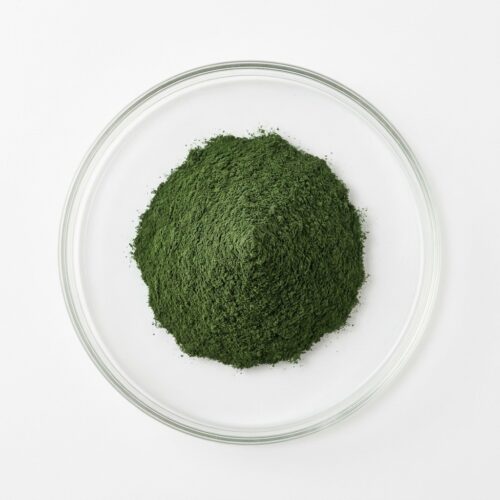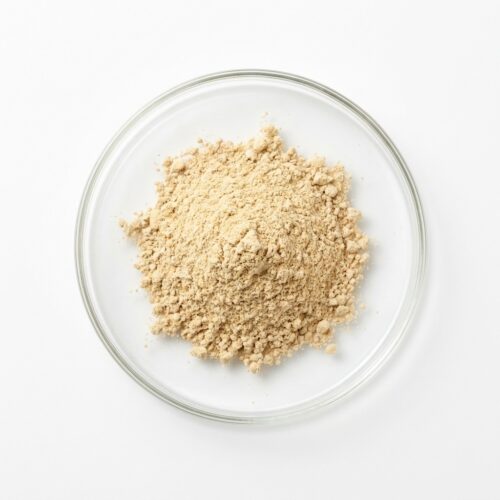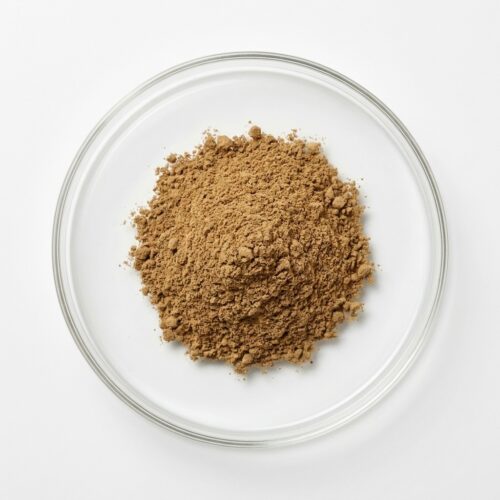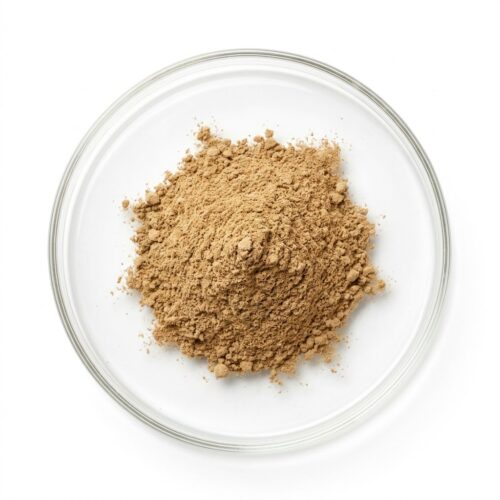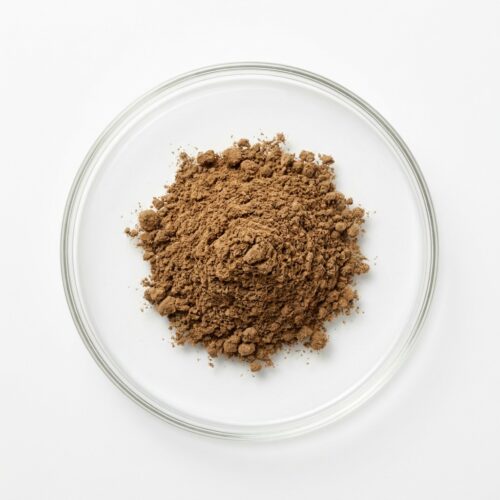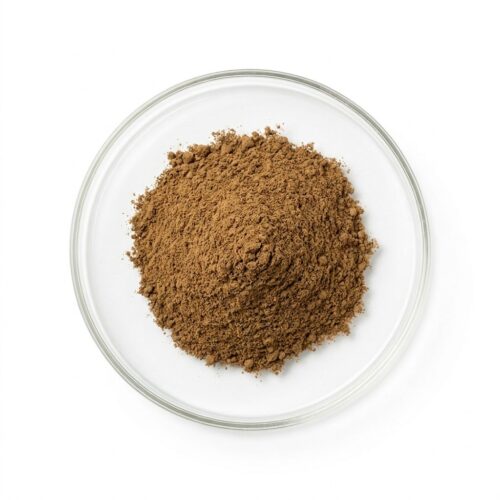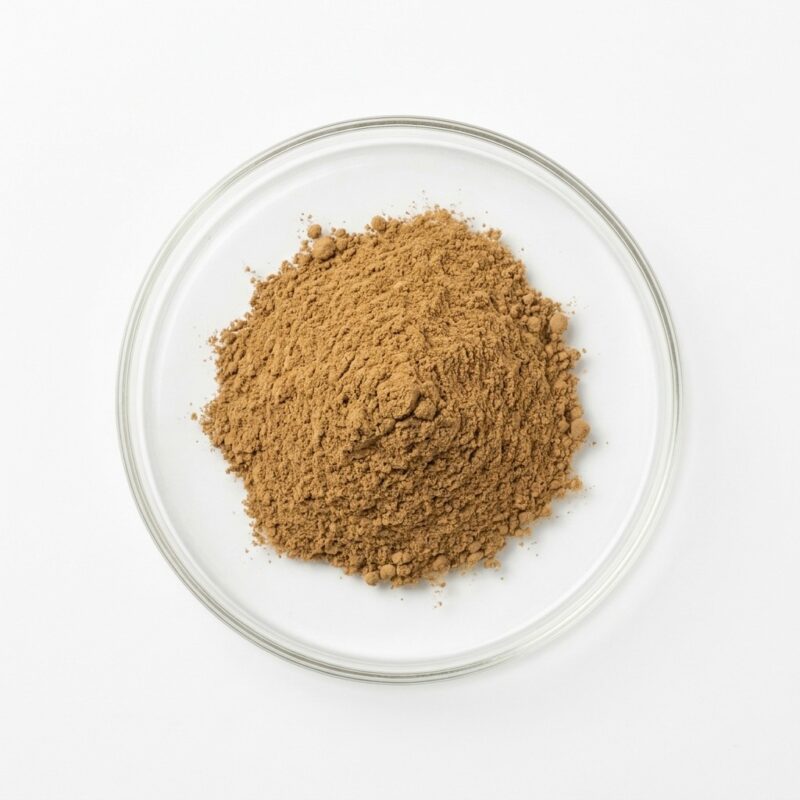
Pueraria Mirifica Extract is a concentrated botanical extract derived from the tuberous root of Pueraria mirifica, a plant native to Thailand and Myanmar and one of the most potent phytoestrogenic botanicals known. Standardised to contain more than 40% flavonoids (UV), this extract is rich in miroestrol, deoxymiroestrol, daidzein, genistein, and other phytoestrogens — bioactive compounds with oestrogen-like activity significantly stronger than those found in soy or red clover.
Pueraria Mirifica is the premier women’s phytoestrogenic botanical in Southeast Asia, with a strong tradition of use in Thai herbal medicine for menopausal relief, breast health, and female rejuvenation.
Applications:
- Women’s Health (menopausal symptom relief, hot flush management, hormonal balance supplements)
- Beauty Supplements (breast firmness, skin hydration, and anti-ageing beauty formulations)
- Bone Health (phytoestrogen support for post-menopausal bone density)
- Traditional Herbal Medicine (Thai Kwao Krua Khao formulations)
Key Features & Benefits:
- >40% flavonoids (UV) – potent standardised phytoestrogen-rich extract
- Most potent naturally occurring phytoestrogen source known
- Strong Thai herbal medicine heritage and growing global women’s health market
- Halal-certified & food-grade quality
- Suitable for capsule, tablet, and cream formulations
Not the same plant as kudzu
Pueraria mirifica (white kwao krua) is a Thai tuberous root. Its distinctive compounds are miroestrol and deoxymiroestrol, which are strongly oestrogenic, alongside isoflavones. Kudzu, Pueraria lobata, contains mainly puerarin and daidzin and is a different ingredient: see Pueraria Lobata Extract. Red kwao krua is a third plant, Butea superba (Butea Superba Extract). Ask for identity testing that separates these.
What “>40% flavonoids (UV)” measures
A UV total-flavonoid figure is a broad colour-reaction assay. It does not identify individual compounds, and it does not measure miroestrol or deoxymiroestrol, which occur in very small amounts but drive most of the oestrogenic activity. Content varies with plant origin and harvest. For consistency, ask for an HPLC profile of the isoflavones and, where available, of miroestrol and deoxymiroestrol.
Regulatory and safety checks
Because it acts like oestrogen, P. mirifica is regulated more tightly than most botanicals, and the rules differ between markets. Confirm its status with NPRA for your product category before formulating, and plan label warnings for pregnancy, breast-feeding and oestrogen-sensitive conditions.
What to ask for on the certificate of analysis
- Botanical name and plant part (Pueraria mirifica tuberous root)
- Identity test separating P. mirifica from P. lobata and Butea superba (HPLC fingerprint or DNA)
- Total flavonoids with method, plus an HPLC isoflavone profile
- Miroestrol and deoxymiroestrol, where the supplier can measure them
- Extraction solvent and carrier with its percentage
- Loss on drying, heavy metals, pesticide residues and microbiology
- Batch number, manufacture and retest dates